As usual, join us as we highlight the most important events impacting the domestic and international sports betting and gaming industry landscape each weekend throughout the year.
SuperBook Gets Back to Basics
They say a good general knows when to retreat, and the Westgate SuperBook, home of the internationally renowned Westgate SuperContest, has heeded that advice. The old-school, venerable Vegas bookmaking brand believed it could build on its glowing reputation in the industry by joining the mobile sports betting market outside of its Sin City domain.
However, the colossal expenditures on marketing and brand building required to attract novice and seasoned bettors alike were not aligned with SuperBook’s strategic initiative of relying on its reputation and name recognition to woo its digital customer base.
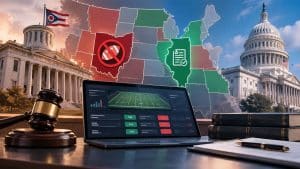
After a relatively brief foray into the mobile sports betting realm, SuperBook’s C-suite executives decided the experiment was over and consequently shuttered operations in Arizona, Colorado, Iowa, Maryland, New Jersey, Ohio, Tennessee, and Virginia.
“It just didn’t make sense for us,” SuperBook executive vice president Jay Kornegay said. “We weren’t sure if we’d be able to dedicate those types of resources to be competitive in those states. We made the right decision.
Back to Basics: Focusing on Las Vegas
“We pulled the reins back to our roots, to Las Vegas. I want to make sure that’s clear. The Las Vegas SuperBook is still running strong, and it is still considered an industry leader. We’re focused on our Las Vegas property.”
Any wagers through November 17th were honored, while any future wagers made in any of those states in which SuperBook was active were refunded.
“It’s a very hyper-competitive market,” Kornegay said. “We knew that going in. We knew that it was going to continue. You have to really dedicate a lot of resources to be somewhat successful.
“Many are playing the long haul. I’m not sure if anybody’s profitable at this point in time. I know that they’re inching closer to it, and I’m all for it. I’m really happy for them. But it just didn’t make sense for us.”
Massachusetts Investigates Player Limits
The Massachusetts Gaming Commission (MGC) has been tenacious in its investigation of its sportsbooks’ practice of lowering player betting limits. It is a topic that has been deftly avoided by the major US industry players, but the MGC refuses to let it go.
The practice has been described by disgruntled bettors as capricious and even arbitrary, imposed by the sportsbooks without any fair warning. Renowned sports bettor Billy Walters even weighed in on the matter last summer at the National Committee of Legislators from Gaming States held in Pittsburgh.
“The thing that I’m really concerned with for legalized sports betting is that we have disparities,” Walters said. “I think in the United States that we were all born and raised to believe in everyone being treated equally and being treated fairly. So, if you qualify for a sportsbook account and your money is clean, it’s legal; I think you should be treated equally legally.”
The Sportsbooks’ Argument
Sportsbooks have stated that it is behavioral patterns that concern them, not necessarily a historically winning customer. The MGC, not satisfied with that explanation, has asked for “a detailed but narrow data request” regarding decisions on customer betting limits.
An internal memo from staff to the MGC’s commissioners said, “We would formulate such a data request to seek specific player data from which our team could deduce (1) the percentage of their players that they limit, (2) how many players are being limited and exhibit winning behavior, and (3) how many players are being treated as VIPs and exhibit losing behavior.”
Subsequent meetings are expected once the MGC has an opportunity to analyze the information provided by the sportsbooks operating in the Commonwealth, which include Fanatics, FanDuel, Caesars, DraftKings, BetMGM, ESPN BET, and Bally Bet.