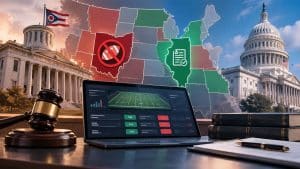
I’ve been following the NCAA vs DraftKings lawsuit closely, and it’s quickly becoming one of the most consequential legal battles in modern sports betting. At the center of the dispute is something deceptively simple: the use of the phrase “March Madness.” But as with most high-stakes legal fights, the implications go far beyond branding.
The NCAA has taken legal action against DraftKings, arguing that the sportsbook’s use of the iconic tournament phrase in promotional campaigns creates a misleading association between college athletics and gambling. DraftKings, on the other hand, is pushing back, claiming its use of the term falls under protected commercial speech.
From my perspective, this is not just a trademark dispute it’s a defining moment for how sports betting integrates with amateur athletics in the United States.
Why “March Madness” Is More Than Just a Phrase
To understand the stakes, you have to recognize what March Madness represents. It’s not just a tournament it’s a multi-billion-dollar cultural and commercial phenomenon tied directly to college basketball’s identity.
The NCAA has historically guarded this brand aggressively, and for good reason. Licensing rights, broadcasting deals, and sponsorships tied to the tournament generate massive revenue. Allowing sportsbooks to freely use the phrase could dilute its value and, more importantly, blur the lines between collegiate competition and gambling promotion.
This is where the NCAA’s argument becomes particularly compelling. They claim that linking betting promotions to March Madness risks:
- Misleading fans into believing there is an official partnership
- Increasing pressure and scrutiny on student-athletes
- Undermining the integrity of amateur sports
From a governance standpoint, the NCAA is essentially trying to preserve the separation between competition and wagering influence.
DraftKings’ Defense: Free Speech and Industry Norms
DraftKings isn’t backing down. The company argues that referencing widely recognized sporting events is a standard marketing practice across the betting industry. In their view, phrases like March Madness have become part of the broader sports vocabulary.
Their legal defense hinges on the idea that:
- The term is used in a descriptive, not misleading, manner
- Consumers understand DraftKings is not officially affiliated with the NCAA
- Restricting such language would violate free speech protections in advertising
I find this argument particularly interesting because it reflects the broader evolution of sports betting since legalization expanded across the U.S. in 2018. Sportsbooks have become deeply embedded in sports culture, and marketing language has followed that integration.
The Athlete Factor: A Growing Concern
One of the most sensitive elements of the NCAA vs DraftKings lawsuit is the potential impact on student-athletes. Unlike professional players, college athletes are often less equipped to handle the pressures that come with betting exposure.
The NCAA’s concern is not hypothetical. Increased betting visibility has already led to:
- Heightened scrutiny of player performance
- Social media harassment tied to betting outcomes
- Integrity risks, including potential manipulation concerns
By tying betting promotions directly to March Madness, the NCAA argues that sportsbooks could amplify these risks at the most visible moment in college sports.
A Turning Point for Sports Betting Marketing
What fascinates me most about this case is how it could reshape sports betting marketing strategies moving forward. If the NCAA prevails, sportsbooks may need to rethink how they reference major sporting events especially those tied to amateur or collegiate competitions.
We could see:
- Stricter limits on event-based promotional language
- Increased use of generic or indirect references
- Greater legal scrutiny over advertising campaigns
On the flip side, if DraftKings wins, it could open the door for more aggressive and integrated marketing tactics, further blending the worlds of sports and betting.
Either outcome will set a precedent not just for college basketball, but for how sportsbooks engage with all major sporting events.
The Broader Industry Impact
This lawsuit arrives at a time when the sports betting industry is already facing heightened regulatory attention. Lawmakers, regulators, and advocacy groups are increasingly focused on:
- Consumer protection
- Responsible gambling practices
- The influence of betting on sports integrity
The NCAA vs DraftKings lawsuit fits squarely into this broader conversation. It raises critical questions about where to draw the line between promotion and exploitation, particularly when young athletes are involved.
From my vantage point, this case could act as a catalyst for:
- New advertising regulations
- Industry-wide compliance standards
- Stronger partnerships between leagues and regulators
More Than a Lawsuit—A Defining Moment
As I see it, the NCAA vs DraftKings lawsuit is about far more than trademark rights. It’s a test of boundaries between sports and gambling, between commercial freedom and ethical responsibility.
On one side, the NCAA is fighting to protect the integrity of college athletics and the welfare of its athletes. On the other, DraftKings is defending what it sees as a legitimate and standard marketing practice in a rapidly evolving industry by professional basketball strategies.
The outcome will likely reshape how sportsbooks communicate, promote, and position themselves in relation to major sporting events. And perhaps more importantly, it will influence how society balances entertainment, commerce, and the protection of athletes in the betting era.
One thing is certain: this is not just a legal battle it’s a turning point for the future of sports betting.