AI cyber risk banks face is no longer a distant technology concern buried inside IT departments. It is becoming a regulatory threat because advanced AI tools can now help expose software weaknesses faster than many financial institutions can patch, govern, or even fully understand them.
That puts bank boards, technology chiefs, and supervisors under pressure at the same time. The same European financial system already watching digital money, stablecoins, and payment innovation now has to treat cyber resilience as part of the broader transformation reshaping finance, from legacy banking systems to European banks building a stablecoin challenge.
AI Cyber Risk Banks Face Is Becoming A Supervisory Problem
The banking industry has always treated cybersecurity as serious. What is different now is speed. AI can accelerate vulnerability discovery, automate parts of attack planning, and help threat actors move from curiosity to exploitation faster than old risk frameworks were designed to handle.
That is why the latest AI cybersecurity warning for euro zone banks feels bigger than a normal compliance reminder. Regulators are not merely telling banks to buy more security software. They are warning that a structural shift in cyber capability may expose the weakest layers of banking technology, especially older systems that remain deeply embedded in payments, account management, customer data, and internal operations.
This is the part many readers may underestimate: a bank does not need to be careless to be exposed. Large financial institutions are complex by design. They run old and new systems together, rely on vendors, integrate with payment networks, serve millions of customers, and maintain layers of compliance infrastructure. AI does not create every weakness, but it can make existing weaknesses easier to find.
That turns legacy software risk into a board-level issue.
Old Banking Systems Are Now A Bigger Target
Legacy technology has always been expensive to replace, but banks have often justified the delay because older systems can be stable, familiar, and deeply customized. The problem is that “stable” does not always mean resilient.
Older systems may depend on outdated code, fragile integrations, limited documentation, or security assumptions formed before today’s threat environment existed. In a slower cyber era, banks could manage some of those weaknesses through monitoring, patching cycles, layered controls, and vendor support. AI compresses that timeline.
If a tool can scan faster, identify patterns better, and help translate technical flaws into attack paths, then banks cannot rely on slow remediation schedules. The gap between vulnerability discovery and exploitation can narrow. That is exactly the type of pressure regulators care about because banking disruptions do not stay inside one firm for long.
A major cyber incident can affect customer access, payment settlement, card services, trading operations, confidence in digital channels, and trust in the wider financial system. For a bank, cybersecurity is not just a technology expense. It is operational continuity.
The Real Risk Is Not Just Hackers Using AI
The obvious fear is that criminals use AI to attack banks. That is serious, but the larger issue is more complicated.
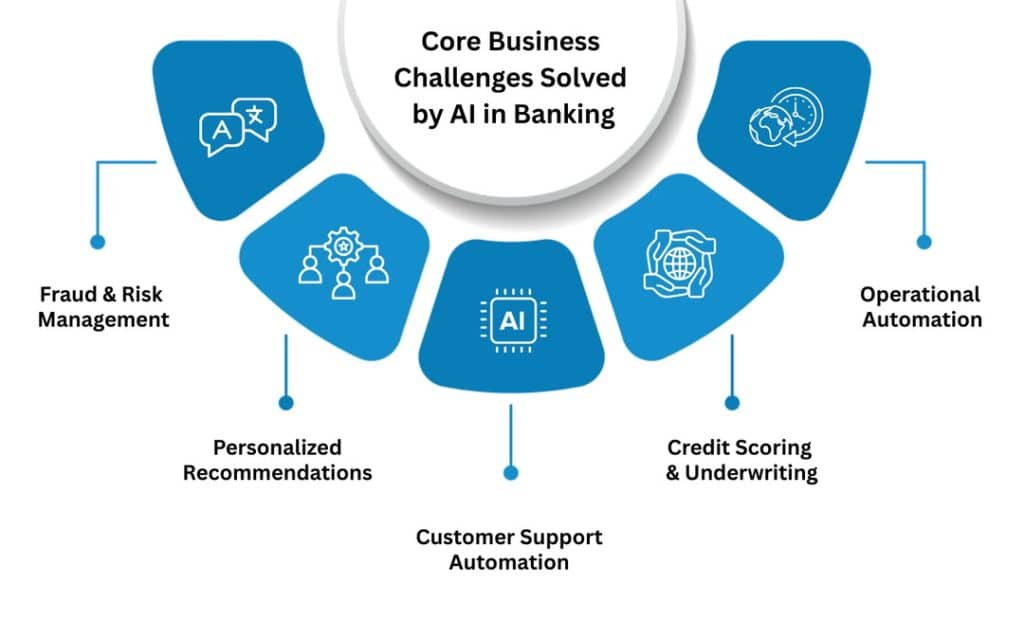
Banks themselves are also using AI. They use it for customer service, fraud detection, compliance review, software development, document processing, marketing, risk modeling, and productivity tools. Every new AI workflow creates questions about data access, model governance, vendor dependence, auditability, and employee behavior.
That means AI risk is two-sided. External attackers may become more capable, while internal adoption may create new exposure if banks move too fast without the right controls. A chatbot connected to sensitive internal systems, a poorly governed coding assistant, or an AI tool trained on restricted information can become a new risk channel.
This is where cybersecurity, compliance, and business strategy start to overlap. The banks that handle this well will not simply ban AI or rush into every new tool. They will classify use cases, restrict sensitive access, test models, monitor outputs, review vendors, and tie AI adoption to real security governance.
The winners will treat AI as a controlled banking capability, not a casual productivity upgrade.
The Banking Cyber Risk Map Is Getting More Crowded
The easiest mistake is to view AI cyber risk as one more item on an already long checklist. It is better understood as a multiplier across several existing risk categories.
| Risk Area | How AI Changes The Pressure | Bank-Level Response |
|---|---|---|
| Legacy software | Speeds up discovery of old vulnerabilities | Accelerate patching, system upgrades, and asset mapping |
| Third-party vendors | Expands exposure through outside technology providers | Tighten vendor due diligence and incident obligations |
| Employee behavior | Makes phishing, impersonation, and social engineering more convincing | Improve training, access controls, and identity verification |
| Internal AI tools | Creates new data leakage and governance risks | Limit sensitive access and monitor approved use cases |
| Incident response | Compresses the time banks have to react | Run faster simulations and escalation drills |
The lesson from this table is direct: AI cyber risk is not one department’s problem. It touches procurement, legal, compliance, operations, data governance, and executive decision-making.
Banks that treat it as a narrow technical issue are likely to move too slowly.
Regulators Want Proof, Not Promises
The European Central Bank’s wider supervisory priorities for 2026-28 already place operational resilience and ICT capabilities near the center of bank supervision. That matters because the current AI-cyber concern fits into a longer regulatory direction: supervisors want banks to show they can prevent, withstand, and recover from digital disruption.
That means generic assurances will not be enough. Regulators are likely to expect evidence: clear inventories of critical systems, documented patching programs, third-party risk controls, cyber incident playbooks, board reporting, testing schedules, and accountability for unresolved weaknesses.
For banks, the uncomfortable reality is that cybersecurity investment is no longer judged only by whether an attack has happened. It is judged by preparedness before the attack. A bank with outdated systems, slow governance, or unclear vendor oversight may face pressure even if no breach has occurred.
That is a major shift in tone. Regulators are effectively saying that cyber weakness is not just an IT flaw. It can become a prudential concern.
The Next Pressure Point Is Spending Discipline
The obvious answer is to spend more. But the smarter answer is to spend better.
Banks can pour money into cybersecurity and still remain vulnerable if they do not know which systems are most critical, which vendors matter most, and which weaknesses create the most dangerous chain reactions. AI raises the cost of confusion. A scattered security budget may look impressive in a board presentation while leaving old dependencies untouched.
The next wave of bank cyber investment should focus on three areas. First, modernization of critical legacy infrastructure. Second, faster vulnerability management and patch deployment. Third, stronger control over AI tools used inside the institution and across vendor relationships.
This is where defensive AI investment also becomes important. If attackers can use AI to move faster, banks need AI-assisted monitoring, anomaly detection, code review, and threat intelligence of their own. The goal is not to automate judgment away. The goal is to give security teams better speed and visibility.
Banks That Wait May Lose More Than Money
The hardest part of cyber risk is that failure can look invisible until it becomes public. A bank may appear stable, profitable, and well-capitalized while carrying technology weaknesses that only become obvious during an incident.
That is why this story deserves attention beyond banking compliance circles. Customers increasingly rely on digital access. Businesses depend on payment continuity. Markets assume major financial institutions can operate through stress. If AI makes cyber disruption easier to trigger, then bank resilience becomes part of public trust.
AI cyber risk banks face will keep rising because the tools are improving, the systems are complex, and the incentives for attackers remain strong. The opportunity is that banks still have time to modernize, test, and govern before the next major incident defines the conversation for them. The risk is waiting until AI has already exposed the weakness everyone should have fixed earlier.