The stopgap funding bill passed by the House may look like a clean escape from a pre-election shutdown. The smarter read is less comforting: Congress has delayed the crisis, moved it closer to December, and left the Senate to decide whether this is a pause button or a trapdoor.
That matters because government funding fights are no longer just procedural Washington noise. They shape voter mood, market expectations, federal services, and the political climate that can move everything from campaign messaging to politics markets at the best U.S. betting sites.
The Stopgap Funding Bill Buys Time, Not Peace
The House approved H.R. 9770, the Continuing Appropriations Act, 2027, by a 220-205 vote, extending federal funding through December 4 if it clears the Senate and becomes law. The official case for the bill is simple: prevent a September 30 funding lapse before the midterm elections and give appropriators more runway to finish full-year spending bills.
That is the clean version. The political version is messier.
A stopgap bill does not solve the underlying fight over spending, policy riders, border funding, defense priorities, or election-year leverage. It freezes the argument and relocates it. September becomes less dangerous, but December becomes loaded with unfinished business.
That is why the H.R. 9770 vote should not be read as Congress suddenly discovering fiscal discipline. It is better understood as leadership trying to remove one political landmine before lawmakers head into the campaign stretch.
The near-term result is stability. The longer-term result may be compressed budget pressure at the worst possible moment.
Why September Was Too Risky for Both Parties
Shutdown fights can be useful for politicians until the public starts assigning blame. That is why an early House vote makes strategic sense. Lawmakers know a September deadline would land right before midterm voting, when even a short disruption could dominate local news and give opponents easy attack lines.
For Republicans, avoiding a shutdown before November reduces the risk of looking unable to govern while controlling the House. For Democrats, opposing a House-written bill without bipartisan input lets them argue the process was one-sided without necessarily owning an immediate shutdown.
That tension is the point. Both parties want leverage, but neither wants to be trapped in the frame of “you closed the government before voters went to the polls.”
The House move changes the timing of that argument. Instead of an election-season shutdown drama, Congress may now face a post-election December deadline, when members are either emboldened by victory, weakened by defeat, or trying to settle scores before the next Congress reshapes the battlefield.
A delay can be useful. It can also make every unresolved issue sharper.
December Could Become the Real Shutdown Deadline
The December 4 date is not random political housekeeping. It creates a short runway after the midterms, when Washington often becomes more unpredictable.
Some lawmakers may feel newly empowered. Others may be leaving office. Leadership may be trying to prove strength. The White House may push harder on priorities that were too risky before Election Day. That makes December a different kind of funding fight from September.
The Senate is the immediate choke point. Most legislation there still needs 60 votes to move forward, which means Republican leaders cannot simply send over a House bill and expect it to glide through. The Senate funding talks now become the difference between a clean extension and another negotiation cycle full of amendments, delays, and messaging votes.
The bigger problem is that December funding fights rarely happen in isolation. They can collide with defense spending, disaster aid, farm support, immigration fights, tax issues, or year-end legislative packages. Once that happens, the “clean” bill can become a vehicle for everything Congress failed to finish earlier.
Here is the risk map behind the new timeline:
| Funding Stage | Political Benefit | Hidden Risk |
|---|---|---|
| House passage in July | Removes immediate September pressure | Shifts unresolved fights to the Senate |
| Senate negotiations | Creates room for bipartisan changes | Gives both parties leverage to reopen disputes |
| September 30 deadline | Could be neutralized if the bill passes | Failure would revive shutdown risk quickly |
| November midterms | Avoids a direct pre-election funding lapse | Results may harden party positions |
| December 4 deadline | Forces final action after the election | Becomes a larger year-end confrontation |
The table shows why the House vote is not the end of the story. It is a reshuffling of risk.
Federal Agencies Still Pay the Price for Short-Term Governing
Continuing resolutions are useful because they keep the government open. They are also a sign that Congress has not completed its basic annual funding work.
For federal agencies, temporary funding can mean delayed planning, cautious hiring, slower contracting, and uncertainty around programs that need full-year direction. The mechanics of continuing resolution limits are not exciting, but they matter for agencies trying to operate beyond autopilot.
That is the underrated cost of this approach. A shutdown is disruptive and politically toxic, but serial stopgaps create their own drag. Agencies cannot fully plan. Contractors wait. grant recipients watch for signals. Military and domestic programs stay open, but often without the clarity needed to operate efficiently.
This is why Congress can avoid a shutdown and still create governance problems. Keeping the lights on is not the same as passing a durable budget.
The political class often treats a continuing resolution as a win because it prevents the worst-case headline. But voters experience government through services, paychecks, benefits, travel systems, emergency response, and local projects. If uncertainty keeps stacking up, the damage does not need a formal shutdown label to matter.
The Market Signal Is Political Stability, Not Spending Detail
For betting-minded readers, the immediate question is not whether every line of federal spending changes. The sharper signal is whether Washington looks functional enough to reduce volatility before the midterms.
A successful stopgap lowers the odds of a September shutdown fight dominating the campaign. That could benefit incumbents who want to talk about border security, inflation, foreign policy, or the economy instead of federal closures. It could also deny challengers a simple “chaos in Washington” message.
But the December deadline keeps the instability trade alive. Political markets often respond less to budget text than to perceived control: Can leadership count votes? Can the Senate cut a deal? Are party factions behaving? Does the White House want confrontation or closure?
Those questions will matter more as December approaches.
The practical danger is shutdown risk pricing returning after the election, when the incentives change. A party disappointed by midterm results may fight harder. A party strengthened by voters may demand more. That is how a bill designed to lower political risk can quietly reload it.
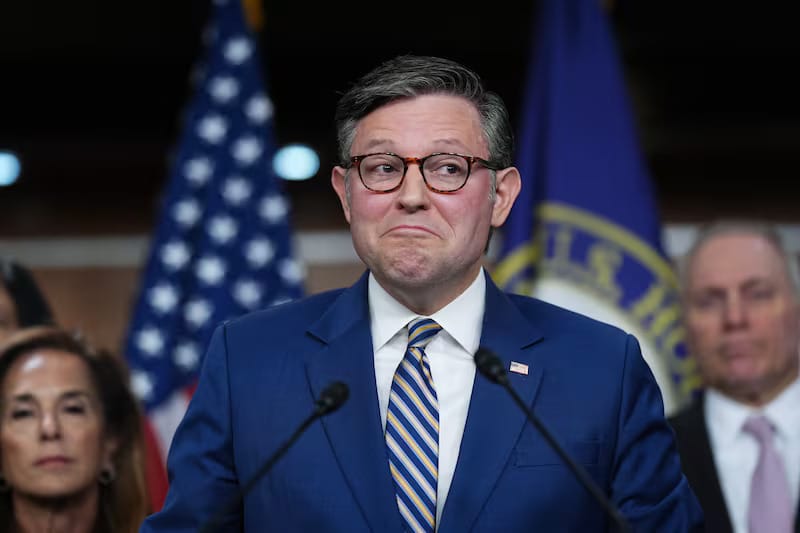
The Next Test Is Whether the Senate Changes the Deal
The cleanest path is simple: the Senate accepts or lightly modifies the House approach, both chambers move the bill, and the government avoids a September 30 lapse. That outcome would give Congress breathing room.
The harder path is more likely to reveal the real pressure. Democrats may demand changes. Republicans may resist anything that looks like surrender. Conservatives may push for spending discipline. Defense hawks may worry about national security funding. A short-term funding bill can become a proxy war for almost every unresolved priority in Washington.
The economic stakes are not imaginary. The shutdown impact analysis around lapses in discretionary appropriations shows why even temporary disruption can ripple through federal pay, contracts, and agency operations.
That is why the stopgap funding bill deserves more attention than a routine House vote. Congress may have avoided one deadline, but it has not solved the governing problem underneath it.
If the Senate turns this into a broader negotiation, December becomes the new danger zone. If both chambers move quickly, Washington buys itself time. Either way, the stopgap funding bill is not proof that the shutdown fight is over. It is proof that Congress knows exactly how dangerous the fight has become.