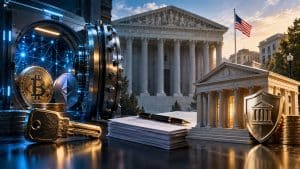
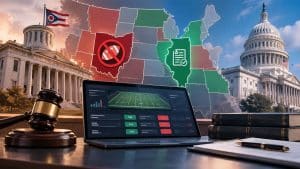
Sports betting in Florida continues its operations as the legal saga unfolds, with the state’s Supreme Court abstaining from intervention last week while a U.S. Supreme Court challenge remains in play.
Florida, now the largest state to venture into legalized sports betting, sees the Seminole Tribe resuming its sports betting app, reintroduced to a limited audience this month. The tribe plans to extend its offerings with in-person sports betting at its six Florida casinos in early December, marking a significant development in the complex legal landscape surrounding the industry.
Timeline
In October, the U.S. Supreme Court permitted a lower court ruling to stand, paving the way for the Seminole Tribe to restart its sports betting operations in Florida. Associate Justice Brett Kavanaugh underscored that the decision specifically pertained to the contract between Florida and the tribe, emphasizing restrictions on gambling within tribal lands to avoid potential violations of federal law.
Chairman Marcellus Osceola Jr. expressed gratitude in a statement, thanking the state of Florida, the U.S. Department of the Interior, and the U.S. Department of Justice for their roles in defending the tribe’s Compact. Simultaneously, the tribe announced the reintroduction of in-person craps, roulette, and sports betting. A week later, the Hard Rock Bet app saw a re-release, facilitating mobile sports betting for users.
The journey to legal sports betting in Florida dates back to 2018 when the U.S. Supreme Court nullified the Professional and Amateur Sports Protection Act, allowing states to permit sports gambling. Florida, with its unique “hub and spoke” model, granted the Seminole Tribe exclusive rights, entailing a state monopoly on sports betting. This agreement, exchanged for substantial financial benefits, has triggered legal battles, with West Flagler Associates and Bonita-Fort Myers Corp. challenging the 2021 contract with a motion to suspend sports betting provisions.
Legal Intricacies
The legal intricacies revolve around a state constitutional amendment from 2018, prohibiting casino gambling without citizen initiative approval. Legal expert Daniel Wallach notes the pivotal question: whether sports wagering, categorized as a casino game, falls within the amendment’s exception for tribal lands.
Geography becomes a decisive factor, as the state contract allows the Seminole Tribe to operate a “hub and spoke” sports gambling structure, defining its location on tribal land. The constitutional amendment mandates any gambling expansion to be voter-approved but still permits lawmakers to negotiate gambling contracts with Native American tribes for casino gambling on tribal lands.
The economic implications are substantial, with the potential to impact all online casino games. Nationwide, Americans have legally wagered $220 billion in sports betting over the past five years, generating $3 billion in state and local taxes, as per the American Gaming Association’s estimates.
Seminole’s Influence
The Seminole Tribe’s influence on gambling in Florida has been significant, running multiple casinos and contributing to legal advancements in tribal sovereignty. Despite the legal challenges and lawsuits, the tribe remains at the forefront of the gambling landscape.
In a recent legal development, West Flagler Associates’ motion to suspend the relaunch of Hard Rock’s sports betting app was denied by the State’s Supreme Court. The Seminole Tribe, pleased with the decision, anticipates further legal proceedings. However, challenges persist for West Flagler, with the U.S. Supreme Court yet to rule on the case and the Florida State Supreme Court’s decision focusing on app shutdown without ruling on its legality.
Granting a sports betting monopoly to the Seminoles may have repercussions, potentially limiting consumer choices and driving bettors to offshore platforms with more favorable deals. Legal expert Daniel Wallach emphasizes the uniqueness of Florida’s situation, noting that no other state of similar size has granted a sports-betting monopoly to a single entity.