Asia-Pacific bank credit risk is becoming one of the most important global banking stories because the pressure is arriving through several channels at once. Higher energy costs, weaker borrower conditions, supply-chain strain, and slower growth expectations are forcing lenders to think less about expansion and more about resilience.
This is not a classic banking panic, and that distinction matters. The current concern is more subtle: banks across the region are preparing for credit deterioration before the damage fully appears, which makes provisions, capital planning, and borrower quality the real signal to watch.
Why Asia-Pacific Bank Credit Risk Is Back In Focus
The current Asia-Pacific bank credit risk story is not just about one country or one balance sheet. It is about how external shocks move through banking systems that look stable on the surface but remain exposed to energy prices, trade flows, inflation, and fragile borrower margins.
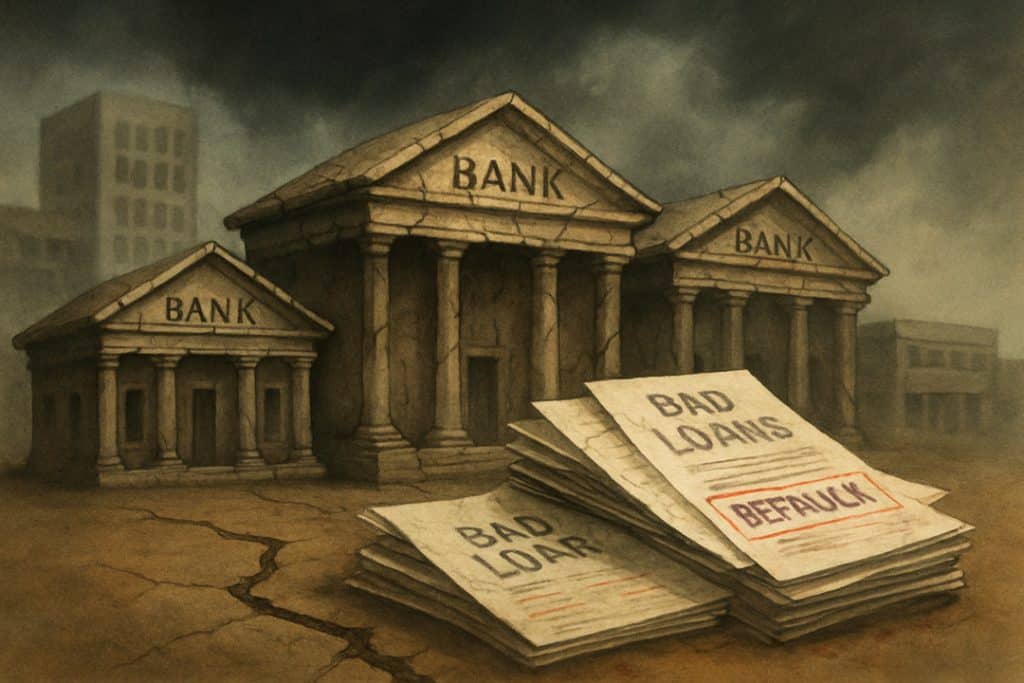
Banks do not need a crisis to become more cautious. They only need enough evidence that future losses may rise. That is why loan-loss provisions matter. A provision is not the same as an actual default, but it is a bank’s way of preparing for possible losses before they fully arrive. When lenders increase those buffers, they are telling the market that the operating environment has become more difficult.
The Asia-Pacific region is especially sensitive because it contains very different banking systems under one broad label. Australia has large, concentrated banks tied closely to households, property, and business confidence. Singapore is a financial hub with regional exposure, wealth flows, and trade sensitivity. India has stronger domestic growth but still faces imported energy and funding pressures. Smaller Pacific economies can feel fuel and shipping shocks quickly because they are import-dependent.
That diversity makes the region hard to generalize, but the direction is clear. Credit quality is no longer a background issue. It has moved closer to the center of bank earnings, investor sentiment, and regulatory judgment.
What Rising Loan-Loss Provisions Really Mean
Loan-loss provisions are often misunderstood because they sound technical. In practical terms, they are the money banks set aside when they believe some borrowers may struggle to repay. They reduce current profit, but they can protect the balance sheet later. That is the trade-off.
When provisions rise, investors should not automatically assume disaster. Sometimes higher provisions show discipline. A bank that prepares early can absorb stress more calmly than one that waits for defaults to surge. The concern grows when provisions rise because borrower conditions are clearly weakening and management does not know how deep the losses may become.
The current environment is pushing banks toward caution. Higher energy prices can hurt airlines, transport firms, manufacturers, retailers, tourism operators, and households. Supply-chain disruptions can delay revenue and raise costs. Higher-for-longer interest rates can tighten refinancing conditions. Weaker growth can reduce demand. Each factor can pressure borrowers individually, but the real risk comes when several arrive together.
That is why credit provisioning is a forward-looking banking topic. It is less dramatic than a failed lender and more revealing than a single quarterly profit number. Provisions show how banks are reading the road ahead.
For investors, the key question is not simply whether provisions are rising. It is whether they are rising from a position of strength or from delayed recognition. A well-capitalized bank can treat provisions as an early buffer. A weaker lender may treat them as the first visible sign of a deeper problem.
The Energy Shock Is A Banking Story
Energy prices do not usually sound like a bank earnings story, but they can become one quickly. When fuel, freight, and power costs rise, borrowers with thin margins are forced to absorb higher expenses or pass them on to customers. Not every business can do that.
The pressure often begins outside the bank. A shipping company faces higher fuel costs. A manufacturer pays more for inputs. A tourism operator sees travel demand soften. A household spends more on essentials. Eventually, those pressures reach lenders through missed payments, weaker cash flow, lower loan demand, or requests for restructuring.
That is why energy exposure deserves more attention in Asia-Pacific credit analysis. Many economies in the region depend heavily on imported fuel. When energy costs rise, the impact can spread across consumers, small businesses, transport networks, and government budgets. Banks may not directly lend to the source of the shock, but they still finance the people and companies hit by it.
The danger is not only default. It is margin compression. A borrower can remain current while becoming less flexible. That borrower may delay investment, draw down liquidity, reduce hiring, or rely more heavily on credit lines. The bank may still get paid, but the credit profile weakens. That kind of deterioration can build quietly.
This is where provisions become a warning rather than a headline. They reflect the possibility that stress is moving from cost pressure into credit outcomes.
The Countries To Watch Closely
Asia-Pacific banking risk is not evenly distributed. The pressure will depend on each country’s economic mix, borrower base, capital buffers, energy exposure, and policy flexibility.
| Market Area | Key Pressure Point | Why It Matters For Banks |
|---|---|---|
| Australia | Household debt, property sensitivity, business cost pressure | Large banks are highly exposed to domestic borrowers and confidence cycles |
| Singapore | Regional trade, wealth flows, corporate exposure | Banks can feel stress through cross-border clients and commercial activity |
| India | Energy imports, corporate refinancing, uneven borrower strength | Growth remains important, but higher costs can pressure weaker borrowers |
| Pacific economies | Fuel, freight, tourism, fiscal strain | Smaller markets can feel external shocks quickly through import costs |
| Japan and North Asia | Corporate margins, non-bank links, global demand | Banks face indirect risks through companies and financial-market exposure |
This table is not a prediction of bank failures. It is a map of sensitivity. Credit risk usually follows stress channels, and those channels differ by market. A mortgage-heavy bank does not behave like a trade-finance bank. A lender exposed to small businesses does not carry the same profile as one concentrated in large corporations.
Australia is worth watching because household and property dynamics often shape bank sentiment. If consumers become more cautious and businesses face higher costs, banks may need to balance loan growth against credit protection. Singapore is important because its banks often reflect regional commercial flows. India is important because it combines scale, growth, and imported-energy sensitivity.
The broader Asia-Pacific economic outlook also matters because banks rarely weaken in isolation. Slower growth, weaker trade, and higher operating costs can change the borrower environment even when banks themselves remain well capitalized.
Why Banks May Still Be Stronger Than The Headlines Suggest
Rising provisions are not the same as a banking-system breakdown. Many Asia-Pacific banks entered this period with stronger capital, better regulation, and more conservative risk controls than in past stress cycles. That gives them room to absorb pressure, though it does not eliminate uncertainty.
The current provision levels also appear more precautionary than catastrophic in many cases. Banks are not necessarily saying large losses have already arrived. They are preparing for the possibility that losses could rise if energy costs, interest rates, and weaker borrower conditions persist.
That distinction is important for readers and investors. A cautious bank is not automatically a weak bank. In fact, early provisioning can be a sign of quality management. The more dangerous bank is often the one that insists everything is fine until borrowers begin failing in large numbers.
Still, strong banks are not immune. Profitability can fall even without a crisis if provisions rise, loan growth slows, funding costs remain elevated, and weaker borrowers require more monitoring. Bank stocks can also reprice before actual credit losses become visible. Markets do not wait for perfect evidence. They respond to expectations.
That is why this story sits between concern and crisis. The banking system may be prepared, but investors are right to question whether current buffers are enough if the macro environment worsens.
The Investor Read: Watch Provisions, Not Just Profit
Bank earnings can look healthy while risk is building underneath. A strong revenue quarter may hide the fact that management is raising provisions or warning about weaker borrowers. That is why investors should read beyond headline profit.
The first line to watch is provision growth. If provisions rise modestly while asset quality remains stable, banks may be acting prudently. If provisions keep rising alongside nonperforming loans, overdue payments, and borrower restructuring, the credit cycle may be turning more seriously.
The second line is net interest margin. Higher rates can help bank income when loan yields rise faster than funding costs. But if rates stay high long enough to weaken borrowers, the benefit can turn into pressure. Banking is full of that kind of tension.
The third line is management commentary. Banks usually speak carefully, so small language changes matter. Words around caution, uncertainty, stress, watchlists, and borrower behavior can reveal more than promotional language around growth.
The fourth line is sector exposure. Transport, energy-intensive manufacturing, commercial property, small business lending, and consumer credit can react differently to the same shock. A bank’s risk depends less on the regional headline and more on where its loans actually sit.
Investors should also avoid assuming that every bank faces the same outcome. Strong capital, diversified earnings, disciplined underwriting, and early provisioning can create meaningful separation between lenders.
What Regulators Are Likely To Watch
Regulators will be focused on whether banks are recognizing risks early enough. That does not mean forcing panic. It means making sure banks do not understate credit weakness, delay provisions, or rely on optimistic assumptions when borrower stress is rising.
The most important regulatory question is whether banks have enough capital and liquidity to absorb a worse scenario. Loan-loss provisions help, but they are only one layer of protection. Capital ratios, funding stability, collateral quality, stress tests, and exposure concentration all matter.
Regulators may also look more closely at non-bank connections. In modern finance, credit stress does not always begin inside banks. It can start with private credit funds, insurers, asset managers, commodity traders, or leveraged corporate borrowers. Banks can still be connected through lending lines, derivatives, custody, settlement, or client relationships.
That wider network creates complexity. Traditional bank supervision is easier when risks sit clearly on bank balance sheets. It becomes harder when exposures are indirect, layered, or spread across markets. Asia-Pacific banks may not carry the same private-credit profile as U.S. or European institutions, but global financial connections still matter.
The likely regulatory posture is caution without alarm. Supervisors will want realistic provisioning, credible stress scenarios, and careful treatment of vulnerable borrowers. They will also want banks to maintain lending discipline rather than chase growth to offset margin or provision pressure.
Why Borrowers May Feel The Shift First
For ordinary borrowers, rising bank caution may show up before any major headline does. Loan approvals can become slower. Pricing can tighten. Credit limits can be reviewed more closely. Banks may ask more questions about cash flow, collateral, and refinancing plans.
Businesses with strong balance sheets may barely notice. Weak borrowers will notice quickly. That is how credit cycles often work: the first visible change is not widespread default, but reduced access for the least resilient borrowers.
Small and midsize businesses can be especially sensitive. They may not have the same access to bond markets, private capital, or diversified funding sources as large companies. When costs rise and banks become cautious, those businesses can face a painful choice: pay more for financing, delay investment, cut costs, or search for alternative lenders.
Households may also feel the shift through mortgage affordability, personal lending standards, and credit-card behavior. If wages do not keep pace with costs, banks will watch repayment patterns more closely. That does not mean a consumer crisis is inevitable, but it raises the importance of early signals.
The banking sector is often described through capital ratios and provisions, yet the real economy feels the change through credit availability. That is why this topic matters beyond investors.
The Trade-Off For Bank Management Teams
Bank executives face a difficult balancing act. If they raise provisions too aggressively, they may pressure profit and alarm investors. If they move too slowly, they may appear complacent when credit losses eventually rise. The right answer requires judgment.
They also have to decide how much to lend in a less certain environment. Pulling back too sharply can hurt growth and customer relationships. Lending too freely can create future losses. That balance is especially difficult when shocks come from outside the credit system, such as energy prices or geopolitical tension.
The strongest banks will likely do three things well. They will identify vulnerable borrowers early. They will price risk realistically. They will communicate clearly without sounding defensive. Those are basic principles, but under stress, basic principles become execution tests.
Management teams must also avoid using one strong business line to distract from another weak one. A bank may have solid fee income or trading revenue while credit risk rises in the loan book. Investors should reward banks that present a complete picture.
The best leadership in this environment is not dramatic. It is measured, transparent, and willing to sacrifice some near-term profit for long-term balance-sheet credibility.
How This Connects To The Wider Banking Story
The Asia-Pacific credit story fits into a larger global banking theme: lenders are facing a world where risks are more connected and less predictable. Rate uncertainty, geopolitical shocks, private credit growth, energy costs, and borrower stress all feed into each other.
This is why regional banking stories should not be treated in isolation. A credit signal in Asia-Pacific can matter to global investors because large banks, multinational companies, insurers, and asset managers operate across borders. When one region becomes more cautious, global lending sentiment can shift.
The same dynamic is visible in U.S. and European banking, where investors continue to question profitability, credit quality, and the durability of turnaround plans. A useful comparison is this broader banking market perspective, where execution and investor confidence are just as important as headline targets.
That connection matters because banks are confidence businesses. They borrow, lend, invest, and intermediate based on the belief that risks are understood and priced correctly. When that belief weakens, even strong banks become more conservative.
The Asia-Pacific provision story is not a signal that the region’s banks are broken. It is a signal that the margin for easy optimism is shrinking.
What Readers Should Watch Next
The first thing to watch is whether provisions keep rising in the next reporting cycle. One cautious quarter can be prudent. A pattern across multiple banks and markets would suggest a broader credit turn.
The second thing is actual asset quality. Nonperforming loans, delinquencies, restructurings, and watchlist loans will matter more than broad commentary. If those indicators stay stable, provisions may remain manageable. If they deteriorate, the story becomes more serious.
The third thing is energy-price persistence. A short shock is easier to absorb. A prolonged period of elevated costs can reshape borrower cash flow, inflation expectations, and central-bank policy. That would increase the burden on banks and borrowers alike.
The fourth thing is capital-market sentiment. Bank stocks can reprice quickly if investors believe credit losses are being underestimated. Equity markets are not perfect, but they often react before loan books show the full impact.
The fifth thing is policy response. Central banks, finance ministries, and regulators may need to balance inflation control against growth support. That balance will affect borrower conditions and bank profitability.
The Bottom Line On Asia-Pacific Bank Credit Risk
Asia-Pacific bank credit risk is rising because the region is being tested by a mix of higher energy costs, weaker borrower conditions, supply-chain pressure, and slower growth expectations. The concern is not that banks are suddenly fragile. The concern is that credit conditions are becoming less forgiving.
That makes loan-loss provisions the number to watch. They show how banks are preparing for the possibility that today’s macro pressure becomes tomorrow’s borrower stress. Some lenders may handle that shift well. Others may reveal weaker underwriting, thinner buffers, or heavier exposure to vulnerable sectors.
The opportunity for strong banks is to prove that caution can be a competitive advantage. Early provisioning, disciplined lending, and clear communication can build confidence when markets are nervous. The risk is that a prolonged shock turns precaution into actual losses and forces banks to defend both earnings and balance sheets at the same time.
Asia-Pacific bank credit risk deserves attention now because it sits at the intersection of banking, energy, inflation, trade, and borrower behavior. The next few quarters will show whether this is a manageable provision cycle or the beginning of a deeper credit-quality test. Either way, lenders are already bracing for a tougher environment, and investors should be watching the buffers before the losses arrive.