Fintech banking rails have become the newest pressure point in the fight over who gets direct access to America’s financial infrastructure. Washington’s latest push is not just about helping startups move money faster; it is about challenging the banking industry’s long-standing role as the gatekeeper between consumers, payment systems, and non-bank financial innovation.
That is why banks should treat this moment seriously. A policy shift that sounds technical on paper could reshape competition, compliance, deposits, payment costs, and the balance of power between regulated banks and the fintech companies that rely on them.
Fintech Banking Rails Are Becoming A Gatekeeper Fight
The central issue is simple: fintech firms want easier access to the systems that move money, while banks want regulators to remember why those systems have traditionally been tightly controlled.
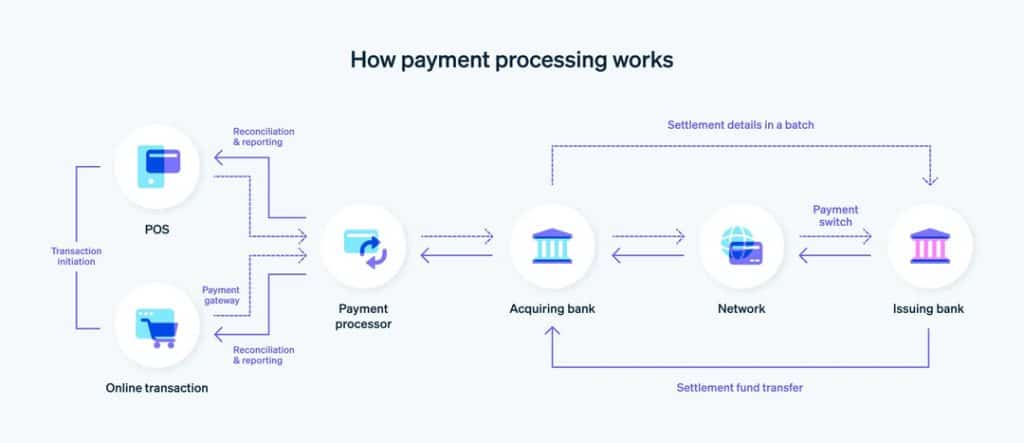
For years, non-bank payment companies, digital asset firms, neobanks, and other financial technology platforms have often depended on partner banks to reach core payment infrastructure. That arrangement gives banks leverage. It also gives regulators a familiar supervisory chain: if the fintech is not directly regulated like a bank, the bank partner becomes the control point.
The policy conversation is now shifting. The May 19 White House order on integrating financial technology innovation into regulatory frameworks pushes federal financial regulators to reduce unnecessary barriers and asks the Federal Reserve to evaluate how certain non-bank financial companies may access Reserve Bank payment accounts and services.
That is the sentence banks cannot ignore. If more firms can connect closer to the payment core, banks may lose part of the infrastructure advantage that has protected them from faster, cheaper, more flexible competitors.
The fight is not only about innovation. It is about who controls access.
Washington Is Framing Innovation As A Competition Problem
The political framing matters. If fintech access is treated mostly as a safety question, banks have the stronger argument. If it is treated as a competition question, fintech firms gain ground.
Washington’s message is leaning toward competition. The argument is that old supervisory bottlenecks may protect incumbents more than consumers. That does not mean regulators will simply open the door and let every non-bank firm plug into payment systems. But it does mean the burden of explanation may shift.
Banks will need to show that restricted access is about risk management, not market protection. Fintech companies will need to prove that direct or expanded access can happen without weakening anti-money-laundering controls, liquidity management, cybersecurity, consumer protection, or payment-system stability.
That is where the debate becomes more complicated than a “banks versus fintech” story. Faster payments can help consumers and businesses. Lower friction can support competition. Better access can reduce dependency on fragile banking partnerships. But payment systems are not ordinary technology platforms. They are part of the financial system’s plumbing.
A broken app is inconvenient. A broken payment rail can become systemic.
The Fed’s Payment Account Proposal Shows The Compromise Path
The Federal Reserve’s move may become the practical middle ground. The Board’s May 20 request for public comment on a proposed payment account for clearing and settling payments points toward a narrower access model rather than a full master-account free-for-all.
That distinction matters. A limited payment account can be designed for clearing and settlement without giving firms the full privileges traditional banks may access. That helps regulators test a more open framework while keeping guardrails around credit, liquidity, and operational risk.
In plain English, the Fed appears to be exploring a way to let eligible firms get closer to the payment system without automatically giving them the same backstops banks receive. That is a crucial compromise because it recognizes both sides of the argument. Fintech companies have a real need for faster, more direct access. Banks and regulators have a real reason to worry about firms that touch payment infrastructure without carrying the same obligations as insured depository institutions.
Here is the policy tension in a cleaner form:
| Issue | Traditional Bank Position | Fintech Position | Regulatory Pressure Point |
|---|---|---|---|
| Payment access | Banks should remain the main supervised gateway | Qualified non-banks should have more direct access | Who is eligible and under what conditions |
| Risk controls | Direct access could weaken oversight | Modern compliance tools can manage risk | AML, fraud, cybersecurity, and liquidity standards |
| Competition | Banks carry heavier regulatory burdens | Bank dependency raises costs and limits innovation | Whether rules protect safety or incumbents |
| Consumer impact | Stability should come before speed | Faster, cheaper payments benefit users | How to expand access without reducing protection |
| System design | Payment rails are public-trust infrastructure | Legacy access rules need modernization | Whether limited accounts can balance innovation and safety |
The table shows why this debate will not be solved by slogans. The best answer may not be full exclusion or full access. It may be a tiered model that matches privileges to risk, supervision, capital, liquidity, and operational controls.
Banks Are Not Just Defending Old Turf
It is easy to frame banks as slow incumbents trying to protect their market position. Sometimes that critique is fair. Many consumers experience banking as expensive, outdated, and full of unnecessary friction.
But banks also operate under a regulatory structure that fintech firms often do not carry in the same way. Banks must manage examinations, capital expectations, liquidity obligations, customer due diligence, sanctions compliance, fraud controls, deposit relationships, and operational resilience. When fintech firms want access to the same core infrastructure, banks reasonably ask whether the rules are being applied evenly.
That is why confidential supervision and bank exam standards matter in this conversation. The more access policy changes, the more regulators will need credible tools to evaluate risk behind the scenes, including issues tied to confidential bank ratings and supervisory confidence.
The smart banking response is not to reject fintech access reflexively. It is to demand a clear risk framework. If a non-bank firm wants to move closer to the payment core, it should show how it handles compliance failures, cyber incidents, liquidity stress, fraud spikes, customer disputes, and operational outages.
That is not anti-innovation. That is risk-based access.
Fintech Firms Now Face Their Own Credibility Test
Fintech companies may like the direction of travel, but expanded access comes with a trade-off. The closer a firm gets to payment infrastructure, the harder it becomes to operate with the looseness of a consumer app.
That means more documentation, more controls, more audits, more regulatory scrutiny, and fewer excuses when things go wrong. A fintech company that wants bank-like access must be prepared for bank-like expectations, even if the rules are tailored rather than identical.
This is where the strongest fintech firms could separate from weaker operators. Companies with mature compliance teams, resilient systems, transparent governance, and clear customer protections may benefit from the new policy environment. Firms built mainly on speed, marketing, and regulatory arbitrage may struggle.
The opportunity is real. Direct or improved payment access could reduce dependency on bank partners, lower costs, improve transaction speed, and support more reliable payment products. But the price of that opportunity is higher accountability.
Fintech firms asked for a more serious seat at the table. Washington may be giving them one. Now they have to prove they belong there.
The Next Signal Is How Regulators Define The Guardrails
The next phase will come down to implementation, not rhetoric. Regulators can support innovation while still writing rules that make direct access difficult in practice. They can also create a narrow path that helps the strongest firms while leaving most of the market dependent on bank partnerships.
The most important signals will be eligibility standards, account limitations, treatment of uninsured firms, cybersecurity expectations, fraud responsibilities, and whether access applies broadly or only to specific categories of institutions. Banks will also watch whether regulators require comparable oversight for firms performing comparable payment functions.
For consumers and businesses, the practical question is whether this leads to better financial products without weakening trust. Faster payments are useful. Lower costs are attractive. More competition can be healthy. But none of that helps if users face more fraud, weaker dispute handling, or payment failures during stress.
Fintech banking rails are now a live policy test for the future of U.S. financial infrastructure. The opportunity is a faster, more competitive payment system; the risk is building new access points before the safeguards are strong enough. Banks may no longer control the conversation as easily as they once did, but fintech firms are about to learn that getting closer to the rails also means getting closer to the rules.