Fintech consumer banking is no longer a side bet on slick apps and colorful debit cards. It is becoming a direct challenge to how banks defend deposits, payments, credit relationships, and the customer’s daily financial habits.
That matters for anyone watching digital money move through betting, crypto, wallets, and financial apps. The same consumer who compares payout speed across online betting sites is also learning to judge banks by transfer speed, verification friction, account access, and how quickly an app solves a money problem.
Fintech Consumer Banking Has Become A Daily Habit Fight
The old fintech pitch was convenience. Send money faster. Split payments cleaner. Get a better app. Avoid the branch. That was annoying for banks, but not always existential.
The newer pitch is more dangerous: keep your spending, saving, credit, international transfers, and eventually digital-dollar activity inside one app.
That is where banks should start sweating. A customer does not wake up thinking about balance-sheet structure. A customer thinks, “Where is my paycheck? Can I move this money? Why is this transfer still pending? Why does this app make the basic thing easier?”
Once fintech becomes the place where money is managed every day, the bank risks becoming plumbing. Valuable plumbing, yes. But still plumbing.
The interface owns loyalty. That is the pressure point banks cannot ignore.
Revolut, Klarna And Wise Show Three Different Attacks
The fintech threat is not one company doing one thing. It is a group of firms attacking different parts of consumer banking at once.
Revolut is pushing the super-app model: payments, cards, currency, investing, crypto exposure, and banking ambitions under one digital roof. The OCC’s list of digital asset applications includes Revolut Bank US, N.A., received March 4, 2026, which shows how app-first finance keeps trying to move closer to the regulated banking perimeter.
Klarna is coming from a different direction. It built consumer familiarity through buy now, pay later and merchant checkout, then moved deeper into everyday money management. Its U.S. savings launch added FDIC-insured accounts through WebBank, with no monthly fee, no minimum deposit, direct deposit, and app-based savings tools tied to Klarna’s broader financial hub.
Wise is the cautionary example. Its U.S. national trust bank application was declined in July 2026, a reminder that fintech ambition still has to survive regulatory review. That does not kill the model. It does show the gate is not wide open just because policymakers want more financial innovation.
The pattern is clear. Fintechs want the customer relationship first, then more banking power later.
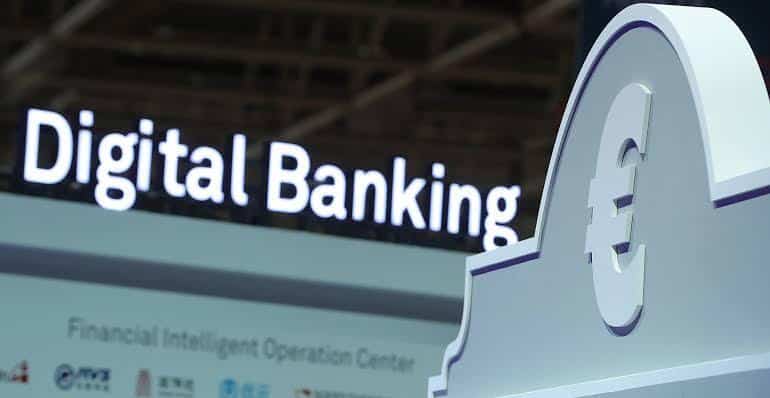
Big Banks Still Have The Balance Sheet Advantage
This is where the “fintech will kill banks” argument gets too cute. Banks are not helpless dinosaurs waiting for a meteor.
Large banks have capital, deposits, lending capacity, compliance infrastructure, card networks, fraud teams, government relationships, and decades of consumer trust. Even younger customers who dislike bank apps often still want the security of a real bank when something goes wrong.
That advantage matters. When a payment fails, a deposit disappears, or an account gets frozen, the customer suddenly cares less about app design and more about accountability.
Banks also benefit from inertia. Direct deposit is sticky. Mortgage relationships are sticky. Business banking is sticky. People complain about banks for years and still do not switch because switching is boring, paperwork-heavy, and easy to postpone.
But inertia is not a strategy. It is a cushion. The longer banks rely on it, the more room fintechs get to chip away at the daily-use layer.
Trust is not automatic once consumers start handling money across multiple apps.
The Decision Factors Are Changing For Consumers
The banking choice used to be branch access, checking fees, ATM networks, and maybe a savings rate. Those still matter, but the modern consumer banking decision is wider now.
A user may hold deposits at a bank, send money through a fintech, use a credit product at checkout, keep crypto in a separate wallet, and move funds through a sportsbook or trading app. That is not clean. It is messy, fragmented, and very normal.
Here is the decision-factor split banks and fintechs are fighting over:
| Decision Factor | Traditional Bank Edge | Fintech Edge | Consumer Risk |
|---|---|---|---|
| Deposit safety | Strong regulated structure | Often depends on partner-bank setup | Confusion over who protects funds |
| Payment speed | Improving but uneven | Faster app-based experience | More fraud and account-freeze concerns |
| Credit access | Deep underwriting history | Checkout-level convenience | Overspending or unclear repayment habits |
| User experience | Better than before, still mixed | Usually cleaner and faster | Convenience can hide complexity |
| Digital assets | Cautious and limited | More willing to experiment | Higher compliance and volatility risk |
The table shows the real fight. Banks do not need to copy every fintech feature. Fintechs do not need to become full-service banks overnight. Both sides are trying to control the customer’s next financial action.
That is the battlefield.
Stablecoins Make The Consumer Banking Fight Bigger
Stablecoins pull this debate out of ordinary checking accounts and into digital-dollar infrastructure.
If stablecoins become more common for payments, remittances, trading, or platform transfers, fintechs could gain another way to route money around traditional bank experiences. That does not mean banks disappear. It means banks may lose more of the visible relationship while still supporting the background system.
Banks are already responding with tokenized deposits, real-time payment upgrades, and closer attention to digital-asset licensing. Fintechs are pushing from the other side, arguing that customers want money to move like the internet, not like a bank holiday calendar.
The best version of the future would combine speed with strong consumer protection. The worst version would create confusion: app balances that feel like bank deposits, crypto products that feel like cash, and customers who only learn the difference when a problem hits.
That is why the regulatory fight matters. Speed is attractive. But in finance, speed without clarity can become the next customer-trust problem.
The Next Pressure Point Is Who Controls The Paycheck
The most important consumer banking battle may not be crypto, stablecoins, or even savings accounts. It may be direct deposit.
Once a fintech app becomes where the paycheck lands, everything changes. That app can offer savings tools, card spending, credit products, investing, crypto access, international transfers, merchant rewards, and financial recommendations. The bank that used to own the primary relationship becomes optional.
Klarna’s U.S. savings launch is a useful signal because it ties everyday spending to savings inside the same consumer app. That is exactly the type of product expansion banks should watch closely. Not because every customer will switch tomorrow. Because small habits compound.
Banks still have the safer hand if the contest is balance-sheet strength. Fintechs have the cleaner opening if the contest is customer attention.
Fintech consumer banking matters now because the fight has moved from novelty to infrastructure. Banks can still win, but not by assuming customers will stay loyal to institutions that move slower, explain less, and make digital money feel harder than it needs to be. The next winner in consumer banking will not simply hold the money. It will make the customer feel in control of it.