I have rarely seen a market anxiety stay neatly contained inside the corner where it begins. What starts as a stress point in a specialized credit market has a way of migrating first into liquidity, then into confidence, and finally into the balance sheets of institutions that insist they are only watching from the sidelines.
That is why private credit risk now deserves to be treated as one of the defining banking stories of the moment. This is no longer just a conversation about alternative lenders, wealthy investors, or the mechanics of closed-end fund structures. It is a broader test of how modern finance behaves when redemption pressure, tighter liquidity, and fragile sentiment collide at scale.
Why This Story Has Moved To Center Stage
For years, private credit was framed as one of the market’s great post-crisis success stories. As banks pulled back from some forms of lending, nonbank lenders stepped in. They offered speed, flexibility, and direct access to borrowers that were often too complex, too leveraged, or too bespoke for traditional lending channels. The sector benefited from a long era of low rates, abundant capital, and investor appetite for yield.
But every fast-growing market eventually reaches the moment when expansion gives way to scrutiny. In private credit, that moment has arrived. The issue is not simply whether a handful of funds face withdrawal requests or whether individual deals will sour. The more important question is what happens when pressure inside this market spills outward.
That spillover matters because the financial system is more interconnected than it looks on paper. Banks may not originate every loan in the private credit ecosystem, but they finance counterparties, warehouse assets, provide subscription lines, manage cash, clear transactions, and share exposure through overlapping investor bases. When stress emerges in one part of the chain, it rarely stays there.
The Banking System Is Not Separate From The Shock
One of the most persistent myths in modern finance is that risks can be cleanly segmented. There is a tendency to describe nonbank finance as if it exists in a parallel universe adjacent to banks, but not materially entangled with them. That assumption has always been too neat.
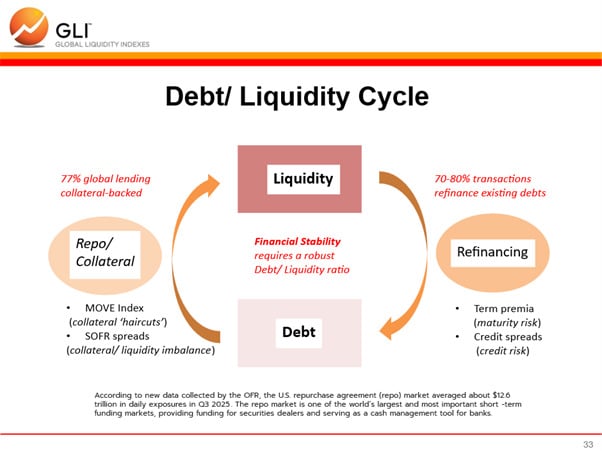
The real transmission channels are subtler and, for that reason, more dangerous. If investors demand cash from private-credit vehicles, managers may need to slow distributions, sell what they can, or renegotiate terms. That changes liquidity assumptions across the market. It also alters pricing signals. Assets that once looked stable suddenly look hard to value, and hard-to-value assets have a way of tightening credit conditions far beyond their immediate niche.
Banks feel this in several ways. Funding markets can become more defensive. Risk committees can toughen underwriting standards. Loan spreads can widen, even for borrowers outside the private-credit complex. In some cases, banks may also face second-order effects through asset-management affiliates, structured financing relationships, or reduced client activity. The issue is not whether banks hold every underlying exposure directly. The issue is whether private credit risk changes the behavior of the broader system.
Liquidity Is The Real Pressure Point
At the heart of this story is a mismatch that markets repeatedly underestimate: investors often expect a smoother exit than the underlying assets can realistically provide. Private credit is built around loans that are not meant to trade like public bonds. They are negotiated, customized, and relatively illiquid by design.
That model works comfortably when capital is patient. It looks less comfortable when investors want optionality at the same time. Once redemption pressure enters the picture, the market confronts an old truth in a new wrapper: liquidity is abundant until it is suddenly scarce.
This is where the banking angle becomes especially important. Banks are not only intermediaries of credit; they are intermediaries of confidence. When confidence in valuation, liquidity, or counterparty resilience starts to wobble, banks adjust quickly. They hold more cash, lend more selectively, demand tighter terms, and revisit assumptions that may have looked reasonable only weeks earlier. In practical terms, that means conditions for businesses and households can tighten even without a formal banking crisis.
For anyone trying to understand private credit risk, the right frame is not whether one fund gates withdrawals or one lender stumbles. It is whether the market begins to doubt the reliability of liquidity across the wider nonbank credit universe.
Higher Rates Have Changed The Math
This story would be serious in any environment. It is more serious in a world where money is no longer cheap.
Higher interest rates have reshaped the economics of both borrowers and lenders. Debt-servicing costs are heavier. Refinancing windows are narrower. Covenant pressure is harder to ignore. Even healthy borrowers are operating in a less forgiving landscape, and weaker credits have fewer places to hide. That makes every valuation judgment more consequential.
For banks, this means the margin for error has shrunk. The comforting view that nonbank lenders absorb risk outside the regulated banking perimeter is less persuasive when those same pressures can boomerang into funding, asset prices, and client solvency. The market is relearning a lesson it should already know: when leverage meets illiquidity in a higher-rate world, problems travel.
Regulators Are Watching The Perimeter For A Reason
A notable feature of this moment is that supervisors are no longer focused only on banks in the narrow sense. They are increasingly concerned with what happens at the perimeter of regulated finance, where private funds, shadow lending channels, and market-based credit have grown large enough to matter systemically.
That shift is rational. The next phase of financial instability is unlikely to announce itself in the exact language of the last one. It may not begin with bank runs or mortgage-backed securities. It may begin with redemption friction, valuation uncertainty, and a steady tightening of private capital flows that eventually reaches the real economy through slower lending and weaker risk appetite.
In that sense, private credit risk is not a side story to banking. It is a leading indicator of how resilient the wider credit system really is under pressure.
Why This Matters Now
What matters most now is not headline drama but the cumulative effect of smaller stresses interacting at once. When liquidity assumptions weaken, when funding becomes more cautious, and when lenders pull back at the margin, the consequences build quietly before they become obvious.
I see this as the central point: the health of the banking system can no longer be judged only by what sits on bank balance sheets. It must also be judged by how exposed banks are to the behavior of markets around them especially markets that grew rapidly during easy-money years and are now being tested under far less forgiving conditions.
That is why this topic matters now. Private credit risk has moved from a specialized concern to a systemic one, and the banking industry is the transmission belt through which that stress can spread. The institutions that navigate this period best will be the ones that treat nonbank instability not as someone else’s problem, but as an early warning for the entire credit system.