Digital Wager Wire highlights the most significant events affecting the domestic and international sports betting and gaming industries each week throughout the year.
Kalshi Suffers Silver State Setback
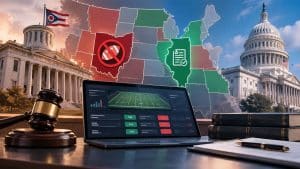
Few, if any, of Kalshi’s opponents are as strident as the Nevada Gaming Control Board (NGCB). And the relentless commission was back at it again when they successfully lobbied a federal judge for a temporary restraining order (TRO) against Kalshi. Although this is far from the last legal salvo to be launched, it will prohibit Kalshi from operating in the Silver State for 14 days.
Nevada Gaming Control Board Chairman Mike Dreitzer said in a press release, “Kalshi has repeatedly stated that its operations are legal in 50 states, which is clearly not true. Prediction markets, to the extent they facilitate unlicensed gambling, are illegal in Nevada, and we have a statutory duty to protect the public. We want people in the state to wager safely at a licensed book.”
Prediction markets offering sports event contracts like Kalshi and Polymarket contend that they are licensed under the federal authority of the Commodity Futures Trading Commission (CFTC), which allows them to operate in all 50 states. However, gaming regulators across the nation vehemently disagree and argue that any form of wagering extended within their boundaries must follow the requisite protocols and licensing procedures.
As for the CFTC, it has stayed above the fray and has yet to take a clear-cut position. However, that appears to be changing as the newly installed CFTC commissioner, Michael Selig, has become increasingly vocal on the topic and appears to be on the precipice of updating rules that will be supportive of the prediction markets.
NCAA Wants Prediction Markets Out of College Sports
Prediction markets are getting attacked from all sides, and the NCAA is just the latest to join their chorus of detractors.
NCAA President Charlie Baker recently penned a letter to the new CFTC chairman, Michael Selig, asking him to prohibit prediction markets from offering sports event contracts on college sports until guardrails are created and a mutually agreed-upon legal framework is instituted.
“First of all, you can start doing it at the age of 18,” Baker said. “[In] almost every state, you can’t gamble legally until you’re twenty or twenty-one; that’s problem number one. Problem number two is they don’t collect the kind of data that you’re required to collect if you’re a sportsbook.”
It is unlikely that Selig will come to the table and barter with Baker, considering his recent comments in favor of the prediction platforms. However, the lack of responsible gambling protocols attached to the sports event contracts has caused concern throughout the nation. Selig may seek to address this issue on his own in order to assuage the sensibilities of those who are demanding it.