Crypto has entered a new political season, and the timing is impossible to ignore. As President Donald Trump prepares to address a cryptocurrency conference and Hong Kong confronts fresh stablecoin confusion around fake “HKDAP” and “HSBC” tokens, the industry is facing a sharper question: who gets to define trust in digital finance?
Crypto Regulation News Is Now A Political Market Signal
I have watched digital assets move through several phases: libertarian experiment, speculative boom, institutional asset class, and now, unmistakably, political infrastructure. The latest wave of crypto regulation news matters because it is no longer only about enforcement actions or technical rulemaking. It is about public authority, voter narratives, investor confidence, and the credibility of financial centers competing for blockchain capital.
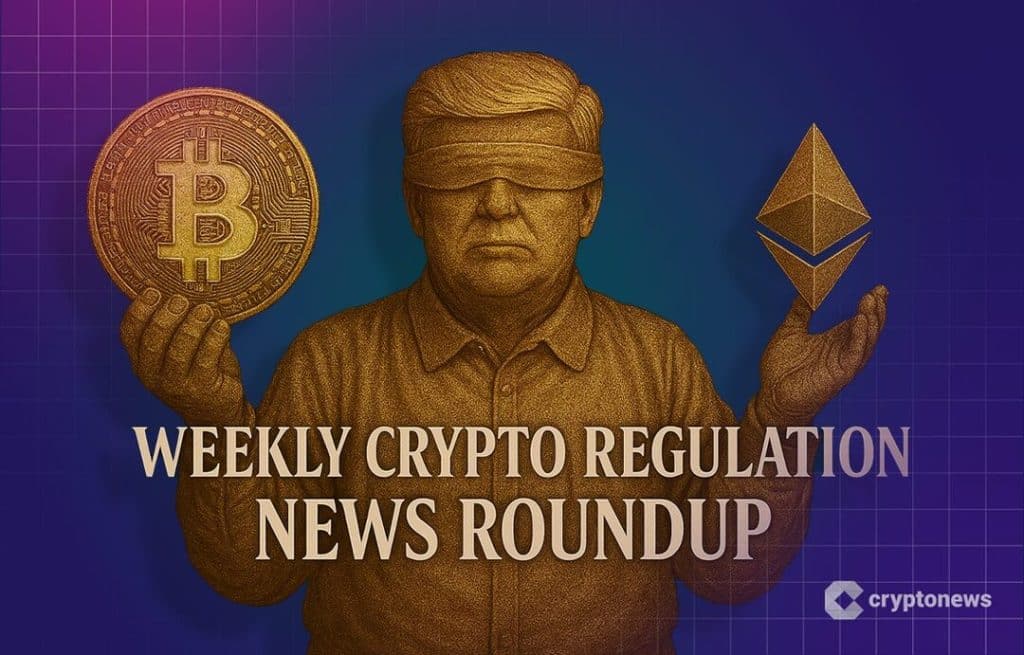
Trump’s planned appearance at a crypto conference is significant because it places cryptocurrency directly inside the machinery of political messaging. For years, crypto advocates argued that regulation should be clear, innovation-friendly, and globally competitive. That argument has now matured into a campaign-stage issue, where digital assets are framed not merely as technology but as economic policy.
At the same time, Hong Kong’s fake stablecoin episode shows the other side of the same coin. When tokens appear to borrow the credibility of public institutions, commercial banks, or official-sounding acronyms, the market is reminded that branding can travel faster than verification. In a sector built on speed, that is a systemic vulnerability.
Trump’s Crypto Appearance Raises The Stakes
Trump’s scheduled crypto conference remarks should not be treated as routine political theater. In the current environment, even symbolic engagement from a major political figure can influence market expectations, lobbying strategy, and retail sentiment.
The crypto industry has long wanted political validation. It wants access to banking, predictable token classification, fair disclosure standards, and a regulatory structure that does not treat every digital asset project as presumptively suspect. A high-profile political speech can help normalize that agenda.
But there is a risk. When crypto becomes closely associated with partisan identity, it can gain short-term visibility while losing long-term institutional neutrality. Financial markets generally prefer regulatory durability. Investors want to know that rules will survive election cycles, agency leadership changes, and shifts in congressional control.
That is why the central issue is not whether Trump sounds friendly to crypto. The more important question is whether political support produces coherent policy. The industry does not need slogans as much as it needs definitions: what is a security, what is a commodity, what is a payment token, what is a stablecoin, and who supervises each category?
Hong Kong’s Stablecoin Warning
Hong Kong’s fake stablecoin headlines are a reminder that regulatory ambition creates imitation risk. When a jurisdiction signals that it wants to become a serious digital asset hub, opportunists often move quickly to exploit public attention.
The reported appearance of fake “HKDAP” and “HSBC” tokens is especially sensitive because stablecoins depend on trust by design. A stablecoin is not simply a crypto token with a price target. It is a claim, or at least the representation of a claim, linked to reserves, redemption rights, issuer credibility, and operational safeguards.
That makes false association especially dangerous. If a token implies a connection to a major bank, a government-linked initiative, or a regulated payment framework when no such authorization exists, the damage can extend beyond individual buyers. It can undermine public confidence in legitimate policy work.
Hong Kong has been trying to position itself as a disciplined digital asset center, not a free-for-all. The fake token issue tests that positioning. The territory’s challenge is to encourage regulated stablecoin development while making clear that no token should receive market credibility simply because it borrows the language of official finance.
The Stablecoin Problem Is Really A Trust Problem
Stablecoins sit at the center of the global crypto debate because they connect blockchain markets with traditional money. They are used for trading, settlement, remittances, liquidity management, and decentralized finance. In practice, they often function as the cash layer of the crypto economy.
That is precisely why regulators care. If a stablecoin issuer lacks adequate reserves, redemption discipline, cybersecurity controls, or transparent governance, the consequences can spread quickly. A loss of confidence can become a digital bank run.
The Hong Kong situation illustrates a more basic risk: consumers may not even know whether a token is real, licensed, affiliated, or fraudulent. In traditional finance, institutional names carry regulatory meaning. In crypto, anyone can create a token name, ticker, logo, or website that appears credible to the untrained eye.
This is why modern crypto regulation news increasingly revolves around market integrity rather than just innovation. The policy debate has shifted from “Should crypto exist?” to “How can users distinguish lawful digital finance from imitation finance?”
Why Political Endorsement Can Cut Both Ways
Political attention can be a powerful accelerant. It can bring crypto into mainstream economic debate, pressure agencies to clarify rules, and encourage financial institutions to build compliant infrastructure. It can also attract retail investors who interpret political visibility as validation.
But political endorsement is not the same as regulatory legitimacy. A speech does not create reserve audits. A campaign position does not define custody standards. A pro-crypto platform does not automatically solve money laundering risk, market manipulation, insider dealing, or consumer protection gaps.
This distinction matters because crypto has repeatedly suffered from confidence cycles. Enthusiasm often arrives first, infrastructure second, and accountability last. The next phase has to reverse that order. If the industry wants durable growth, credibility must precede hype.
The strongest crypto markets will likely be those where political leaders support innovation while regulators insist on enforceable standards. That balance is difficult but necessary. Too much hostility pushes activity offshore. Too much permissiveness invites fraud, leverage, and reputational collapse.
Hong Kong And The Global Race For Digital Asset Leadership
Hong Kong’s role is especially important because it sits at the intersection of Asian capital markets, offshore finance, Chinese economic influence, and global institutional demand. Its digital asset strategy is not only about local startups. It is about whether a major financial center can create a credible regulated pathway for tokenized assets, stablecoins, and blockchain-based settlement.
The fake stablecoin controversy therefore arrives at a delicate moment. Hong Kong wants to be seen as open, but not reckless. Competitive, but not compromised. Innovative, but not vulnerable to imitation schemes.
That is the same challenge facing the United States, the European Union, Singapore, the United Arab Emirates, and other jurisdictions trying to attract digital asset businesses. The winners will not simply be the places with the friendliest rhetoric. They will be the places where serious firms can operate with legal certainty and where consumers are protected from misleading products.
What Investors Should Watch Next
For investors, the most important signal is not the loudest headline. It is whether political and regulatory developments reduce uncertainty.
In the United States, watch whether crypto policy becomes more legislative and less dependent on agency-by-agency enforcement. In Hong Kong, watch how quickly authorities respond to fake token activity and whether licensing frameworks are communicated clearly to the public. Across markets, watch stablecoin rules, banking access, custody requirements, and disclosure expectations.
The key insight is simple: crypto’s next bull case depends as much on governance as on technology. Bitcoin can rise on macro liquidity. Tokens can rally on speculation. But broad adoption requires users, banks, asset managers, payment companies, and regulators to trust the rails.
The New Crypto Reality
The latest crypto regulation news shows an industry moving into a more consequential phase. Trump’s conference appearance reflects crypto’s growing political weight. Hong Kong’s fake stablecoin concerns reveal the fragility of trust when official-sounding tokens can appear before licensing frameworks are fully understood by the public.
Both developments point to the same conclusion: digital assets are no longer operating at the edge of finance. They are pressing into the center of financial policy, election strategy, and global market competition.
That makes this moment important. If policymakers deliver clear rules and the industry accepts higher standards, crypto can mature into a more credible financial sector. If politics amplifies hype faster than regulation builds trust, the market risks repeating old mistakes under a more official-looking banner.
The opportunity is real, but so is the warning. Crypto’s future will not be decided only by code, capital, or campaign speeches. It will be decided by whether the industry can prove that innovation and accountability can finally move at the same speed.