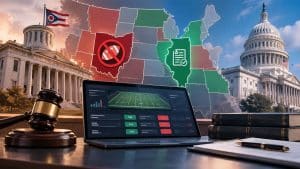
The District of Columbia and Connecticut are the most recent U.S. jurisdictions to ban Bovada from its online sports betting industry, and there could be more to come.
Rolling Up the Welcome Mat
Bovada is no longer welcome to operate in Washington DC and Connecticut, which brings the number of markets to 10 in which the Costa Rican-based is not operating including Nevada, New Jersey, New York, Maryland, Delaware, Michigan, Colorado, and West Virginia.
Unlike Connecticut, it doesn’t appear that Bovada’s parent company, Harp Media B.V., received a formal cease-and-desist letter from the powers that be in DC., nevertheless, it is voluntarily leaving the market anyway.
The DC bureaucracy sent word to Bovada to pack up its tent in the District at just about the same time it opened up its mobile sports betting market to multiple operators. FanDuel enjoyed a brief monopoly upon taking over for the disastrous GambetDC but local DC lawmakers believe more revenue will be generated by more operators.
Bovada’s banishment is the latest in a growing trend to protect the domestic online sports betting markets from offshore sportsbooks that are unlicensed and unregulated by state authorities. Although Bovada maintains an excellent reputation in the industry, it is likely being targeted by governmental officials because of its popularity in the U.S. Other offshore sites like BetOnline, Bookmaker, and Heritage enjoy similar reputations but have not been specifically named.
No Way Says AGA
The offshore sports betting industry has no more formidable foe than the American Gambling Association, which is an advocate for licensed sportsbooks in the United States. Unlike the offshore sites, those operating in the United States like FanDuel, DraftKings, Caesars, and BetMGM, to name some of the major players, all pay significant licensing fees and give hefty percentages of their revenues to local and state governments.
Therefore, it is in the states’ best interest to make sure those gambling dollars are staying within state lines and not being sent to sites like Bovada that don’t pay taxes and are not regulated. The AGA is keenly aware of this and has spoken out vehemently against the offshores and has called on the U.S. Department of Justice to intervene.
Two years ago, AGA President and CEO Bill Miller sent a letter to U.S. Attorney General Merrick Garland, stating, “While the challenge of illegal gambling is not new, the brazen and coordinated manner in which it occurs – both online and in communities – has elevated this problem to a level that requires significant federal attention.”
Earlier this year, Michigan sent a cease-and-desist letter to Bovada’s parent company informing them they were not welcome to operate in the Great Lakes State. Bovada has abided by this and all similar demands made by other states.
“The Michigan Gaming Control Board’s decisive action highlights that states have the power to protect their residents from predatory, offshore gambling sites and is another important step in winning the battle against the illegal market,” AGA President and CEO Bill Miller said in a statement shortly after the action was taken. “The AGA applauds the MGCB’s leadership against bad actors like Bovada and urges other states to follow Michigan’s lead.”