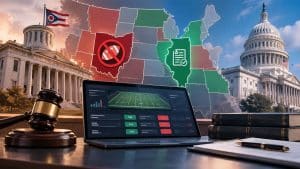
Governor Kevin Stitt has announced a comprehensive plan to introduce sports betting in Oklahoma, outlining specific terms and conditions. Stitt’s proposal, released on November 2nd, encompasses both in-person and mobile betting, each with distinct taxation rates and regulatory frameworks.
However, Stitt’s sports betting plan has taken tribal officials and state lawmakers by surprise, with both groups asserting a lack of consultation on the proposal.
The Proposal
For in-person betting, Stitt proposes a 15% tax on wagers, a rate in line with several states such as Illinois, Maryland, Massachusetts, and Virginia. This form of betting, referred to as “retail event wagering,” is envisioned to be conducted exclusively by federally recognized Indian tribes under a state-tribal compact.
The mobile betting aspect of the plan introduces a higher tax rate of 20%, aligning with rates established in Tennessee, Nebraska, and Massachusetts. In this scenario, bets could be placed anywhere within the state, with platforms operated by state-licensed companies. Companies seeking a license would face an initial fee of $500,000, coupled with an annual fee of $100,000.
Imposing Limitations
However, Governor Stitt’s proposal imposes limitations on the types of wagers allowed. Bets on individual college athletes’ performances, prop bets on collegiate competitions (e.g., coin toss results, specific events within a game), and wagers on coaches, referees, and player injuries at any level are prohibited. The governor’s office indicated reliance on the NCAA for additional guidance on college sports betting.
This initiative comes after previous attempts to pass sports betting legislation in Oklahoma faced setbacks, with the latest effort stalling in the state Senate earlier this year.
Surprise and Skepticism: Tribal Reaction to Stitt’s Plan
Released while the governor was in Israel, the plan includes details on taxation, exclusivity rights, and regulatory structures for both in-person and mobile sports betting.
Under Stitt’s proposal, tribes in Oklahoma would have exclusive rights to offer in-person sports betting, taxed at 15%. However, concerns arise regarding mobile sports betting, where exclusivity is not extended to tribes. Any vendor willing to pay the $500,000 license fee and $100,000 in annual fees would be eligible to offer mobile gaming, taxed at 20%.
Tribal responses varied from curiosity to outright dismissal, emphasizing the importance of collaboration between the state and tribes for successful legalization. Choctaw Nation Chief Gary Batton expressed dissatisfaction, stating that the plan does not represent the best interests of the people and tribes.
Criticism
Chairman Matthew Morgan of the Oklahoma Indian Gaming Association criticized the lack of meaningful government-to-government discussions, emphasizing the need for collaboration through legislative processes and gaming compacts that protect tribal exclusivity.
Senator Bill Coleman, a co-author of a previous sports betting bill, questioned the governor’s coordination with tribal partners and highlighted the importance of working in good faith to address tribal concerns.
Governor Stitt’s rocky relationship with tribes, stemming from previous attempts to renegotiate gaming compacts, adds complexity to the current proposal. Tribal leaders stress the significance of honoring federal, state, and tribal government rights and responsibilities in shaping agreements.
The path forward for Governor Stitt’s sports betting plan remains uncertain, with tribal input and legislative collaboration playing pivotal roles in its potential realization. The legislative session beginning in February may provide further insight into the viability and acceptance of the proposed sports betting framework in Oklahoma.