Digital Wager Wire highlights the most significant events affecting the domestic and international sports betting and gaming industries each week throughout the year.
Kentucky Bill Would Ban Sportsbooks From Prediction Markets
Representative Michael Meredith is the sponsor of HB 904, a measure that would prohibit the state’s online sportsbooks from entering the prediction market category. Both legislative chambers have passed the bill, and now it is up to Kentucky Governor Andy Beshear to sign, veto, or allow the bill to become law without his signature.
In addition to that key element, the bill would also make the following changes to Kentucky’s sports betting framework:
- Raises betting age to 21 from 18
- Restricts in-state collegiate athlete prop bets
- Authorizes fixed-odds wagering on horse racing
- Sets up fantasy sports regulations, taxing those companies at 12.5%, and banning house pick’em contests
“We also say that if you are a licensee under the bill through sports wagering, a horse racing track, or a fantasy sports operator, for the next year you can’t operate a prediction market in Kentucky,” Meredith said during the House’s initial vote.
However, the most controversial element of the bill initially demanded that the sportsbooks would be banned from operating prediction market brands anywhere in the country, not just in Tennessee.
Representative Meredith stated, “After [July 1, 2027], you’re not allowed to be involved with or in business as a prediction market operator anywhere else in the country if you’re licensed under one of our licensee structures here.”
DraftKings and FanDuel are responsible for generating over 80% of the $103.3 million in sportsbook taxes sent to the state since the industry launched in March 2023. Those sportsbooks, along with Fanatics, all operate their own prediction market platforms and would have been forced to decide between remaining in Kentucky and forfeiting their prediction brands or leaving the Bluegrass State altogether.
But cooler heads prevailed after severe pushback from all three sportsbooks, as the Senate rescinded the ultimatum, but kept the ban on operating those prediction market brands in Kentucky, and the House concurred.
It is reported that Governor Beshear will sign the legislation into law, but, as of this writing, he has yet to do so.
CFTC Sues Over Prediction Market Jurisdiction
Michael Selig, the recently installed Chairman of the Commodity Futures Trading Commission, had testified during his confirmation hearings that he was inclined to let the courts decide on whether the organization’s federal authority superseded state gambling laws.
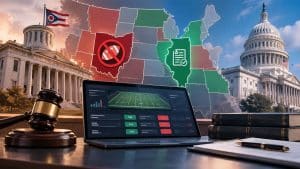
However, his tune has abruptly changed as the CFTC is now litigating against Arizona, Connecticut, and Illinois, contending they are unlawfully attempting to restrict prediction markets like Kalshi from offering sports event contracts.
State gaming authorities argue that prediction markets are simply sportsbooks masquerading as derivative financial institutions that traditionally offer speculative contracts on commodities like gold, silver, and pork bellies.
However, the prediction platforms have battled against the states’ gaming commissions and have won several early legal rounds, allowing them, for the most part, to continue to offer these sports event contracts nationwide.
These are just the latest lawsuits in a contentious legal battle that continues to rage. Many believe it will ultimately wind up at the US Supreme Court, where a final verdict will settle the issue over jurisdiction.