Digital Wager Wire highlights the most significant events affecting the domestic and international sports betting and gaming industries each week throughout the year.
IRS Boosts Jackpot Reporting Minimum
Beginning on January 1, 2026, the IRS codes regarding jackpot reporting will change from $1,200 to $ 2,000. It’s not the increase many had hoped for; however, it does represent the first modification to the code since it was instituted in 1977, courtesy of President Trump’s One Big Beautiful Bill Act.
Although jackpots hit before the New Year will not be impacted, the boost to the mandatory reporting requirement is welcomed by not only slot players but also by tribal and commercial casino operators. No longer will the machines lock at a jackpot of between $1200 and 1,999 while players sit patiently, searching for an attendant to present the necessary tax forms and validate the player’s ID before unlocking the machines.
Sam Cohen, government affairs and legal officer for the Santa Ynez Band of Chumash Indians, has argued for an increased tax rate, stating, “Failure to index this reporting threshold has placed an unnecessary compliance burden on the player who’s the taxpayer, increased administrative costs for tribal and commercial casinos, and created paperwork backlogs and operational burdens for the IRS.
“When accounting for inflation, a comparable jackpot reporting threshold today is estimated to be approximately $5,800,” he said. “The IRSAC recommends raising the reporting threshold and subsequently increasing it based on inflation and cost-of-living adjustments each year.”
This may be one of many future increases, according to sources, but at the very least, it is the first step towards adjusting the jackpot reporting minimum in nearly 50 years.
Arizona Terminates Underdog DFS License
In a surprising turn of events, the Arizona Department of Gaming (ADG) has issued Underdog Sports a Notice of Violation and Intent to Revoke its daily fantasy sports license. Underdog has announced it will be entering the controversial sports prediction market and will be offering sports event contracts only in markets where it does not serve as a DFS operator.
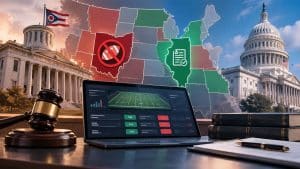
However, like many gaming commissions, the Arizona Department of Gaming has waged a legal battle with prediction markets, claiming those companies offer what is essentially sports betting without a license and devoid of paying state taxes.
Kalshi, and other prediction platforms like it, argue they are protected by the Commodity Futures Trading Exchange, and because it is a federal agency, its authority supersedes the state gaming agencies, absolving them of following state rules, regulations, and laws that pertain to sports betting operators.
Underdog Sports recently voluntarily relinquished its sports betting license in North Carolina and withdrew from the Missouri sports betting market before it launched on December 1st to avoid any friction with gaming regulators.
At a recent meeting of the National Conference of Legislators from Gaming States in San Juan, Chris Kotterman of the Arizona governor’s office announced the decision to revoke Underdog’s DFS license even though it would not be operating as a prediction market in the Grand Canyon State.
“This was a very clear case that the operator was offering something in Arizona that we consider to be an illegal product,” Kotterman said during an NCLGS panel discussion.
This could be a significant precedent if other gaming commissions take similar action. Leading mobile sportsbook operators like DraftKings, FanDuel, and Fanatics have either already launched their own prediction markets or are on the precipice of doing so.
Should the commissions in their states take similar rigid stances, it could force them to decide where their future lies – as prediction sports betting platforms or remain as leading mobile sportsbooks in an industry that has become so wildly popular, but where they also , December ,pay significant taxes.