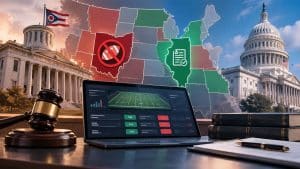
A proposal to dramatically increase the tax rate on Massachusetts sportsbooks’ adjusted gross revenues was recently voted down by the state Senate.
Bucking the Trend
Across the nation, state legislators are rethinking the tax rates imposed on sports betting platforms operating in their respective jurisdictions after getting a glimpse of how wildly popular sports betting has become. It’s been an ideal time to operate a successful mobile sportsbook, and most states have been collecting more tax revenues than they anticipated.
But enough is never enough, which is why Ohio has doubled its tax rate from 10% to 20% on sportsbooks operating in the Buckeye State. Meanwhile, Illinois, New Jersey and Washington, D.C. are also contemplating a tax hike. However, when a Massachusetts state senator brought up the topic in the form of a proposal, the issue was summarily dismissed by his colleagues.
MA Not Joining Other States
State Senator John Keenan made an impassioned plea to increase the current tax rate on mobile sportsbooks adjusted gross gaming profits from 20% to 51% which would see the Bay State tied with New York, Rhode Island, and New Hampshire as having the highest tax rates in the nation. Keenan planned to divert the extra revenues into mental health programs and protect athletes from harassment.
“The public harm issues are going to get so far ahead of us unless we act,” Keenan declared during the Senate session. “We have an obligation to all the residents and taxpayers of the Commonwealth of Massachusetts to use whatever revenues we can from the industry to prevent the harms from happening.”
Sportsbooks Snub MGC
Keenan’s measure was quickly voted down, but he did underscore another topic of interest when he raised the issue of Bay State sportsbooks not cooperating with the Massachusetts Gaming Commission in a recent roundtable discussion on the imposition of betting limits on its winning customers
None of the active sportsbooks in the state attended, citing proprietary risk management protocols, and asking instead for executive, or private, sessions with the MGC, which was subsequently denied due to transparency issues.
State General Counsel Todd Grossman said the Commission determined that “there is no clear and safe way to enter into executive session in the circumstances to discuss this particular information.”
Keenan took this as a snub by the major sportsbooks to the MGC, stating, “Basically, they thumbed their nose at the gaming commission. That’s the industry that we’re dealing with here in Massachusetts, an industry that is making far more money than they ever expected, and far more money than we expected them to make at this point.”
Why Are Books Against the Change?
The counterargument against raising the tax rate has been made many times by the sportsbooks and their industry lobbyists which is a higher rate means less competitive odds, fewer bonuses to attract new customers, and less incentive for the smaller sportsbooks to continue operating in the state. This would reduce competition and allow consumers fewer choices.
It would also ostensibly drive disenchanted bettors to the unregulated sportsbooks that don’t pay taxes and don’t tax Americans on their winnings. Thus, a higher tax rate on sportsbooks adjusted gross revenues could have a deleterious effect on the industry as a whole. It appears no tax hikes on Bay State sportsbooks’ profits are in the offing, at least for now.