Bitcoin ETF Inflows have pushed crypto back into a familiar but dangerous position: the market suddenly looks confident, yet the next few trading sessions may decide whether this is a real breakout or another emotional rally. Bitcoin’s move toward $80,000 matters because ETF demand is no longer a side story; it is becoming one of the clearest measures of institutional conviction in the asset.
Why Bitcoin ETF Inflows Matter Now
Bitcoin has always moved on stories as much as numbers, but the current story has unusual weight. A push toward $80,000 would have been easy to dismiss a few years ago as another burst of speculative enthusiasm. This time, the move is being tied to renewed demand through regulated investment vehicles, especially spot Bitcoin ETFs.
That changes the quality of the rally. When Bitcoin rises on social media hype, leverage, or retail fear of missing out, the move can evaporate quickly. When spot ETF demand strengthens, the market has to consider a more durable form of buying pressure. Institutions, advisers, and brokerage-based investors do not all move at once, but their participation can create a steadier source of liquidity.
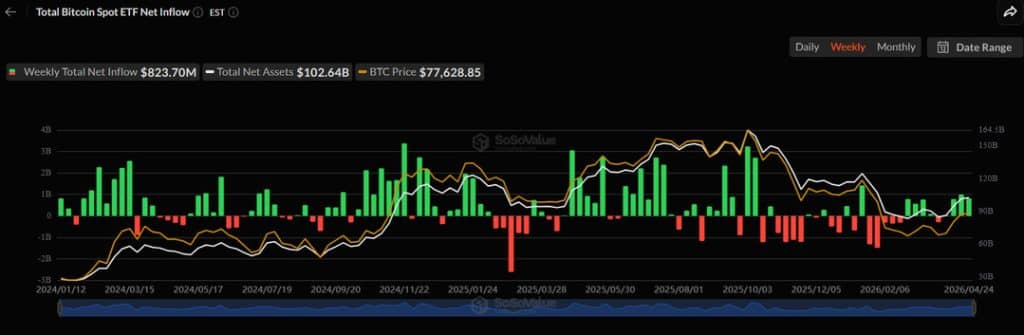
A recent market snapshot put Bitcoin near $79,900 after it briefly crossed the $80,500 area, with a fresh wave of Bitcoin ETF Inflows helping frame the move.
The central question is not whether ETF inflows helped Bitcoin rise. They clearly supported sentiment. The better question is whether the buying represents lasting demand or a short-term rotation that can reverse as quickly as it appeared.
The Difference Between Price Momentum And Durable Demand
Bitcoin traders often treat a major round number like $80,000 as a psychological line. Markets need symbols, and Bitcoin has always attracted symbolic thresholds. But a number on a screen is not the same as market structure.
A durable move requires more than price momentum. It needs cash entering the market, sellers getting absorbed, volatility staying manageable, and buyers showing a willingness to accumulate beyond the first breakout. ETF flows matter because they help answer that deeper question.
If Bitcoin rises while ETF inflows remain strong, the market can argue that new capital is absorbing supply. If Bitcoin rises while flows flatten or reverse, the move starts to look more fragile. Price can run ahead of support. That is where rallies turn into traps.
The challenge for investors is separating signal from noise. A single strong inflow day can create excitement, but one day does not define a cycle. A sustained pattern across several sessions tells a different story. So does the breadth of participation across multiple funds rather than one dominant vehicle.
This is why I watch flows differently from price. Price tells us what happened. Flows help explain who may have driven it and whether the move has institutional depth.

Why Spot ETFs Changed The Bitcoin Market
The arrival of U.S. spot Bitcoin ETFs created a new access point for investors who wanted Bitcoin exposure without managing wallets, private keys, crypto exchanges, or direct custody.
Before spot ETFs, many traditional investors found Bitcoin operationally awkward. They could believe in the asset and still avoid it because custody, compliance, reporting, and platform risk were too difficult. ETFs removed some of that friction. They did not remove Bitcoin’s volatility, but they made exposure easier to package inside familiar investment accounts.
The broader spot Bitcoin ETF framework also changed how the market talks about legitimacy. Bitcoin did not become risk-free because ETFs exist. It did become easier for regulated allocators to discuss, model, and access.
That shift affects behavior. Some buyers now approach Bitcoin as a portfolio allocation rather than a subculture. Some advisers treat it as an alternative asset conversation. Some institutions can express a view without building crypto infrastructure from scratch.
Retail traders still matter. Crypto-native funds still matter. Miners, exchanges, derivatives desks, and long-term holders still matter. But ETFs added another channel of demand, and that channel is now central to interpreting major price moves.
What The $80,000 Test Really Means
Bitcoin’s return toward $80,000 is not important only because the number is large. It matters because it tests whether buyers can reclaim a zone that many traders see as meaningful resistance.
A breakout can change sentiment quickly. When Bitcoin moves above a level that previously capped rallies, sidelined buyers often reassess. Short sellers may reduce exposure. Momentum strategies may add risk. Headlines become more bullish. The market can start feeding itself.
That self-feeding process is powerful, but it is also dangerous. If Bitcoin fails to hold the area, the same forces can reverse. Traders who bought the breakout may exit. Short-term confidence can vanish. ETF demand may slow if investors interpret the move as exhausted rather than early.
That is the tension around the latest rally. Bitcoin does not need to move in a straight line to confirm strength. It does need to avoid looking like it only crossed $80,000 because enthusiasm briefly outran discipline.
A healthy market would consolidate, absorb profit-taking, and keep drawing buyers. A fragile market would spike, stall, and fall back below the breakout zone with little resistance. The next signal may come less from the headline price and more from how calmly the market handles selling pressure.
ETF Demand Does Not Eliminate Bitcoin Risk
ETF inflows can make Bitcoin look more mature, but they do not change the asset’s underlying volatility. Bitcoin remains a risk asset with sharp drawdowns, emotional trading, and sensitivity to liquidity conditions.
That is why the latest inflow-driven move deserves perspective. ETF buying can support price, but it can also intensify downside when flows reverse. The same vehicle that makes it easier to buy can make it easier to sell. Accessibility cuts both ways.
There is also a concentration issue. If a few large ETF products dominate flows, the market may depend heavily on the behavior of investors using those funds. That does not make the rally false, but it does create a point of vulnerability.
Then there is macro risk. Bitcoin may trade like a monetary hedge in some periods and like a high-beta technology asset in others. When risk appetite is strong, it can benefit. When liquidity tightens or investors reduce exposure to volatile assets, it can suffer. ETFs do not erase that cycle.
The mistake would be treating ETF inflows as proof that Bitcoin has become conventional. It has become more accessible. That is not the same thing as becoming stable.
What Institutional Buying Says About Crypto’s Maturity
Institutional participation is often overstated in crypto, but it should not be dismissed. The ETF channel gives the market a clearer way to measure institutional and brokerage-based demand than many older proxies.
That visibility creates accountability. If flows are positive, bulls can point to real capital entering the market. If flows weaken, the narrative becomes harder to sustain. The market cannot rely only on broad claims about adoption when daily flow data keeps score.
This is one reason the current rally feels important. Bitcoin is not merely asking investors to believe in a long-term thesis. It is showing whether capital is willing to express that thesis at higher prices.
Still, institutional buying does not guarantee rational pricing. Institutions chase momentum too. They respond to performance pressure. They rebalance. They get cautious after drawdowns. The presence of institutions may deepen the market, but it does not remove human psychology.
In fact, ETFs may make Bitcoin more sensitive to traditional portfolio behavior. If advisers begin treating Bitcoin as a satellite allocation, flows may respond to risk budgets, quarterly reviews, model portfolios, and broader market conditions. That could make Bitcoin more integrated with traditional finance and, at times, more exposed to its habits.
The Supply Story Behind The Rally
Bitcoin’s supply narrative is simple but powerful. New issuance is limited, long-term holders often remain reluctant to sell, and demand shocks can have an outsized price effect when available supply is thin.
ETF inflows sharpen that story. If funds need to acquire Bitcoin to meet investor demand, and sellers are not eager, the price must move to find supply.
But supply stories can become too neat. Every buyer has a seller. Long-term holders may become more willing to distribute as price rises. Miners may manage cash needs. Traders may sell into strength. The idea of scarce supply is real, but it does not mean supply is unavailable at any price.
The question is whether ETF demand can absorb that selling without losing momentum. A strong market does not rise because nobody sells. It rises because buyers are aggressive enough to take what sellers offer.
That is why the coming sessions matter. Bitcoin’s April strength and early May inflows created a constructive setup. The market now needs confirmation through follow-through, not just excitement.
Why This Rally Is Bigger Than Bitcoin Alone
Bitcoin remains the bellwether, but its moves ripple through the broader crypto market. When Bitcoin rises on ETF demand, traders start asking whether Ethereum, Solana, crypto equities, mining stocks, and infrastructure tokens will follow.
That rotation matters because it shows whether the rally has real breadth. A Bitcoin-only move can still be powerful, but a healthier crypto cycle usually shows widening participation. If capital remains concentrated in Bitcoin ETFs, the market may be expressing a specific preference for regulated Bitcoin exposure rather than broad crypto risk.
That distinction has importance. Bitcoin ETFs offer a clean, regulated way to gain exposure to the most established crypto asset. Many other tokens still involve more regulatory uncertainty, weaker institutional access, or less mature investment infrastructure.
For investors, this creates a hierarchy. Bitcoin may benefit first from institutional flows. Ethereum may need its own catalyst. Smaller assets may need stronger risk appetite. Crypto equities may rise quickly, but they carry business-specific risk on top of market beta.
The ETF-driven Bitcoin move is therefore not automatically a green light for every crypto asset. It is a signal that institutional capital is willing to engage where the structure feels familiar and the asset has enough credibility.
Regulation Is Still Part Of The Market Story
ETF inflows are not happening in a vacuum. The crypto market is also reacting to policy signals, legislative negotiations, stablecoin debates, and the possibility of clearer U.S. market rules. Investors do not need perfect regulation, but they do need enough clarity to justify larger allocations.
That is why the regulatory backdrop matters alongside price. If lawmakers move toward clearer rules for stablecoins, exchanges, and digital asset oversight, it may reduce one of the long-standing barriers to institutional participation. Uncertainty does not stop all investment, but it raises the cost of conviction.
For readers tracking the intersection of market structure and policy, the current Bitcoin rally fits naturally into a broader regulatory context. The same investors watching ETF demand are also watching how lawmakers define the next phase of crypto finance.
That connection is critical. Bitcoin’s price may respond to flows today, but long-term allocation depends on rules, custody confidence, taxation clarity, and the ability of institutions to defend exposure to committees, clients, and compliance teams.
A market can rally on excitement. It sustains on confidence.
What Investors Should Watch Next
The first thing to watch is whether inflows continue after the price move. Strong flows before a breakout are encouraging. Strong flows after a breakout are more revealing because buyers are accepting higher prices rather than chasing a discount.
The second thing is price behavior around $80,000. A clean hold above that area would strengthen the bullish case. A sharp rejection would warn that the market may have moved too fast.
The third factor is volatility. A rising market with controlled volatility feels different from a vertical move followed by disorderly selling. Stability after a breakout can attract more cautious allocators.
The fourth factor is breadth. If Ethereum, major crypto equities, and other liquid assets begin confirming Bitcoin’s strength, the rally may be broadening. If Bitcoin remains the only asset with serious demand, the market may be more selective than headlines suggest.
The fifth factor is narrative discipline. The most dangerous moment in crypto is often when a reasonable bullish case becomes exaggerated. ETF inflows are meaningful. They are not magic. Bitcoin can still correct, and investors should treat strength as a reason for better judgment, not less.
My View On The Current Move
I read the latest Bitcoin rally as constructive but not conclusive. ETF inflows give the move more substance than a purely speculative spike, and April’s strength improves the technical backdrop. Still, the market has not earned complacency.
The bullish case is easy to understand. Regulated access is improving. Institutional channels are active. Bitcoin has reclaimed attention. Supply remains limited. The price is approaching a level that can draw fresh capital if it holds.
The cautious case is just as important. A strong inflow day can fade. Round-number breakouts can fail. Traders can front-run ETF demand. Macro conditions can shift. A rally that feels inevitable is often when risk is being underpriced.
The better posture is neither excitement nor skepticism for its own sake. It is patience. Watch whether demand persists, whether price holds, and whether participation broadens. Bitcoin does not need perfection, but it does need confirmation.
If ETF buyers keep showing up near $80,000, the rally has a stronger foundation. If flows cool and price slips, the move may look more like a positioning squeeze than a lasting advance.
The Future Of Bitcoin ETF Inflows
Bitcoin ETF Inflows matter now because they are changing how the market measures demand. Instead of relying only on exchange activity, social sentiment, or speculative leverage, investors can watch a regulated channel that reflects real allocation decisions. That does not make Bitcoin predictable, but it makes the market more transparent than it used to be.
The next phase will depend on whether ETF demand can survive higher prices, normal pullbacks, and renewed skepticism. If it can, Bitcoin’s push near $80,000 may become part of a broader institutional adoption cycle. If it cannot, the rally may remind investors that access alone does not guarantee sustained buying.
The opportunity is significant. ETFs can deepen liquidity, widen participation, and give Bitcoin a more durable place inside traditional portfolios. The risk is equally clear: easy access can amplify both enthusiasm and exit pressure.
My view is that the Bitcoin market is maturing, but not mellowing. It is gaining new channels, new buyers, and new analytical tools while keeping the volatility that has always defined it. That combination demands discipline from anyone watching the move.
If Bitcoin ETF Inflows continue to support prices beyond the first burst of excitement, the $80,000 test may prove to be more than a headline. It may mark the point where institutional demand becomes the market’s central force rather than a supporting character.