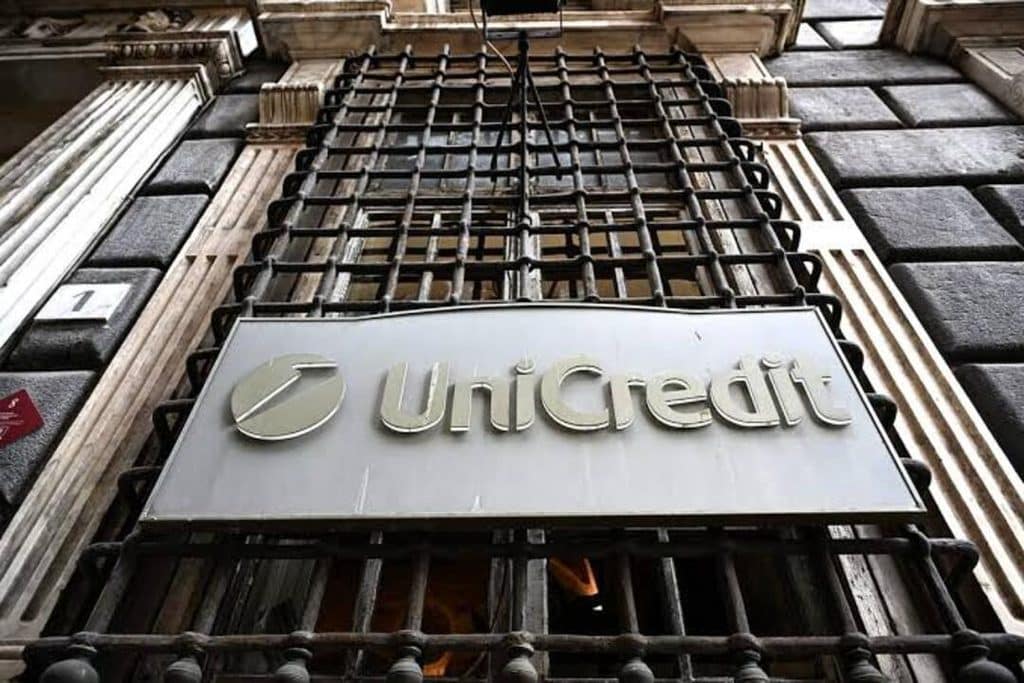
A European banking merger is no longer just a dealmaker’s fantasy buried in conference panels about scale. UniCredit’s push for Commerzbank has turned into a live test of whether Europe actually wants bigger cross-border banks, or only likes the idea until a national champion is on the table.
That tension matters well beyond Frankfurt and Milan. Banking control shapes lending, payments, deposits, and financial trust across the economy, including adjacent consumer markets where users compare US betting sites partly through the same lens: can money move safely, quickly, and predictably?
European Banking Merger Politics Are Back In The Open
The immediate trigger is a planned September 14 meeting in Berlin between German Finance Minister Lars Klingbeil and UniCredit CEO Andrea Orcel. That is a meaningful step because Germany has resisted UniCredit’s effort to take over Commerzbank, while UniCredit has built a stake approaching effective control.
Germany still owns just over 12% of Commerzbank from the financial-crisis-era rescue. UniCredit, meanwhile, has built a position of nearly 50%, giving the Italian bank serious influence over shareholder decisions.
That is why this is not just another M&A story. It is a sovereignty story wearing a banking suit.
Commerzbank is not Germany’s biggest bank, but it plays a central role in financing the Mittelstand, the network of small and midsize companies that sits at the heart of Germany’s industrial economy. For Berlin, that makes the lender more than a ticker symbol. It is part of the national credit machine.
Investors Want Scale, Governments Want Control
The investor case for consolidation is straightforward. Europe has too many banks, many of them still heavily domestic, and its lenders often look smaller and less efficient than U.S. rivals.
Bigger banks can spread technology costs over more customers. They can compete harder in investment banking, payments, wealth management, and corporate lending. Can absorb regulatory costs more easily. They can also appeal to investors who want stronger returns and clearer growth stories.
Governments hear that argument and immediately start counting jobs.
That is the conflict. Investors want scale. CEOs want expansion. Supervisors often like the idea of stronger cross-border banks. But national governments worry about headquarters, layoffs, lending priorities, political leverage, and whether a foreign-owned bank will still treat domestic borrowers as strategic clients when times get rough.
Banks are infrastructure, even when markets price them like ordinary companies.
Why Commerzbank Is The Perfect Test Case
Commerzbank sits exactly where Europe’s banking union debate gets uncomfortable.
It is big enough to matter politically, but not so dominant that a merger looks impossible. Has a clear domestic identity, but it operates in a European market that keeps talking about integration. It has public ownership history, but private shareholders now have their own incentives.
UniCredit’s position forces Germany to confront a question Europe has avoided for years: if cross-border banking consolidation is desirable in theory, what happens when the buyer is real, the target is sensitive, and the politics are inconvenient?
The European Central Bank has long argued that cross-border consolidation can help the sector gain scale and efficiency. In a broader banking integration speech, ECB supervision chief Claudia Buch noted that hopes for a more integrated banking market had not fully materialized and that lending portfolios remained heavily domestic.
That is the larger backdrop. Europe built common supervision, but banking remains stubbornly national in practice.
The Comparison That Defines The Deal
The UniCredit-Commerzbank fight can be read as a clash between market logic and national logic. Both sides have rational arguments, and that is what makes the standoff so durable.
| Pressure Point | UniCredit’s Logic | Germany’s Concern |
|---|---|---|
| Banking scale | A larger cross-border lender can compete better | Bigger does not automatically mean better for German borrowers |
| Shareholder influence | A near-50% stake gives UniCredit leverage | Control may arrive without a friendly agreement |
| Jobs and headquarters | Integration can produce cost savings | Synergies often mean layoffs and reduced local power |
| Mittelstand lending | A bigger bank can bring broader resources | German companies may lose a domestic-focused lender |
| European integration | Cross-border deals support banking union goals | National governments still guard strategic banks |
The table shows why this fight will not be solved by saying “mergers create efficiency.” Efficiency for shareholders can look like vulnerability to governments and workers.
That does not make Germany wrong. It also does not make UniCredit reckless. It means Europe’s banking ambitions are colliding with Europe’s political instincts.
Europe’s Bank Rally Is Changing The Mood
The timing helps explain why this merger fight has returned with force.
Banks are not living in the dead-margin world that followed the 2008 crisis and the long era of ultra-low rates. Higher rates improved profitability. Share prices recovered. Capital positions strengthened. CEOs have more confidence, and investors are more willing to reward strategic ambition.
A broader global expansion swing is also visible across major lenders. Cross-border bank credit rose by $1.7 trillion in the first quarter of 2026, an 11.4% year-over-year increase, showing that large banks are again looking beyond their home markets.
That matters because deal appetite tends to follow confidence. When banks feel weak, they retreat. When they feel strong, they start looking for markets, customers, and balance sheets to absorb.
UniCredit is not alone in sensing that the moment has changed. Italy itself has seen a wave of bank dealmaking, with Italy’s banking shake-up showing how quickly defensive mergers, hostile approaches, and strategic bids can reshape the sector.
The merger cycle has restarted.
The Next Pressure Point Is The Price Of Political Approval
The key question now is not only whether UniCredit can acquire Commerzbank. It is what price Europe attaches to political approval.
That price may involve job assurances, German lending commitments, Frankfurt presence, governance limits, brand protections, or a more generous offer to shareholders. It may also involve a longer transition period designed to make the deal feel less like a raid and more like a negotiated European banking project.
If Berlin softens, other European bank CEOs will notice. If Berlin blocks or slows the process aggressively, the message will be just as clear: cross-border consolidation is welcome until it threatens national control.
That is why the meeting matters. It is not the end of the deal. It is the start of the serious political bargaining.
Markets will watch UniCredit’s capital position, Commerzbank’s board response, German government language, ECB signals, and whether shareholders believe a full merger can create value without becoming a political mess.
A European banking merger sounds clean in strategy decks. In reality, it runs through ministries, unions, regulators, shareholders, and borrowers who all define “value” differently.
Europe’s banking merger fight is back because the continent’s lenders need scale, but its governments still treat major banks as national assets. UniCredit and Commerzbank may become the case that proves Europe is ready for real banking integration. Or they may become another reminder that in European finance, the hardest part of a deal is not buying the shares. It is convincing a country to let go.