Chinese bank dollar deposits are turning into one of the more revealing banking stories of the moment because they sit at the intersection of yield, currency management, and global bond demand. The trade is simple on the surface: attract dollars from customers, buy higher-yielding U.S. Treasuries, and earn a spread that domestic Chinese assets are struggling to offer.
That is not just a China story. It matters to anyone watching bank balance sheets, foreign-exchange flows, Treasury yields, and the broader financial plumbing that also affects payment confidence across digital markets and US betting sites.
Chinese Bank Dollar Deposits Are Becoming A Yield Trade
The latest dollar-deposit push shows Chinese banks buying U.S. Treasuries after raising rates on dollar deposits. That is a notable shift because it turns customer dollar balances into a tool for both earnings and currency management.
The logic is easy to understand. Domestic Chinese government bond yields are low. U.S. Treasury yields are higher. If a bank can pay customers a dollar deposit rate near 3% or even close to 4% in some cases, then invest that money into Treasuries yielding more, the spread becomes attractive.
This is banking at its most old-fashioned: gather funding, buy assets, manage the margin.
But the backdrop makes it more interesting. Banks are not just chasing yield because they suddenly discovered Treasuries. They are operating in a market where domestic safe-asset returns are thin, exporters have helped create more dollar liquidity, and China is trying to manage the pace of yuan strength.
The spread is the story, but the currency signal is what makes it bigger.
Why Dollar Deposits Look More Attractive Than Yuan Cash
Chinese banks have a clear reason to compete for dollars. Yuan deposit rates at major state banks are far lower than the rates being discussed for some dollar accounts, creating an obvious incentive for customers with dollar balances to keep that money in the banking system rather than convert it.
That matters because deposit pricing affects behavior. If dollar holders believe they can earn a better return while staying liquid, they may be less eager to sell dollars for yuan. That can help absorb dollar liquidity and reduce upward pressure on the Chinese currency.
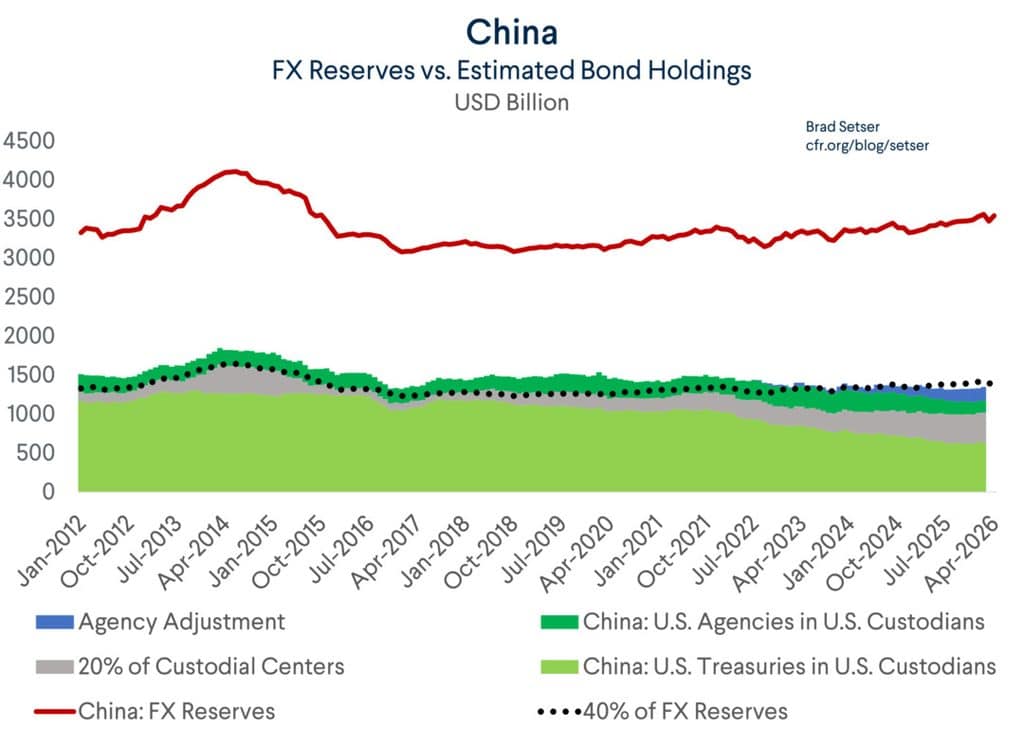
The numbers show why the issue has grown. Foreign-exchange deposits in China stood at $1.18 trillion at the end of July, up 17.9% from a year earlier, while the first seven months of 2026 brought $121.2 billion of growth in those deposits. China’s broader foreign-exchange reserves update showed reserves at $3.4188 trillion at the end of July, up slightly from June.
Those are large pools of money. Even small shifts in pricing, conversion behavior, or investment strategy can matter when the deposit base is that big.
For banks, the appeal is obvious. For policymakers, the attraction is more delicate: stronger dollar deposit rates can make the currency market a little less one-sided without relying only on direct intervention.
The Treasury Trade Is A Banking Margin Story
The comparison between dollar deposits and Treasury purchases is where the bank math becomes clear.
| Banking Choice | Main Appeal | Main Risk |
|---|---|---|
| Hold yuan deposits | Stable domestic funding base | Low returns limit bank income |
| Raise dollar deposit rates | Attract and retain foreign-currency balances | Higher funding cost if Treasury yields fall |
| Buy U.S. Treasuries | Earn income from higher-yielding safe assets | Bond-price risk if yields rise further |
| Convert yuan into dollars | Gives banks foreign-currency buying power | Can attract regulatory attention |
| Keep dollars inside China | Supports balance-sheet flexibility | Depends on customer willingness to hold dollars |
The table shows the basic tradeoff. This is not a free-money machine. Banks are taking funding-cost risk, interest-rate risk, and currency-policy risk. Still, the appeal is strong when domestic options look less rewarding.
That is why this story should be read as a margin strategy, not just a headline about China buying more U.S. debt. Banks are trying to improve returns without making the move look like a direct bet against domestic policy preferences.
China’s Treasury Holdings Tell A More Complicated Story
China’s official U.S. Treasury holdings have been declining for years, which makes the bank-buying story look counterintuitive at first. The latest U.S. Treasury foreign-holdings table showed China’s holdings at $633.4 billion in June, down from $659.3 billion in May and far below the peak levels seen more than a decade ago.
That does not mean Chinese banks cannot be buying Treasuries now. It means the ownership picture is messy.
Treasury holdings can be affected by custody locations, valuation changes, sales, purchases, reserve-management choices, and transactions that do not show cleanly under one country label. Some holdings can be routed through financial centers outside China, making the headline number less precise than investors sometimes assume.
This is why the latest bank activity matters less as a simple “China is buying Treasuries again” story and more as a banking strategy story. The question is not only who owns the bonds. It is why Chinese commercial banks see Treasuries as a better use of dollar funding than many local alternatives.
The holdings data is imperfect, but the incentive is easy to see.
The Yuan Angle Makes The Trade More Sensitive
The currency angle is where this gets politically and financially sensitive.
A stronger yuan can create pressure for exporters, especially when China is still relying heavily on external demand to support growth. If companies and households convert more dollars into yuan, that can add appreciation pressure. Higher dollar deposit rates give customers a reason to wait.
That does not mean banks are single-handedly managing the currency. But they can become part of the mechanism.
By keeping more dollars parked inside the domestic banking system, lenders can reduce immediate conversion flows and then use those dollars to buy foreign assets. It is a quieter method than dramatic policy action, and it gives banks a profit motive at the same time.
The risk is that the trade depends on relative rates. If U.S. yields fall sharply, the economics narrow. Deposit competition becomes too aggressive, banks may pay away too much of the spread. If currency pressure shifts, the policy usefulness can fade.
Yield trades can reverse when the rate environment changes.
What Markets Should Watch Next
The next signal is whether this remains a tactical move by banks or becomes a larger funding pattern.
Watch dollar deposit rates first. If smaller banks keep advertising higher rates and larger lenders continue matching enough to defend funding, that suggests competition for dollar balances is still alive.
Watch U.S. Treasury yields next. The trade works best when the yield pickup is large enough to justify the funding cost and the duration risk. A sharp move lower in yields could make the strategy less appealing. A sharp move higher could hurt bond values, even if new purchases offer better income.
Watch the yuan as well. If appreciation pressure persists, higher dollar deposit rates may remain useful. If the currency weakens, the same strategy could look less necessary.
Finally, watch official Treasury holdings data, but do not treat it as the whole story. Custody channels can blur the picture, and bank-level activity may not translate neatly into the headline country number.
Chinese bank dollar deposits matter now because they show how banks can turn a currency-management challenge into a balance-sheet opportunity. The strategy is not risk-free, and it is not guaranteed to reshape China’s official Treasury position overnight. But it does reveal a practical banking truth: when domestic returns are thin and dollar yields are high, banks will find a way to make foreign-currency deposits work harder.