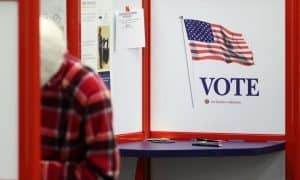
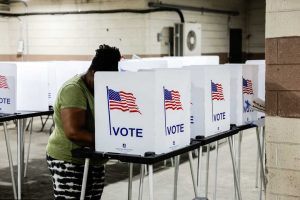
The Trump mail ballot order has moved from legal theory to election reality. North Carolina has begun sending midterm mail ballots, while courts, election officials and the Postal Service are still sorting through whether the administration’s proposed voting restrictions can take effect before November.
That timing is what makes this more than another courtroom story. For readers tracking political uncertainty, campaign momentum and election-risk narratives around the best U.S. betting sites, the key question is whether late legal fights can create enough confusion to shape voter confidence before ballots are even counted.
Trump Mail Ballot Order Meets the First Real Voting Deadline
North Carolina’s ballot mailing has turned the dispute into a live election-administration test. The first ballots are no longer theoretical documents sitting inside legal briefs. They are entering the system while one federal case, one Postal Service implementation fight and one national political argument are still moving at the same time.
That matters because election systems are built around deadlines. Ballots must be printed, mailed, tracked, returned, verified and counted under rules officials can actually follow. When a president tries to impose new procedures close to voting, even supporters of tighter security have to ask whether the cure creates its own disruption.
The first wave of midterm mail voting now sits against the wider ballot rollout fight, where state officials are trying to keep operations steady while lawsuits challenge the administration’s authority.
The timing is the problem. A voting-rule fight in March is one thing. A voting-rule fight after ballots start moving is something else.
The Court Battle Is Really About Control
The constitutional dispute is bigger than ballot envelopes. It is about who gets to run elections: the president, federal agencies, Congress, or the states.
The Constitution gives states the first role in setting the times, places and manner of congressional elections, while Congress has the power to alter those rules. That structure is why the election authority clause matters in this fight. It gives opponents of the order a simple argument: presidents do not get to rewrite election administration through unilateral command.
The administration’s argument is different. It frames the order as a security measure aimed at ballot integrity, voter verification and mail-system control. That message plays well with voters who already distrust mail voting or believe election systems need tougher safeguards.
But even a popular security message runs into a legal wall if courts decide the executive branch has reached beyond its role. That is why the issue remains politically explosive. The public debate is about election trust, but the courtroom fight is about institutional power.
Postal Service Rules Could Become the Flashpoint
The Postal Service sits at the center of the practical dispute because mail voting depends on predictable delivery and clear handling rules. If ballots are delayed, rejected, misdirected or processed under changing standards, the political fallout could be immediate.
The administration’s push has included new procedures tied to recipient lists, ballot envelopes and barcode-style tracking. Supporters see that as a way to prevent improper ballot movement. Critics see it as a late-stage federal filter that could block lawful ballots because of clerical mismatches, technical problems or inconsistent state data.
That concern sharpened after Senate Democrats urged the Postal Service to stop work on the new rules, warning that implementation could disrupt voting close to the election. The broader Postal Service rule dispute shows why this fight is not only legal. It is operational.
Postal uncertainty travels fast because voters do not need a law degree to understand the risk of ballots getting caught in a changing mail system.
Comparison Table: Security Argument vs. Election Disruption
The fight is politically powerful because both sides are claiming the language of election integrity, but they define the threat differently.
| Administration Argument | Opposition Argument |
|---|---|
| New rules can strengthen confidence in mail voting | Late changes can confuse voters and election workers |
| Postal checks can reduce improper ballot handling | Technical mismatches could block lawful ballots |
| Federal action is needed to standardize safeguards | States control election procedures unless Congress acts |
| Barcode and list systems can improve tracking | Untested systems create risk close to Election Day |
| Mail voting needs tighter oversight | The timing makes disruption more likely than reform |
The comparison shows why this dispute is so hard to settle politically. One side sees delay as weakness. The other sees speed as danger. That is exactly the kind of argument that can harden partisan views before votes are counted.
Election Officials Are Trying to Project Calm
Election administrators now have the hardest job in politics: make the system work while national figures argue that the system is either under attack or too vulnerable to trust.
Their public message is likely to stay steady. Ballots are going out. Existing procedures remain in place unless courts allow changes. Local and state workers are preparing for high scrutiny, legal challenges and a flood of voter questions.
That calm is necessary, but it does not erase the pressure. Even if the rules do not change before November, the litigation itself can affect public confidence. Voters may wonder whether their ballot will count. Campaigns may prepare lawsuits before problems occur. Partisan groups may use uncertainty to fundraise, mobilize or delegitimize losses.
Confidence is fragile when legal arguments move faster than voter understanding. The practical risk is not simply rejected ballots. It is a fog of suspicion around ordinary election administration.
That is why North Carolina’s role matters. As the first state to send mail ballots statewide for the midterms, it becomes a proving ground for whether the legal fight remains contained or spills into broader campaign chaos.
The Midterm Risk Is Confusion Before Election Day
The Trump mail ballot order may not decide the midterms directly. Its bigger effect could be narrative. If voters believe rules are changing, lawsuits are unresolved and the Postal Service may alter ballot handling, the election can feel unstable before results arrive.
That instability helps campaigns in different ways. Republicans can argue they are fighting for cleaner elections. Democrats can argue Trump is trying to interfere with voting access. Both sides can use the same legal fight to energize their own voters.
The danger is that neither side controls the downstream effect. Voter confusion can depress participation, create longer administrative queues, trigger lawsuits and increase suspicion of close results. In tight House and Senate races, even a small confidence problem can become a national controversy.
The next signals are clear: whether courts keep blocking implementation, whether the Postal Service pauses or proceeds, whether more states raise objections and whether early ballot processing produces visible problems. The issue will not disappear just because the first ballots are mailed.
The Trump mail ballot order is now colliding with the election calendar, and that makes every procedural decision politically loaded. If the courts keep the current system stable, the story may fade into another legal fight. If rules shift while ballots are already moving, mail voting could become one of the biggest flashpoints of the 2026 midterms.