Iran and the United States are still exchanging diplomatic messages, but the most important disagreement may be over what happens before formal nuclear negotiations can begin. With the November 3 U.S. elections approaching, Iran talks and midterms have become intertwined with sanctions, oil shipments and competing demands over the Strait of Hormuz.
The latest developments introduce a new dimension to the Iran-related midterm risks already affecting energy markets. President Donald Trump has pledged not to launch additional U.S. strikes against Iran before Election Day, but Tehran’s proposed route toward an agreement requires concessions that Washington has not accepted. A pause in military escalation is not the same as progress toward a negotiated settlement.
Iran’s Negotiating Strategy Now Has an Election Dimension
Three senior Iranian officials and another person familiar with Tehran’s thinking told Reuters on October 20 that Iranian leaders were deliberately extending negotiations partly to increase political pressure on Trump before the U.S. midterms.
The officials, who spoke anonymously, described an Iranian leadership concerned about renewed American or Israeli attacks and unwilling to offer concessions that could strengthen Washington’s negotiating position.
Those accounts are significant but require qualification. They describe the thinking of officials familiar with Iran’s position, not a publicly adopted Iranian government declaration that influencing U.S. elections is its formal diplomatic objective.
Iran’s Foreign Ministry and the White House did not respond to Reuters’ requests for comment on the allegations.
The dispute also extends well beyond American electoral politics.
Iran’s security concerns and economic pressures remain central to the negotiations. Tehran distrusts Washington following military operations that disrupted earlier diplomatic efforts, while U.S. officials continue pressing for restrictions on Iran’s nuclear activities.
The political calendar adds pressure to an already complicated negotiation without explaining every disagreement.
The Seven-Day Hormuz Proposal Contains a Major Catch
The clearest indication of the negotiating impasse is Iran’s proposed arrangement for reopening the Strait of Hormuz.
Under a plan conveyed through Qatari mediators, Tehran has offered to restore passage through the waterway within seven days, subject to several American concessions.
Those conditions include lifting the U.S. maritime blockade, easing restrictions on Iranian oil exports, releasing frozen Iranian assets and ending hostilities across the conflict.
Iranian Foreign Minister Abbas Araqchi said on October 18 that the offer remained available and messages were continuing through intermediaries.
Washington, however, wants Iran’s nuclear program addressed from the beginning of negotiations.
Iran insists that its preliminary conditions must be met before those discussions proceed.
The latest diplomatic developments therefore expose a fundamental sequencing disagreement.
Both sides want different first steps.
For Washington, early nuclear commitments are central to a durable agreement. For Tehran, relief from economic and military pressure is a prerequisite for entering meaningful nuclear negotiations.
That difference cannot be resolved simply by announcing another round of talks.
It also explains why the seven-day proposal should not be mistaken for a confirmed timetable to reopen Hormuz. The offer is conditional, and its requirements remain disputed.
Why Hormuz Matters More Than Diplomatic Headlines
The Strait of Hormuz has become one of the conflict’s most consequential economic pressure points.
Military threats, attacks on shipping and restrictions on vessel movements have disrupted energy transportation. Even when some vessels manage to cross the waterway, operators must contend with elevated security, insurance and freight costs.
The resulting uncertainty helps sustain an energy-market risk premium.
On October 20, Brent crude futures briefly reached $111.75 per barrel, their highest level since May. Traders were responding to renewed attacks and concerns about shipping security, including reported strikes involving Saudi facilities and commercial vessels.
The latest oil-market developments underline an important distinction: oil prices respond to actual supply conditions and perceived future risks, not simply whether diplomats are communicating.
Negotiations do not guarantee lower prices.
Even an agreement to reopen shipping routes would need to produce measurable improvements in tanker movements, export availability and operating costs before energy markets could confidently price in sustained relief.
The effect on American consumers may also take time.
Gasoline and diesel prices depend on crude costs, refining conditions, distribution expenses and regional supply. A diplomatic announcement does not immediately reverse those pressures.
That makes the physical movement of energy a more useful indicator than optimistic statements from either government.
Prediction Markets Face Two Separate Sources of Uncertainty
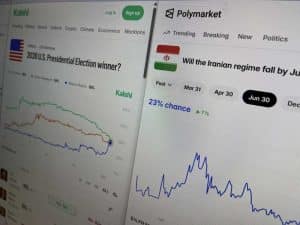
The diplomatic stalemate also creates a difficult environment for political prediction markets.
Contracts involving U.S. congressional control and those involving an Iran ceasefire or other diplomatic developments measure different outcomes.
A change in expectations about an Iran agreement does not necessarily establish a corresponding change in voter preferences.
Political traders may react to headlines involving negotiations, military operations or oil prices. However, those reactions represent market participants’ judgments, not direct evidence about how Americans intend to vote.
Geopolitical risk and election risk must be evaluated separately.
An unexpected diplomatic breakthrough could alter expectations for sanctions relief and energy availability. It would not automatically establish how congressional races will be decided.
Likewise, prolonged negotiations could keep geopolitical uncertainty elevated without producing a measurable change in the electoral picture.
The distinction matters because prediction-market prices can incorporate limited liquidity, concentrated trading positions and rapidly changing interpretations of news.
A contract price should not be treated as a substitute for polling, official economic data or confirmed diplomatic developments.
The Negotiating Sequence Is the Signal Before November 3
The most useful developments to monitor are those capable of changing the underlying diplomatic disagreement.
First is whether Washington and Tehran reach an understanding on the sequence of sanctions relief, maritime access and nuclear discussions.
Second is whether Qatari mediation produces more than an exchange of proposals. A jointly acknowledged framework would carry different significance from statements made separately by the negotiating parties.
Third is the security situation around Hormuz. Changes in commercial shipping, tanker attacks and insurance costs would offer evidence about whether regional operating conditions are improving.
Finally, Iran’s own economic position deserves attention.
The country has absorbed substantial damage from the conflict, sanctions and restricted oil exports. Reuters reported that Iranian annual inflation reached 73.6% in September, citing the country’s Statistical Centre.
Those economic pressures complicate the idea that Tehran can prolong negotiations without significant domestic costs.
Both governments therefore face constraints that extend beyond the American election timetable.
The central issue in Iran talks and midterms is not simply whether Tehran or Washington wants an agreement before November 3. It is whether either government is prepared to accept the other’s required first step.
Until that sequencing dispute changes, negotiations can remain active without producing a settlement. For energy markets and political observers, the meaningful development will be a verifiable change in negotiating terms or shipping conditions, not another announcement that discussions are continuing.