Governments across Europe and parts of Asia are encouraging households to keep enough food, water, medication and other essential supplies to survive several days without outside assistance. Some recommend 72 hours. Others advise a full week or even ten days. The growing attention surrounding government emergency supply advice raises an obvious question: what are authorities preparing their populations to face?
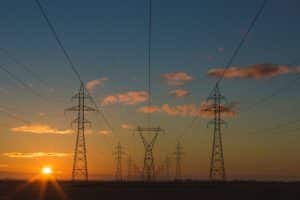
The answer is broader than the possibility of war. Power failures, cyberattacks, extreme weather and disrupted communications can leave entire communities unable to access everyday services. The concern also reaches financial infrastructure, where banking cybersecurity risks can affect payment systems and consumer access to money. Governments increasingly want households to understand that essential services may not always recover immediately.
Countries Are Recommending Different Emergency Supply Periods
Recent coverage has brought renewed attention to the number of countries encouraging citizens to prepare emergency supplies.
However, not every government recommends the same duration, and many of these policies existed long before the latest headlines.
Norway provides a clear example. In May 2024, authorities increased their recommended household preparedness period from three days to one week. The country subsequently distributed updated emergency-preparedness information to households.
The United Kingdom took a different approach.
On October 22, 2026, the British government launched its new Be Ready campaign, encouraging households to prepare for three days of disruption.
Elsewhere, Sweden, Estonia and Taiwan recommend at least seven days, while Germany advises households to aim for ten days where practical.
The differences become clearer when comparing official guidance.
| Country or Region | Recommended Supplies | Main Preparedness Focus |
|---|---|---|
| Sweden | At least 7 days | War, power failures and major emergencies |
| Norway | 7 days | Critical infrastructure disruption and crises |
| Estonia | At least 7 days | Loss of electricity, water and heating |
| Taiwan | At least 7 days | Natural disasters and security emergencies |
| Switzerland | About 7 days of food; 3 days of water | Temporary supply interruptions |
| Germany | Aim for 10 days | Disasters, infrastructure failures and supply shortages |
| United Kingdom | 3 days | Severe weather and disruption of essential services |
| European Union | Minimum 72-hour preparedness objective | All-hazards crisis readiness |
These are household preparedness recommendations, not evidence that the countries expect the same emergency or have issued a coordinated warning.
Switzerland illustrates why the details matter. Its government recommends roughly one week of food but at least nine liters of drinking water per person, intended to cover approximately three days.
Germany also emphasizes that households unable to prepare for ten days should begin with a smaller supply rather than abandon preparedness entirely.
Why Norway and Sweden Are Planning for a Full Week
Northern European countries have placed particular emphasis on civilian readiness.
Norway’s official self-preparedness guidance recommends that residents manage independently for one week, even if electricity, water, mobile networks or payment services become unavailable.
The Norwegian Directorate for Civil Protection explains that major disruptions can temporarily overwhelm emergency services. Residents able to meet their immediate needs independently allow authorities to direct resources toward people requiring urgent assistance.
Sweden has adopted a similar approach.
Its government advises residents to prepare for at least one week without ordinary access to electricity, water or grocery stores.
Swedish civil-defense planning also reflects the country’s security environment and the continuing importance of preparing society for potential armed conflict.
But war is only one scenario.
A severe winter storm could interrupt power and heating. Flooding could contaminate water supplies. A cyberattack could disrupt communications or essential infrastructure.
One emergency kit can address several risks.
That is the logic behind modern civilian preparedness: households do not necessarily need different supplies for every possible crisis, but they do need a practical way to manage temporary interruptions.
Britain’s New Campaign Shows How the Message Is Changing
The United Kingdom’s October 22 announcement provides an example of how governments are making preparedness more visible.
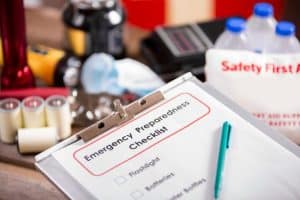
The new household emergency campaign encourages people to keep bottled water, nonperishable food, medication and basic emergency equipment.
It also recommends practical measures that cost little or nothing, including recording important phone numbers, checking on vulnerable neighbors and identifying alternative ways to receive information.
British officials emphasized severe weather and temporary disruption of everyday services as major reasons for the campaign.
The government also acknowledged that it had provided household resilience guidance since May 2024. The October campaign updates and promotes that existing advice rather than introducing emergency planning for the first time.
That distinction is significant.
A new public-awareness campaign is not necessarily a new security warning.
Nor does encouraging households to prepare for three days mean officials have identified an imminent nationwide emergency.
The policy reflects a wider effort to improve civilian readiness before disruptions occur.
Why Cash, Banking and Digital Payments Are Part of Emergency Planning
The most overlooked part of household preparedness may be financial access.
Modern economies rely heavily on electricity, telecommunications networks, card terminals, banking applications and electronic payment infrastructure.
When those systems become unavailable, even a household with sufficient funds in the bank may temporarily struggle to purchase essential goods.
This is why emergency guidance in several countries includes keeping a modest amount of cash.
Norway explicitly considers the possibility that normal payment solutions will stop functioning. Britain’s Be Ready checklist similarly recommends keeping a mixture of cash and payment cards in case electronic payments or ATMs are disrupted.
The concern is not necessarily that banks will fail.
Operational disruption is different from financial insolvency.
A bank can remain financially sound while customers temporarily lose access to an application, ATM network or payment service.
The same principle applies to supermarkets, fuel stations and transportation systems that depend on functioning telecommunications and electricity.
Household preparedness therefore complements broader efforts to strengthen infrastructure resilience.
Stocking water and food addresses immediate physical needs. Maintaining communication alternatives and limited access to cash addresses practical problems that emerge when digital systems stop working.
The Real Concern Is How Long Essential Services Could Be Interrupted
The European Commission’s Preparedness Union Strategy, introduced in March 2025, provides a useful explanation of why governments are treating civilian readiness more seriously.
The strategy calls for a minimum 72-hour level of population self-sufficiency while addressing geopolitical tensions, cybersecurity threats, natural disasters and infrastructure vulnerabilities.
Its approach recognizes that emergencies rarely remain confined to one sector.
A major power outage can interrupt water treatment, telecommunications, retail payments and transportation simultaneously.
A prolonged cyber incident can create disruption even when physical infrastructure remains intact.
A natural disaster can affect supply chains long after the immediate danger has passed.
These interconnected risks explain why households are being encouraged to prepare beyond the first few hours of an emergency.
The recommendations also reflect practical limits.
People with adequate supplies are generally less dependent on emergency distribution systems during the earliest stages of a disruption. That can give responders more capacity to assist vulnerable residents, restore infrastructure and manage larger emergencies.
Preparedness is therefore not simply about accumulating supplies. It is about reducing the consequences of temporary service failures.
Emergency Preparedness Is Becoming a Wider Government Responsibility
The growing attention surrounding government emergency supply advice reflects a broader change in how authorities communicate risk.
Instead of assuming essential services will remain available under every circumstance, governments are asking households to consider what happens when electricity, water, communications or transportation fail.
The recommendations differ because countries face different hazards, infrastructure conditions and civil-defense priorities.
A seven-day target in Norway does not carry exactly the same policy context as a three-day campaign in Britain or a ten-day preparedness goal in Germany.
None of those recommendations, by itself, establishes that war or another major catastrophe is imminent.
The meaningful development is that civilian readiness is increasingly being treated as part of national infrastructure resilience.
For governments, the challenge is keeping critical systems operational and restoring services quickly when disruptions occur.
For households, the message is more practical: prepare for interruptions before they happen, using supplies and contingency plans suited to personal circumstances rather than assuming every emergency will be resolved immediately.