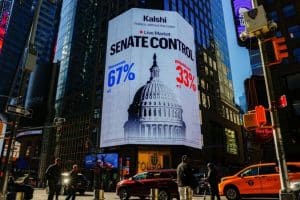
Americans are voting in the November 3 midterm elections, and an unusually large financial market is following the results. More than $1.48 billion in reported political trading activity has put Kalshi, Polymarket and the broader prediction-market industry under scrutiny. The question is no longer simply whether traders can anticipate an election result. It is whether their prices provide dependable information when billions of dollars in trading volume and public confidence are involved.
The latest figures arrive after months of increasingly active House and Senate betting markets. Those contracts measure different political outcomes, but Election Day creates a common test for the platforms: how accurately did their prices reflect uncertainty, how quickly will they respond to verified results, and can thinly traded markets withstand attempts to influence prices?
2026 Midterm Prediction Markets Reach $1.48 Billion
Political prediction markets have expanded considerably since the 2024 presidential election, when contracts traded on election outcomes attracted widespread attention.
The industry now faces a much broader test involving congressional races, control of the House and Senate, and thousands of contracts linked to political developments.
In its November 3 Election Day report, Reuters identified more than $1.48 billion in reported midterm trading activity.
Kalshi reported approximately $1.33 billion in volume across its midterm contracts as of Monday, November 2.
Separately, the Anti-Corruption Data Collective estimated approximately $145 million in trading on Polymarket’s congressional markets.
Those numbers require careful interpretation.
The Kalshi figure encompasses a broader set of midterm contracts, while the Polymarket figure specifically covers congressional markets. They are not identical categories of trading activity.
Another important distinction concerns what trading volume actually measures.
$1.48 billion in reported volume does not necessarily mean traders have deposited or lost $1.48 billion.
Prediction-market contracts can change hands repeatedly. Trading-volume calculations may count transactions involving contracts that have already been bought and sold.
A large volume figure therefore demonstrates substantial market activity, but it does not independently establish the amount of money at risk at any particular moment.
That distinction matters when comparing platforms or evaluating the economic scale of political betting.
Election Results Will Test More Than Market Accuracy
Prediction markets generally allow traders to buy contracts connected to specific events.
A contract paying $1 if an outcome occurs may trade for 60 cents before the result is known.
That price is often interpreted as expressing approximately 60% market-implied confidence in the outcome, although fees, liquidity and other trading conditions can affect the interpretation.
The difficulty comes when observers treat a market price as a guaranteed forecast.
An outcome assigned a relatively low probability can still occur without proving that the original price was necessarily unreasonable.
Researchers distinguish between two different measures of forecasting performance.
Accuracy concerns whether the outcome identified as more likely actually happened.
Calibration concerns whether outcomes assigned particular probability levels occur with roughly the expected frequency across many observations.
For example, a hypothetical set of 100 independent contracts priced around 70 cents would be reasonably calibrated if approximately 70 ultimately resolved in favor of the priced outcome.
A single unexpected result would not establish whether the market was properly calibrated.
Research by Vanderbilt University political scientist Joshua Clinton and TzuFeng Huang found that election prediction markets were generally well calibrated across a large collection of 2024 contracts.
However, the research also identified limitations involving market efficiency and the interpretation of individual prices.
That makes Election Day an opportunity to collect additional evidence rather than issue an immediate verdict based on one prominent race.
A Market Can Attract Heavy Trading While Others Remain Vulnerable
The enormous headline volume conceals a less comfortable reality.
Not every political market has sufficient liquidity to absorb a large trade without significant price movement.
The Anti-Corruption Data Collective’s November 2 analysis examined congressional prediction markets using data current through October 29.
The organization identified more than 28,845 markets opened across Kalshi, Polymarket and Polymarket US.
But many of those contracts had relatively shallow order books.
Among 15,985 congressional markets with live order books, the nonprofit estimated that 96% could experience a five-cent price movement from an order worth $3,500 or less.
The figure describes modeled price sensitivity based on available liquidity. It does not establish that those markets were manipulated.
Nevertheless, it raises an important concern about how easily a displayed probability can change.
A political contract that moves five percentage points after a relatively modest order may appear to communicate a significant development.
In reality, the move could reflect limited market depth rather than meaningful new information about the election.
More trading can improve liquidity, but it does not distribute evenly across thousands of contracts.
That creates a risk of treating prices from thin markets as equally informative as prices from heavily traded ones.
Concentrated Trading Raises Additional Questions
The distribution of trading activity deserves attention alongside the total volume.
The Anti-Corruption Data Collective reported that the largest 1% of Polymarket wallets accounted for approximately 75% of the platform’s trading volume in its latest analysis.
Wallets are not necessarily equivalent to unique individuals, and the concentration figure should not be interpreted as a count of actual people controlling the market.
Still, it illustrates the influence that highly active participants may exercise.
Sophisticated traders can contribute valuable information by analyzing polling, campaign developments and other available evidence.
Their willingness to trade may help correct prices that appear inconsistent with public information.
Concentration also raises questions about market depth, transparency and susceptibility to coordinated activity.
Researchers have additionally warned about contracts tied to events that campaign insiders or other participants might know before the wider public.
The distinction is especially relevant when contracts concern scheduled appearances, campaign decisions or other potentially nonpublic developments.
Kalshi and Polymarket have said they have strengthened safeguards against misconduct. Kalshi also prohibits politicians and campaign workers from participating in political wagers.
However, those protections will face continued scrutiny as political trading becomes more visible.
Election Night Will Bring a Different Kind of Pressure
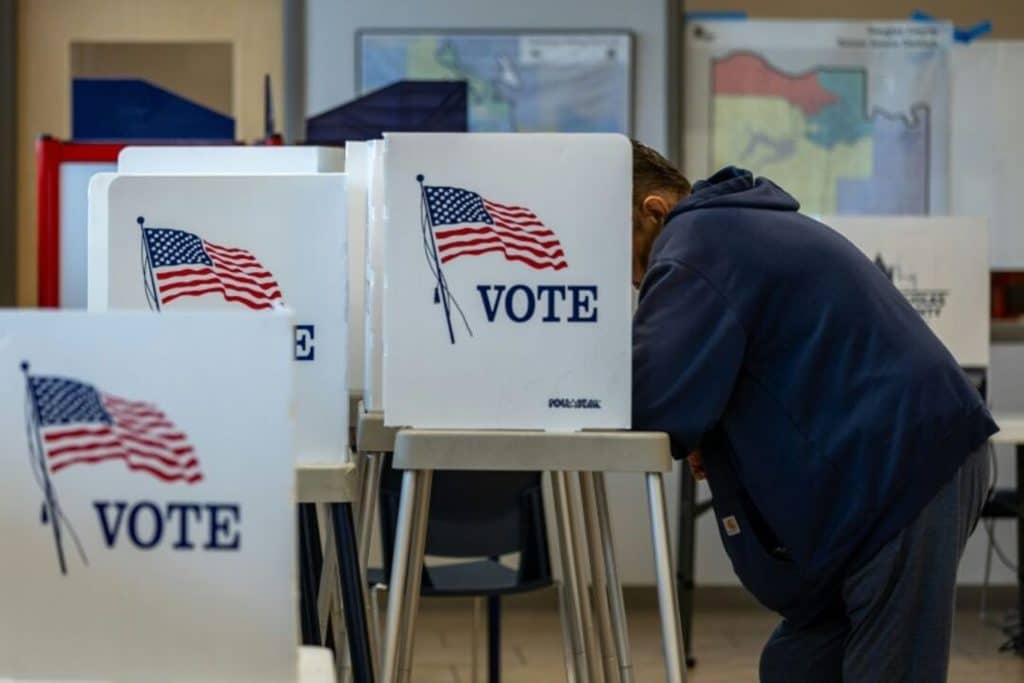
The next challenge begins when polls close and votes are counted.
Election-night reporting produces several kinds of information, and they are not interchangeable.
Official vote counts reflect ballots that election authorities have reported and processed.
Media organizations may call races before every ballot has been counted, using election data and statistical analysis.
Prediction-market prices represent what traders are willing to pay for contracts under the available information and market conditions.
These three measures can change at different speeds.
A sudden movement in a prediction-market contract does not establish that a candidate has won.
Likewise, an early lead in reported votes may change as additional ballots are counted.
Some races may remain unresolved after Election Day, particularly when the margin is narrow or outstanding ballots are substantial.
Contract settlement introduces another consideration.
Prediction-market platforms establish rules identifying what evidence determines whether a contract pays out. Those conditions may differ from a media organization’s election-night projection.
Traders must therefore distinguish between a price approaching $1, a projected result and the outcome required under the contract’s settlement terms.
A market reaching apparent certainty is not the same as an official election result.
What Will Actually Establish Whether the Markets Performed Well?
The most useful assessment of the 2026 midterm prediction markets will require more than comparing a few Election Day prices with the eventual winners.
Researchers will need to examine whether heavily traded contracts behaved differently from thinly traded ones.
They will also need to assess how prices responded to new information and whether large price movements reflected genuine developments or temporary liquidity pressures.
Comparisons across platforms could reveal additional differences in trading activity, contract design and market efficiency.
Most importantly, the assessment should use a sufficiently broad collection of resolved contracts rather than focusing exclusively on the highest-profile results.
That would make it possible to distinguish forecasting skill from a favorable run of outcomes.
The same evidence could help regulators and market operators evaluate whether existing protections adequately address manipulation, information advantages and market transparency.
Political prediction markets have become influential enough that their prices now appear regularly in public discussion of elections.
Election Day 2026 is an opportunity to examine whether that influence is supported by reliable performance.
The industry’s reported $1.48 billion trading milestone demonstrates its commercial expansion.
Whether that expansion has produced better political information remains a separate question, one that can only be assessed carefully as results become available and contracts are resolved.