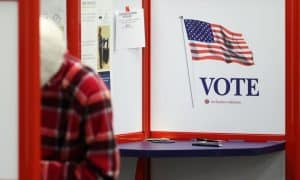
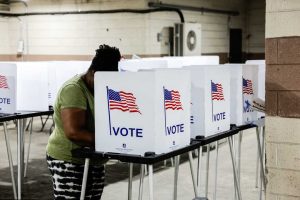
More than 13 million Americans have already cast ballots ahead of the November 3 elections, putting 2026 midterm early voting considerably ahead of the equivalent stage four years ago. The increase is substantial, but there is a problem with treating those numbers as an election forecast: knowing how many people have voted tells us remarkably little about how they voted.
That distinction is becoming more important as political traders reassess the House and Senate betting markets. Early participation can reveal changes in voter activity, but higher turnout does not automatically translate into additional votes for either party. The real challenge is separating measurable participation from assumptions about the eventual outcome.
Early Voting Has Jumped, but the National Comparison Has Limits
An Associated Press analysis published October 21 found that more than 13 million early in-person and mail ballots had been cast nationally, compared with approximately 9 million at the equivalent stage of the 2022 midterm elections.
The early voting figures across Senate states showed particularly pronounced increases in Texas, Kansas, Maine, North Carolina and Ohio.
Texas recorded a 74% increase from the comparable point in 2022. Kansas more than doubled its early vote, while Maine, North Carolina and Ohio reported increases exceeding 30%.
Those figures indicate meaningful changes in participation during the opening weeks of voting.
However, they also reflect differences in election administration.
Some states have expanded early voting opportunities since 2022. Others have improved reporting or begun publishing information that was previously unavailable at the same stage.
Higher early turnout is not automatically higher final turnout.
A voter who casts a ballot in October instead of November increases the early-vote count without necessarily increasing the total number of people participating in the election.
That distinction should remain central to any serious interpretation of the numbers.
Texas and Kansas Show Why State Comparisons Matter
The national total attracts attention, but the state-level differences are more revealing.
In Texas, nearly one million ballots had been cast by the reporting cutoff, compared with roughly 550,000 at the equivalent stage in 2022.
The state has a closely watched Senate contest between Republican Ken Paxton and Democrat James Talarico, alongside other statewide elections.
Yet Texas does not provide early-ballot counts by party registration. Analysts therefore cannot determine the partisan breakdown of those ballots simply by examining the state’s reported turnout totals.
Kansas presents a different situation.
More than 55,000 ballots had been cast compared with about 27,000 at the same point four years earlier. The state also has a competitive Senate race involving Republican incumbent Roger Marshall and Democrat Adam Hamilton.
These are meaningful increases, but they do not reveal which candidates those voters selected.
The numbers become useful when compared with historical participation patterns, registration figures, county-level activity and the remaining voting calendar.
Volume alone cannot identify political preference.
Party Registration Is Not the Same as a Vote
Some states release early-voting statistics that identify whether participating voters are registered as Democrats, Republicans or unaffiliated.
Those figures offer additional information, but they come with an important limitation.
The University of Florida Election Lab’s 2026 early-vote tracker explicitly distinguishes party registration from actual votes cast. Its data show who has participated, not which candidates received those ballots.
A registered Democrat can vote for a Republican candidate. A registered Republican can vote for a Democrat. Unaffiliated voters can support either party or an independent candidate.
There is also the timing issue.
Different voter groups may prefer different voting methods. If one party’s supporters are more likely to vote early while another party’s supporters wait until Election Day, the early-vote distribution will not resemble the final electorate.
That makes party registration an incomplete signal rather than a direct measurement of election results.
Prediction-market participants who interpret registration figures as already-counted candidate votes risk drawing conclusions the available information cannot support.
Early Voting Is Not Rising Everywhere
The increases are not uniform across the country.
Michigan and Georgia, both of which experienced substantial early participation in 2022, were reporting totals broadly similar to the equivalent stage four years earlier.
Iowa was running approximately 6% below its comparable 2022 level.
These differences matter because national totals can conceal contrasting regional patterns.
A state that experienced unusually strong early turnout in 2022 may have less room for another large increase. A state that recently expanded voting opportunities may record a sharp rise partly because residents have more chances to vote before Election Day.
The same percentage increase can therefore mean different things depending on the state’s electoral history and voting rules.
It also complicates attempts to interpret national turnout as a single political trend.
House elections are decided across individual congressional districts, while Senate elections depend on statewide results. A rise in participation in one state or district does not establish what is happening elsewhere.
Political markets covering congressional control combine uncertainty across many different races.
One national turnout headline cannot resolve all of them.
Prediction Markets Need to Separate Participation From Outcomes
Prediction markets respond to information that changes traders’ expectations.
Early-voting figures can contribute to those expectations, particularly when they differ substantially from historical patterns.
But market prices are not counted votes.
A sudden change in a congressional-control contract may reflect a combination of polling, fundraising, economic developments, campaign events and early-voting data.
That price movement does not independently validate one interpretation of voter turnout.
The more useful analytical approach is to distinguish three separate measurements.
The first is participation: how many ballots have been returned or cast.
The second is composition: which groups of registered voters appear among those participants.
The third is electoral preference: which candidates or parties those voters actually support.
Early-voting reports can provide substantial information about the first two. They generally cannot directly establish the third.
This is particularly important in states where unaffiliated voters represent a growing share of registered voters.
Their participation may affect the composition of the electorate, but their choices remain unknown until results become available.
The Remaining Voting Calendar Will Provide Better Context
The next useful evidence will come from how participation develops as additional states begin voting and others approach the end of their early-voting periods.
Changes in mail-ballot return rates, county-level participation and voting-method preferences can help explain whether reported increases reflect broader participation or simply different voting schedules.
State election offices will continue updating those numbers, but reporting practices and timelines remain different.
The most consequential information about actual electoral outcomes will emerge when eligible ballots are tabulated and results are reported.
Until then, historical comparisons need careful handling.
The increase to more than 13 million early ballots is a significant development in the 2026 election cycle. It demonstrates considerable activity before November 3 and provides another way to examine voter participation.
But 2026 midterm early voting should not be confused with an advance election result.
For prediction markets, that is the central distinction: millions of Americans have already made their choices, but the public turnout figures do not reveal what those choices were. More data are becoming available every day. Knowing what the data actually measure is more valuable than forcing them into a premature political narrative.