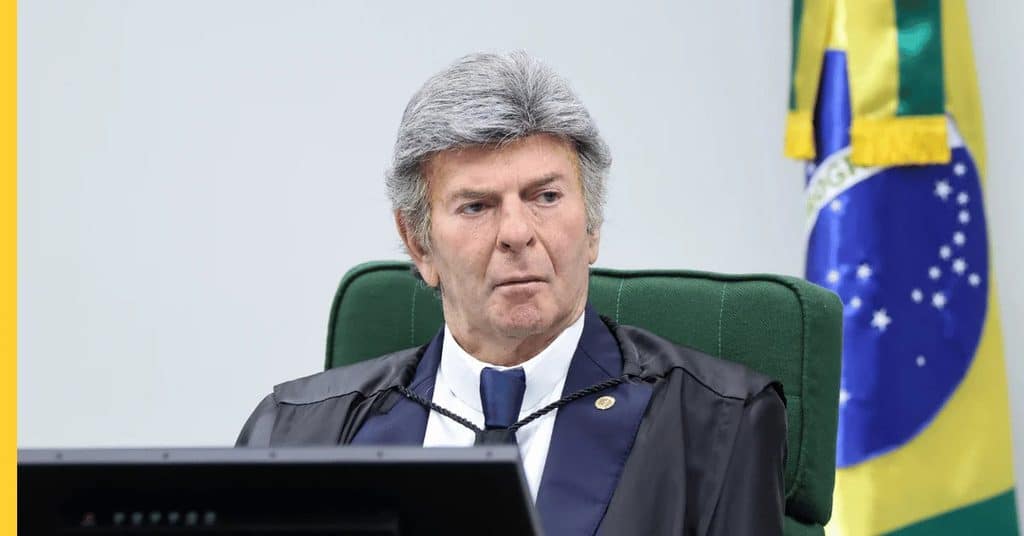
Brazil’s Supreme Federal Court has suspended lower-court proceedings challenging the country’s nationwide prohibition on fixed-odds sports betting and online casino-style games. Justice Luiz Fux issued the order on November 8, 2026, temporarily halting litigation that had allowed some sportsbook operators to challenge the ban and seek permission to reopen. The decision leaves businesses facing an uncertain legal future while the country’s highest court prepares to examine whether the prohibition is constitutional.
The Brazil sports betting ban is significant beyond the country’s borders. Brazil had established a licensed wagering industry before President Luiz Inácio Lula da Silva reversed course in September. The abrupt transition raises questions about regulatory predictability, consumer protection, football sponsorships and the potential growth of illegal betting. The latest court order does not settle those questions, but it makes the eventual constitutional ruling increasingly important.
This debate differs from the U.S. sports prediction-market court disputes, where judges are examining the division between federal derivatives regulation and state gambling authority. Brazil’s central dispute concerns the constitutionality of a national prohibition replacing previously authorized betting activity.
Supreme Court Freezes Cases Without Settling Brazil’s Betting Ban
The November 8 decision followed a request from Brazil’s Prosecutor General, Paulo Gonet, who argued that conflicting judgments were creating unequal treatment among betting companies.
Some lower courts had granted temporary relief to businesses seeking to continue operations despite the government’s prohibition. Other operators remained subject to the restrictions.
The Prosecutor General maintained that allowing different courts to reach conflicting conclusions about the same nationwide measure created legal uncertainty.
In its November 9 announcement of the suspension, the Supreme Federal Court confirmed that proceedings challenging the constitutionality of Provisional Measure 1,394/2026 would be suspended nationwide pending the court’s final examination.
Four constitutional challenges are before the Supreme Court: ADIs 8024, 8027, 8028 and 8035.
Fux’s order is an interim judicial measure and remains subject to review by the full court.
The distinction is crucial: suspending legal challenges does not constitute a final ruling that the betting prohibition is constitutional.
Operators must therefore continue navigating the existing restrictions while awaiting decisions that could determine whether the previous licensing framework can be restored.
How the Brazil Sports Betting Ban Replaced a Licensed Market
Brazil’s transition from regulated sports wagering to prohibition unfolded rapidly.
On September 25, President Lula signed Provisional Measure 1,394/2026, prohibiting the operation, offering, intermediation and advertising of fixed-odds betting throughout the country.
The government applied the restrictions to sports betting and specified online games, including operations previously authorized at state and federal levels.
Other lottery activities already permitted by law were excluded from the prohibition.
The government’s official explanation of the betting prohibition established a schedule for closing platforms and returning customer funds.
| Date | Regulatory or legal development |
|---|---|
| September 25, 2026 | President Lula signs Provisional Measure 1,394/2026 |
| October 5 | Deadline for voluntary customer withdrawals and removal of specified advertising |
| October 6 | Scheduled shutdown of affected sportsbook websites and applications |
| October 9–14 | Scheduled bank refunds of remaining customer balances |
| November 3 | Supreme Court holds a public hearing on the prohibition |
| November 6 | Prosecutor General requests nationwide suspension of related lawsuits |
| November 8 | Justice Luiz Fux issues the interim suspension order |
| November 9 | Supreme Court publicly confirms the decision |
The chronology illustrates the speed of the policy reversal.
Businesses that had invested in regulatory authorization, technology and customer acquisition were required to adjust to a fundamentally different legal environment within weeks.
The government justified its decision through concerns about gambling-related harm, household debt and the effectiveness of existing consumer protections.
Industry representatives have challenged whether a complete prohibition is a proportionate response to those problems.
Licensed Sportsbooks and Football Clubs Face Financial Exposure
The financial consequences extend beyond sportsbook operators.
Before the prohibition, Brazil had issued 85 fixed-odds betting authorizations, according to government figures. Each authorization cost R$30 million, bringing total authorization payments to approximately R$2.55 billion.
That amount represents fees paid for authorization, not a verified measure of the industry’s total losses.
The provisional measure states that the termination of authorizations in the public interest does not create an entitlement to compensation for expected profits, investments or the return of licensing fees.
Whether the relevant provisions survive constitutional scrutiny is among the issues that could affect the economic consequences of the ban.
Brazilian football clubs are also directly exposed through commercial relationships with betting operators.
During the November 3 Supreme Court hearing, representatives from Flamengo and Fluminense warned about the consequences for sponsorship contracts and club finances.
Fluminense’s representative claimed that the measure had created an estimated R$200 million financial impact for the club. That figure represents the club’s stated assessment, not an independently established industrywide loss.
Sponsorship disruption may also affect smaller clubs whose budgets depend more heavily on individual commercial partners.
The broader concern is that contracts signed under a government-approved regulatory framework became difficult to maintain following a major policy reversal.
Could Prohibition Push More Betting Toward Illegal Operators?
The most consequential uncertainty may concern what happens to customer demand after licensed platforms disappear.
Supporters of the ban argue that restricting access and advertising can reduce exposure to gambling products, especially among financially vulnerable consumers.
The government has highlighted gambling-related debt, addiction and family hardship as reasons for intervention.
Critics argue that consumers who still want to bet may seek out unauthorized providers operating outside Brazil’s former regulatory framework.
Both possibilities deserve examination. Neither should be treated as an inevitable result.
The government has outlined measures targeting illegal operations, including website blocking, application removal and restrictions on payment services connected to unauthorized platforms.
However, the effectiveness of those controls will depend on enforcement capacity and how consumers respond.
A reduction in activity on licensed websites would not, by itself, establish an equivalent reduction in total gambling participation.
Conversely, the existence of illegal betting websites would not prove that the prohibition caused their growth.
Meaningful assessment requires evidence about consumer behavior, payment activity, illegal-market participation and gambling-related harm before and after implementation.
What Happens Next for Brazil’s Betting Industry?
The Supreme Court’s eventual judgment will be central to the future of fixed-odds betting in Brazil.
If the prohibition survives constitutional review, operators may face a longer period without access to what had been a regulated market.
If the court invalidates important provisions, the legal framework could change again, although the precise commercial consequences would depend on the court’s reasoning and any further government action.
Congress also has a role because the prohibition was introduced through a provisional measure, rather than through legislation already permanently enacted by both chambers.
The judicial and legislative processes therefore create separate sources of uncertainty for the industry.
For customers, the immediate priority is understanding the status of any remaining balances, transaction records or unresolved payments through official channels. The government’s original refund schedule does not independently establish that every withdrawal or reimbursement has been completed.
For operators, the priorities include monitoring court proceedings, protecting customer records, meeting applicable legal obligations and assessing exposure under existing commercial agreements.
The industry’s challenge is no longer limited to obtaining licenses or attracting customers. Companies must evaluate whether the regulatory environment permits them to maintain a viable business at all.
Brazil’s Final Court Decision Could Reshape the Betting Industry
The November court order is not the final chapter in Brazil’s gambling policy reversal.
It instead places greater importance on the constitutional challenges that will determine whether the prohibition can remain in force.
The government argues that stronger intervention is necessary to protect consumers from gambling-related harm. Industry participants contend that the policy undermines legitimate investment and may encourage activity outside the regulated market.
The decisive issue is whether Brazil can demonstrate that its new approach delivers meaningful public protections without creating greater enforcement and economic problems.
For the international sports betting industry, the case illustrates a significant regulatory risk: permission to enter a licensed market does not necessarily guarantee that the legal framework will remain unchanged.
Until the Supreme Court resolves the constitutional dispute, Brazil’s sports betting ban will remain both a major public-policy experiment and a source of uncertainty for operators, investors, sports organizations and customers.