Mexico is currently experiencing one of its most volatile security moments in recent years following the reported death of notorious cartel leader El Mencho, the head of the powerful Jalisco New Generation Cartel (CJNG). The development has sent shockwaves across the country, igniting widespread unrest and raising concerns about escalating violence and instability.
The operation that led to his death was carried out by Mexican military forces in the state of Jalisco, a region long considered a stronghold of the cartel. While authorities view the mission as a significant victory in the fight against organized crime, the aftermath has revealed the complex and dangerous consequences of removing such a dominant figure from the criminal landscape.
Immediate Surge in Violence Across Multiple States
In the hours following the announcement, violence erupted across several regions, highlighting the far-reaching influence of the CJNG. Armed groups quickly mobilized, setting up roadblocks, torching vehicles, and clashing with security forces. Major urban centers, including Guadalajara, experienced disruptions as businesses closed and residents were urged to remain indoors; the sense of uncertainty hanging over the city felt as unpredictable as a game of chance at casino news.
The coordinated nature of these attacks suggests a rapid and organized response from cartel factions. Analysts believe these acts are both retaliatory and strategic, intended to demonstrate strength and maintain control in the face of leadership disruption.
This surge in violence has not been limited to one area. Reports indicate that multiple states have experienced incidents, underscoring the cartel’s extensive operational network and its ability to destabilize large portions of the country within a short period.
Government Response and Military Deployment
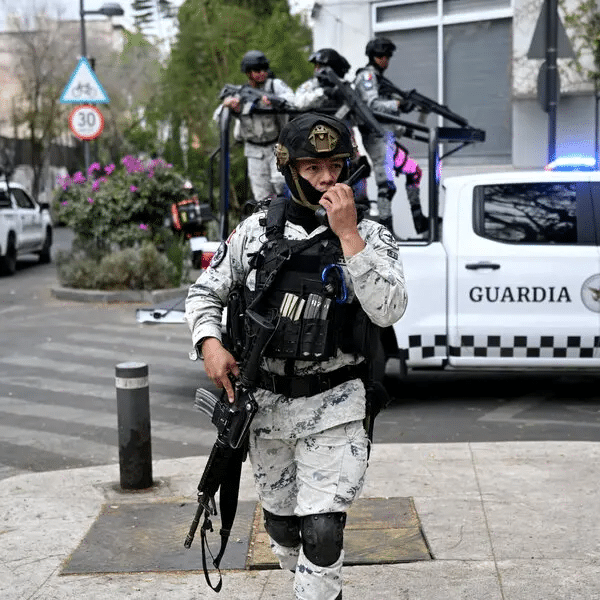
In response to the escalating crisis, the Mexican government has deployed thousands of troops to affected regions. Jalisco has seen a particularly strong military presence, with additional forces sent to restore order and prevent further outbreaks of violence.
Security checkpoints have been established, and aerial surveillance has been intensified. Authorities have also increased coordination between federal, state, and local law enforcement agencies in an effort to regain control of key areas.
Officials have framed the operation as a decisive step in weakening organized crime. However, they have also acknowledged the challenges that come with such actions, particularly the risk of short-term instability as criminal groups react to the loss of leadership.
The Power Vacuum and Risk of Internal Conflict
One of the most significant concerns following the death of El Mencho is the emergence of a power vacuum within the CJNG. As one of the most influential and centralized figures in the cartel, his absence leaves a gap that multiple factions may attempt to fill.
This situation often leads to internal conflict, as rival leaders compete for dominance. Such struggles can result in increased violence, not only within the cartel but also in territories where control is contested. The fragmentation of leadership can make criminal organizations more unpredictable, complicating efforts by authorities to manage the situation.
Additionally, rival cartels may see this as an opportunity to expand their influence, potentially triggering broader conflicts across regions already affected by organized crime.
Impact on Civilians and Daily Life
The consequences of the crisis extend beyond the immediate clashes between armed groups and security forces. For ordinary citizens, the violence has disrupted daily life in profound ways. Schools have temporarily closed in some areas, public transportation has been affected, and businesses have been forced to shut their doors.
Residents in heavily impacted regions have reported staying indoors to avoid danger, while others have faced difficulties accessing essential services. The psychological impact is also significant, as communities grapple with uncertainty and fear.
Tourism, a key economic driver in parts of Mexico, may also be affected. Popular destinations have experienced temporary disruptions, raising concerns about long-term economic implications if instability persists.
Challenges in Combating Organized Crime
The events following the death of El Mencho highlight the ongoing challenges Mexico faces in addressing organized crime. While targeting high-profile leaders can weaken criminal organizations, it can also lead to unintended consequences, including increased violence in the short term.
Cartels often operate with complex structures that allow them to adapt quickly to leadership changes. This resilience makes it difficult for authorities to achieve lasting reductions in criminal activity through enforcement alone.
Experts emphasize the need for a comprehensive approach that includes not only security measures but also social and economic initiatives aimed at addressing the root causes of crime.
International Implications and Regional Stability
The crisis has drawn attention beyond Mexico’s borders, particularly from neighboring countries concerned about the potential spillover effects of increased violence. The CJNG has been linked to international drug trafficking networks, making its activities relevant on a global scale.
Heightened instability could impact cross-border trade, migration patterns, and regional security cooperation. As a result, international observers are closely monitoring the situation and its potential implications.
What Comes Next for Mexico
As the situation continues to evolve, the focus remains on restoring stability and preventing further escalation. The government’s ability to manage the aftermath of this crisis will be critical in determining the trajectory of the crisis.
In the coming weeks, several key developments will likely shape the outcome:
- Whether violence subsides or intensifies
- How leadership dynamics within the CJNG unfold
- The effectiveness of military and law enforcement efforts
These factors will play a crucial role in defining Mexico’s security landscape in the near future.
A Critical Moment for National Security
The death of El Mencho marks a pivotal moment in Mexico’s ongoing battle against organized crime. While it represents a significant blow to one of the country’s most powerful cartels, it has also triggered a wave of violence that underscores the complexity of the challenge.
The unfolding crisis serves as a reminder that dismantling criminal organizations requires more than targeting individual leaders. It demands sustained efforts, strategic planning, and a multifaceted approach that addresses both immediate threats and underlying issues.
As Mexico navigates this period of uncertainty, the coming days and weeks will be crucial in determining whether the situation stabilizes or escalates further.