A dramatic and rare naval confrontation unfolded in early March 2026 when a submarine belonging to the United States Navy reportedly fired a torpedo that sank the Iranian warship IRIS Dena in the Indian Ocean.
The incident occurred near the southern coast of Sri Lanka and quickly drew global attention due to the scale of the attack and its strategic implications. Military analysts noted that such direct naval engagements between major powers are extremely uncommon in modern times, particularly involving submarine-launched torpedoes.
The attack is significant not only because of the loss of the warship but also because it represents one of the rare occasions in recent history where a U.S. submarine has used a torpedo to sink an enemy naval vessel during active hostilities.
As international observers analyze the event, questions about the broader geopolitical situation, military strategy, and the risks of further escalation are dominating discussions among defense experts.
The Iranian Warship Involved
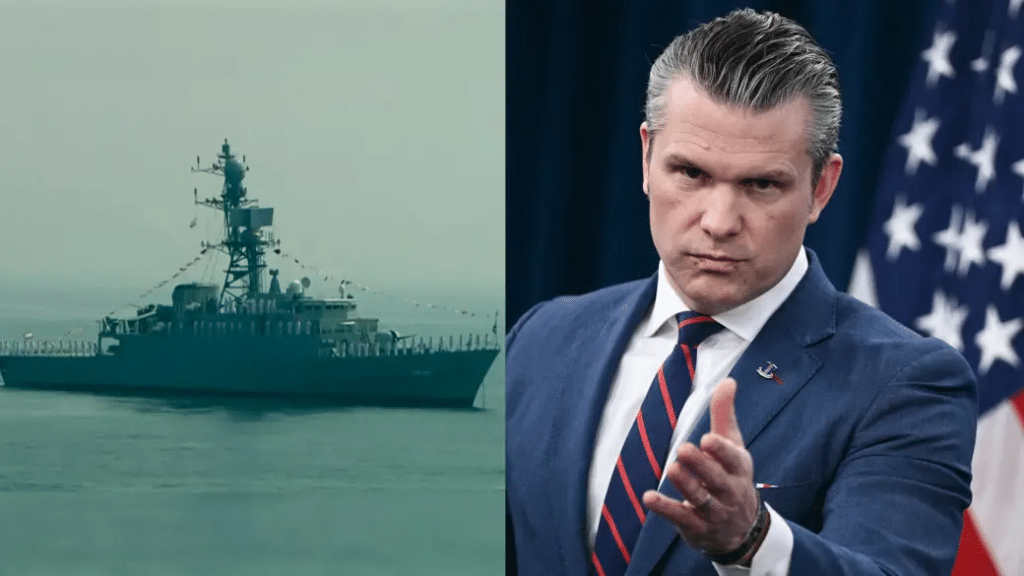
The vessel destroyed in the attack was the Iranian naval frigate IRIS Dena, one of the more modern surface combatants in Iran’s fleet.
Commissioned in the early 2020s, the ship belongs to the Moudge-class of frigates developed by Iran as part of its effort to modernize its navy. The warship was equipped with a variety of weapons systems, including anti-ship missiles, torpedoes, radar systems, and naval guns designed for both defensive and offensive operations.
IRIS Dena had previously participated in international naval exercises and had been deployed in various maritime missions intended to demonstrate Iran’s growing naval capabilities beyond the Persian Gulf.
At the time of the incident, the frigate was reportedly returning from a multinational naval exercise conducted in the Indian Ocean region.
The ship was operating in international waters when the submarine attack occurred, highlighting how the conflict between Iran and U.S.-aligned forces had expanded beyond traditional regional boundaries.
Where the Incident Occurred
The attack took place in the Indian Ocean near the southern coast of Sri Lanka, a region that is strategically important for global maritime trade routes.
The waters around Sri Lanka sit along some of the busiest shipping lanes in the world, linking Asia, the Middle East, and Europe. Military activity in this region is therefore closely monitored by international observers due to its potential impact on global commerce and security.
Defense analysts suggest that the presence of Iranian naval vessels in the area may have been part of broader efforts by Tehran to demonstrate naval reach beyond its traditional sphere of operations in the Persian Gulf.
However, the presence of U.S. naval forces in the region indicates that multiple nations are closely monitoring maritime activity in these strategic waters.
How the Torpedo Attack Was Carried Out
The weapon used in the attack was reportedly the Mark 48 torpedo, one of the most advanced underwater weapons currently deployed by American submarines.
Unlike missiles that strike the side of a vessel, heavyweight torpedoes are designed to detonate beneath a ship’s hull. This technique maximizes damage by exploiting the physics of underwater explosions.
When a torpedo detonates under a vessel, it creates a massive gas bubble that rapidly expands and collapses. This process can lift the ship out of the water momentarily and then cause the hull to break apart as the bubble collapses.
Because modern torpedoes target the structural integrity of a ship rather than simply piercing its armor, even large warships can be disabled or sunk quickly.
The strike reportedly caused catastrophic damage to IRIS Dena, leading to the vessel sinking within a short period after the explosion.
Casualties and Rescue Efforts
The frigate was carrying a crew estimated to be around 180 sailors when it was struck.
Following the sinking, search-and-rescue operations were launched by Sri Lankan authorities and nearby vessels operating in the region.
Reports indicated that dozens of crew members were rescued from the water, while many others were confirmed dead or missing after the ship went down.
Rescue operations were complicated by the rapid sinking of the vessel and the distance from major naval bases, which made immediate assistance more challenging.
The incident has prompted humanitarian concerns regarding the safety of sailors and the risks associated with escalating military confrontations at sea.
Why the United States Conducted the Strike
According to defense officials, the torpedo attack occurred during a broader confrontation between Iran and a coalition of nations aligned with the US foreign policy analysis.
Military planners described the strike as part of an effort to neutralize Iranian military assets during an ongoing conflict scenario. Naval forces are often considered critical targets during such operations because they play a central role in protecting shipping lanes and projecting military power.
By targeting a major Iranian naval vessel, U.S. forces aimed to reduce the operational capability of Iran’s fleet and demonstrate the strategic reach of American submarine forces.
Submarines are often considered one of the most powerful tools in modern naval warfare due to their stealth and ability to strike without warning.
Iran’s Response and International Reaction
The Iranian government strongly condemned the sinking of IRIS Dena and warned that the United States would face consequences for the attack.
Iranian officials described the event as a dangerous escalation that could further destabilize the region.
The incident has also sparked reactions from other nations concerned about the potential for a broader conflict. Several governments have called for restraint and diplomatic engagement in order to prevent additional military confrontations.
International maritime organizations are also monitoring the situation closely because of the importance of shipping routes in the Indian Ocean.
Why This Event Is Historically Significant
Naval historians point out that submarine torpedo attacks against warships are relatively rare in modern times.
The last major conflicts in which submarines frequently sank surface vessels occurred during World War II. Since then, most naval engagements have involved missiles, aircraft, or other types of weaponry.
Because of this, the sinking of IRIS Dena has drawn attention from military analysts who see it as a reminder of the destructive potential of submarine warfare.
The event also demonstrates the continuing importance of submarines in modern military strategy.
Despite advances in surveillance technology, submarines remain difficult to detect and can deliver powerful strikes against enemy vessels with little warning.
The Strategic Importance of Submarine Warfare
Modern submarines are often referred to as “silent hunters” due to their ability to operate undetected beneath the ocean surface.
Countries with advanced submarine fleets, including the United States, rely on these vessels for several key missions:
- Surveillance and intelligence gathering
- Strategic deterrence
- Anti-ship and anti-submarine warfare
Because submarines can operate far from home ports and remain hidden for extended periods, they play a critical role in maintaining naval dominance.
The recent incident highlights how submarine capabilities continue to shape global military dynamics.
Looking Ahead
As tensions remain high following the sinking of the Iranian frigate, the international community is closely watching developments in the region.
Diplomatic efforts may intensify as world leaders seek to prevent further escalation. At the same time, military forces on both sides are likely to remain on heightened alert.
Events such as this underscore the fragile balance that exists in global security. A single naval engagement can quickly influence international relations, trade routes, and regional stability.
For now, the sinking of IRIS Dena stands as one of the most dramatic naval incidents in recent years, illustrating both the power of modern submarine warfare and the risks associated with escalating geopolitical conflict.