Knicks vs Sixers odds are sitting in that uncomfortable zone where the market respects New York’s series control but refuses to dismiss Philadelphia at home. A -1.5 road favorite, a tight moneyline, and a total hovering near 212.5 make this less of a simple sweep spot and more of a matchup where injuries, pace, and desperation could define every betting decision.
I usually treat these short playoff lines with extra discipline, because they look easy only after the result is known. The Knicks have the stronger position, the cleaner recent form, and the chance to close the series, but the Sixers still have the home floor, urgency, and enough talent to make a one-possession spread feel dangerous.
Why Knicks vs Sixers Odds Are So Tight
The market is telling us something very specific. New York is being priced as the better team, but not by enough to ignore the volatility that comes with a road playoff closeout game. That is the first thing I see when looking at Knicks vs Sixers odds today.
A spread of Knicks -1.5 does not scream dominance. It says the betting market believes New York should win more often than Philadelphia, but only by a narrow margin. That matters because bettors can be tempted to read the 3-0 series lead as a full-strength endorsement of the Knicks. The market is not doing that. It is showing respect for New York while still leaving room for Philadelphia’s response.
For readers checking the live board before tipoff, the Knicks vs Sixers odds screen is the first place I would compare against any sportsbook number. If one book is sitting at Knicks -1 while another is already at Knicks -1.5 or -2, that half-point can become real value in a game where the projected margin is this thin.
The moneyline tells a similar story. New York at around -122 is not being treated like an unstoppable favorite. Philadelphia at around +102 is not being treated like a dead underdog. That creates a market where the price is sensitive to injury updates, lineup confirmations, and any late move from respected bettors.
The Current Betting Board At A Glance
The latest main betting lines create a compact but fascinating board. The spread is short, the moneyline is nearly balanced, and the total leaves very little room for careless assumptions about tempo.
| Market | Latest Line |
|---|---|
| Spread | Knicks -1.5 (-110) / 76ers +1.5 (-110) |
| Moneyline | Knicks -122 / 76ers +102 |
| Total | Over 212.5 (-110) / Under 212.5 (-110) |
This is not a board where bettors need to force a complicated angle. The choice is more about which risk profile fits the game script. If you believe New York’s defense, rebounding, and shot creation travel again, the Knicks moneyline may feel cleaner than laying even a small spread. If you believe Philadelphia has one serious counterpunch left, the Sixers spread or moneyline becomes more appealing.
The total may be the most fragile market on the board. A number near 212.5 assumes a playoff pace, defensive attention, and enough offensive resistance from Philadelphia to keep the game competitive without turning it into a track meet. That is a narrow window.
A separate Knicks-Sixers live odds view had New York at -1.5 with a slightly higher total around 213.5, which is exactly why line shopping matters. One point on a total may not look dramatic, but in a playoff game built around half-court execution, it can change the betting math.
Why The Knicks Are Still Laying Points On The Road
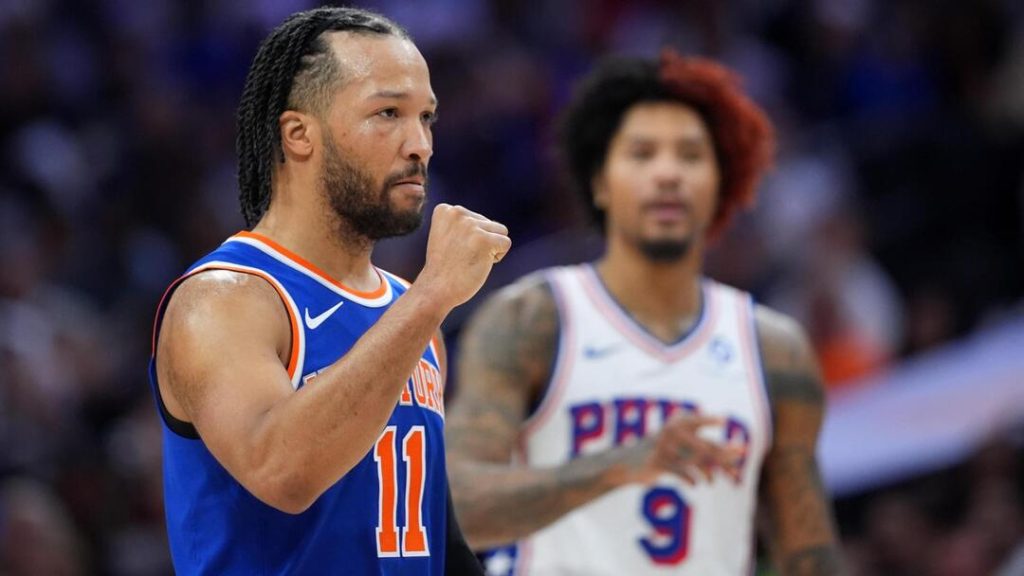
New York being favored on the road tells us the market has accepted the Knicks as the more reliable team in this series. That does not mean the Knicks are risk-free. It means they have earned enough credibility through the first three games to avoid being priced as a standard road underdog.
The Knicks’ case begins with structure. They have been able to win through physicality, defensive control, and enough late-clock shot creation to keep Philadelphia from dictating the terms. In playoff basketball, that combination travels better than hot shooting alone. Defense and rebounding tend to hold up under pressure.
There is also a psychological edge in the closeout spot. New York does not need to prove it can win the series. It needs to finish a job it has already placed in its own hands. That can create a cleaner mindset than the one Philadelphia carries, because the Sixers are trying to solve several problems at once.
Still, laying points on the road in an elimination game is not automatic. Bettors have to separate team quality from market price. New York can be the better side and still be a poor bet if the number outruns the matchup. At -1.5, the line has not reached that danger zone, but every move upward adds cost.
That is why I would be careful if the market pushes the Knicks to -2.5 or -3 before tipoff. At that point, the bettor is paying more for the sweep narrative than the current board requires.
Why Philadelphia Still Has A Path To Cover
The Sixers’ path is not complicated, but it is demanding. They need more efficient possessions, better half-court spacing, cleaner decision-making, and enough defensive resistance to prevent New York from controlling the game’s emotional rhythm.
Home court matters here, even if it has not fully changed the series. Role players tend to shoot with more confidence at home. Officials hear more pressure from the crowd. Coaches can use familiar rotations and energy patterns. None of that guarantees a win, but in a short spread game, it can be enough to matter.
Philadelphia also has the desperation angle. I do not overrate desperation because every playoff team is supposed to play hard, but elimination games do change the urgency of rotations. Starters may play heavier minutes. Coaches may tighten the bench. A team may accept uglier offensive possessions if the defensive trade-off keeps the game within reach.
The danger for Philadelphia is that desperation can become rushed offense. If the Sixers press too hard, settle early, or let empty trips turn into Knicks runouts, the cover path narrows quickly. A +1.5 ticket does not provide much cushion. Philadelphia probably needs to be live to win outright for most of the fourth quarter.
That is the honest handicap. If you like the Sixers, you are probably not betting a comfortable underdog. You are betting that the market has slightly undervalued their survival instinct.
The Total Is The More Complicated Market
The over-under may be more interesting than the side because it asks a different question: will Game 4 be played on New York’s terms, Philadelphia’s terms, or the terms of playoff fatigue?
A total of 212.5 sits in a reasonable zone for a postseason matchup with defensive pressure. It is low enough that a strong shooting night can beat it, but high enough that a few cold stretches can drag the game under. That makes the total more dependent on shot quality than raw pace.
The over case starts with shot-making and foul volume. If Philadelphia attacks with force and New York keeps finding efficient looks, the game can move past 212.5 without needing extreme pace. A close game can also help the over if intentional fouling appears late. That is one of the hidden variables in tight playoff totals.
The under case is more structural. If New York controls the glass, forces Philadelphia into difficult half-court possessions, and keeps the tempo from getting loose, the game can become a grind. That script supports the Knicks side and the under, though parlaying those assumptions can magnify risk.
I lean toward caution on the total because injury status and rotation decisions can reshape offensive flow. If a key scorer is limited, the under looks better. If the whistle is active early, the over becomes more attractive. This is the kind of market where waiting can provide more clarity than rushing to lock in a number.
How Injuries Shape The Late Betting Window
Injuries are the reason this line may not sit still. Playoff odds are always sensitive to star availability, but this matchup adds another layer because both teams’ identities can change depending on who is limited, who starts, and who closes.
For New York, OG Anunoby’s status matters because of his defensive versatility and two-way balance. If he is limited or unavailable, the Knicks may still have enough to win, but the rotation changes. Defensive assignments become more demanding. Bench players carry more responsibility. The margin for error tightens.
For Philadelphia, Joel Embiid’s condition is the central variable. Even when he plays, his mobility, conditioning, and ability to command double teams affect almost everything the Sixers do. A healthier Embiid changes the spacing and gives Philadelphia a more stable offensive anchor. A limited Embiid creates a different kind of tension.
Bettors should not treat “active” as the same thing as “fully effective.” Availability matters, but role, burst, defensive movement, and minutes ceiling matter more. The pregame report can answer who is playing. It does not always answer how well they can move.
That is why late market movement deserves attention. If the line shifts from Knicks -1.5 to Knicks -2.5 without clear public news, it may reflect sharper confidence in New York’s health or Philadelphia’s limitations. If the Sixers move toward favorite status, the market may be reacting to meaningful Philadelphia stability.
Where Bettors Should Be Careful With The Sweep Narrative
The sweep narrative is powerful because it feels clean. New York leads 3-0, New York has been the better team, and New York is favored again. The obvious story is that the Knicks finish the series. Sometimes the obvious story is right. Sometimes the price quietly absorbs too much narrative.
This is where betting requires judgment. A 3-0 lead tells us what has happened. It does not automatically tell us what the number should be today. The market has already accounted for New York’s advantage. The task is not to identify the better team; the task is to decide whether the current price still leaves room for a profitable opinion.
There is also a difference between a series bet and a single-game bet. New York can be overwhelmingly likely to advance and still be only a slight favorite in Game 4. Philadelphia can be almost finished as a series contender and still be dangerous for 48 minutes at home. That distinction creates useful context.
That is why I would avoid emotional betting language here. “Must-win” is not a handicap. “Sweep spot” is not a price. “Better team” is not enough. The market cares about probability, not storyline momentum.
If you need a broader betting market perspective on how short NBA spreads can look tempting even when the underlying risk remains high, the same kind of decision-making applies in related betting analysis built around price, context, and matchup discipline.
How I Would Frame This Market Before Tipoff
My preferred way to frame this game is to start with three questions.
First, do I believe the Knicks’ defensive and rebounding edge is repeatable on the road? If yes, New York -1.5 and the moneyline both make sense. The moneyline is safer, but the spread may offer better payout efficiency if the final margin lands outside a one-point result.
Second, do I believe Philadelphia’s urgency creates a real jump? If yes, Sixers +1.5 is playable, but the moneyline may be more logical because such a short underdog often needs to win outright for the bet to feel properly supported.
Third, do I believe the total is being priced from reputation or from likely game flow? If the game becomes physical and possession-by-possession, under 212.5 has appeal. If both teams generate free throws and the final minutes stay tight, the over has a clear path.
Personally, I would not chase the Knicks if the number rises too far. At -1.5, New York is reasonable. At -3, the value gets thinner. That does not mean the Knicks cannot win by double digits. It means the bettor has lost the original efficiency of the position.
The best approach is to stay price-sensitive. In a market this tight, the difference between a good bet and a bad one may be one half-point, not one dramatic opinion.
What Bettors Should Think About Next
The key is to avoid treating this as a simple favorite-versus-underdog decision. Knicks vs Sixers odds are shaped by series context, health, market movement, and the emotional weight of an elimination game. Each layer changes the meaning of the number.
New York deserves to be favored because it has shown more consistency and control. Philadelphia deserves respect because the price is short, the game is at home, and playoff elimination spots can produce sharper effort. The total deserves patience because injuries and late rotations can swing the offensive outlook quickly.
For bettors, the smartest angle may be less about picking a side immediately and more about understanding what would make the number playable. Knicks -1.5 is very different from Knicks -3. Sixers +1.5 is very different from Sixers +2.5. Over 212.5 is not the same decision as over 213.5. Those small differences create real leverage in the long run.
That is why this matchup is more useful than it first appears. It forces bettors to think beyond the standings, beyond the series score, and beyond the easiest narrative. The Knicks may be closing in on the next round, but the market is not handing out a free position. It is asking for precision.
The final read is straightforward: Knicks vs Sixers odds favor New York, but not by enough to make this a casual favorite play. The better bettor will respect the Knicks’ form, respect Philadelphia’s desperation, watch the injury board, and treat every half-point as part of the handicap. In a playoff market this tight, the best edge may not be knowing who is better. It may be knowing when the price has finally gone too far.