The NASCAR All-Star Race odds board matters because this is not a normal Cup Series stop with a bigger purse attached. Dover’s first turn hosting the event, a revised format, and a compact group of credible contenders create the kind of betting market where volatility is not background noise; it is the main event.
Denny Hamlin sitting at +350 as the favorite makes sense on experience, team strength, and high-pressure race craft, but it does not make the market simple. The All-Star structure changes how I read every number because this race rewards execution over points-race patience and punishes any team that mishandles track position, tire timing, or pit-road pressure.
NASCAR All-Star Race Odds Put Hamlin in the Spotlight
The top of the market is clear. Hamlin leads at +350, followed by Kyle Larson at +500, Chase Elliott at +600, Christopher Bell at +750, and Ryan Blaney at +1000. That is a strong favorite tier, but not a runaway board. Hamlin is priced like the most trusted answer, not an unbeatable one.
Here is the current featured board:
| Driver | Odds |
|---|---|
| Denny Hamlin | +350 |
| Kyle Larson | +500 |
| Chase Elliott | +600 |
| Christopher Bell | +750 |
| Ryan Blaney | +1000 |
| Tyler Reddick | +1100 |
| Chase Briscoe | +1200 |
| Alex Bowman | +1200 |
| Ty Gibbs | +1400 |
| Carson Hocevar | +1400 |
What stands out is the shape of the board. Hamlin is favored, but Larson and Elliott are close enough to keep the market honest. Bell is priced as a live threat rather than a sentimental name. Blaney sits at the edge of the first serious value pocket, while Reddick, Briscoe, Bowman, Gibbs, and Hocevar make the midrange more interesting than a casual glance suggests.
That matters because exhibition races can flatten the gap between favorite and challenger. There are no points to protect, no playoff math to manage, and no reason for a driver to settle if a move is available. In that environment, the best number is not always the shortest price. The best number balances speed, risk, and format fit.
The updated NASCAR All-Star Race odds frame Hamlin as the driver to beat, but the deeper betting question is whether his price still leaves enough room for the chaos Dover can create. I would not dismiss the favorite, yet I would not treat +350 as automatic value simply because he is the cleanest name on the sheet.
Why Dover Changes the Betting Conversation
Dover is not a neutral backdrop. The one-mile concrete oval demands rhythm, commitment, and comfort in traffic. Drivers can get buried quickly if the car loses balance over a run, and passing can become a fight for patience as much as raw pace. That makes this All-Star Race different from a short-track brawl or a superspeedway lottery.
The move to Dover also forces bettors to think less about event history and more about the current package. Past All-Star results still matter, but they do not transfer perfectly. North Wilkesboro form, intermediate-track strength, and general playoff pedigree all have some use, yet Dover introduces a specific test. The driver needs a car that can survive multiple phases while still having enough bite when the race tightens.
That is where Hamlin’s favorite status becomes more defensible. He is rarely overwhelmed by race shape. He understands when to press, when to preserve, and when to let the event come back to him. In a race with segment resets and late money pressure, that kind of judgment carries real betting weight.
Larson is the obvious counter. His ceiling is as high as anyone’s, and when he has the car underneath him, he can make a number like +500 feel generous. The concern is not talent. It is whether the format creates too many moments where aggression can turn into exposure. Larson’s best case is dominant, but his downside is tied to discipline.
The Format Makes Track Position More Expensive
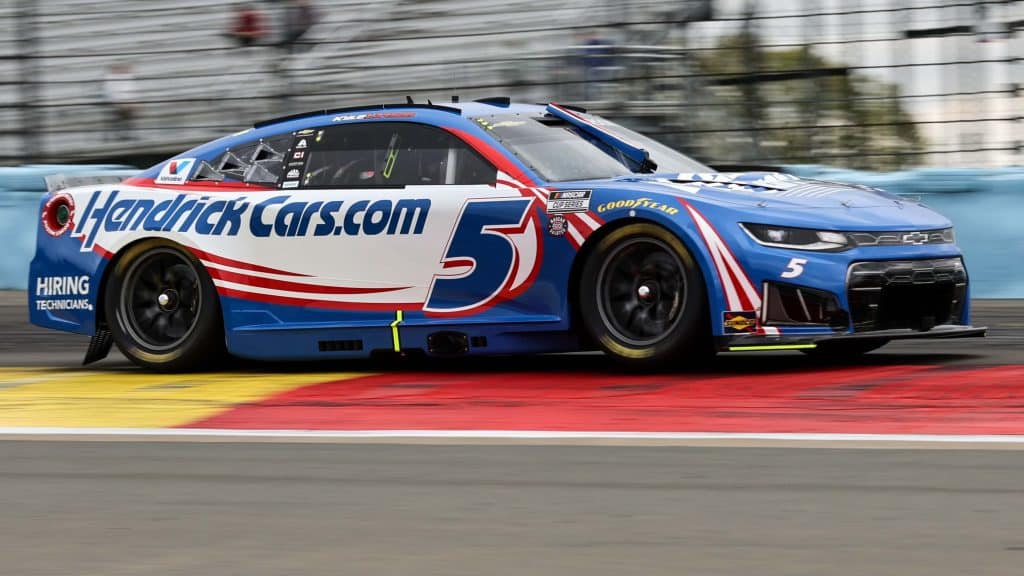
The 2026 event is built around two 75-lap segments before a final 200-lap segment. The field opens larger, then tightens to 26 cars for the final portion, with eligibility tied to recent winners, champions, segment performance, and a fan vote mechanism. The All-Star Race format is not window dressing. It changes the market because it creates more points where a team can gain leverage or lose control.
The most important betting idea is simple: track position has a price. It always does in NASCAR, but it can become especially expensive here because the event does not unfold like a conventional points race. There is less incentive to nurse a decent day and more reason to force the issue before the final segment takes shape.
That places extra weight on pit crews, qualifying rhythm, and restart execution. A driver with great long-run pace can still become a poor wager if the team repeatedly gives away lanes. A midrange driver can become dangerous if the crew creates clean air at the right moment. This is where the betting board becomes less about ranking drivers and more about pricing scenarios.
Hamlin benefits from that framing because he is not only a driver bet; he is a team-operation bet. Bell benefits for similar reasons. Joe Gibbs Racing has multiple cars in the serious conversation, and that can matter when setups, adjustments, and race information develop across the afternoon. That does not guarantee anything, but it strengthens the confidence behind their market position.
Briscoe at +1200 is one of the more intriguing names because the number gives him room to be imperfect. He does not need to be the most likely winner to be interesting. He needs a plausible path where track position, segment timing, and team execution put him in the front group late. That is exactly the kind of price range where I look for upside.
Where the Value Starts After the Favorites
The betting value after Hamlin depends on how aggressive a bettor wants to be. Larson at +500 is not exactly a bargain, but he is the easiest non-Hamlin case to make. If the car has elite speed, the number could look short after the opening segment. Elliott at +600 offers a more controlled profile. Bell at +750 may be the cleaner value if the goal is to avoid the shortest prices while still backing a driver with real win equity.
Bell is especially interesting because his market position is not inflated beyond reason. He has the right blend of confidence, race craft, and Toyota support. He can win without needing a bizarre race. That matters. Some drivers in the midrange need a messy event. Bell just needs a competitive car and clean late execution. That gives his number credibility.
Blaney at +1000 is the first price where I start thinking about the market differently. At that point, the question becomes less, “Who is the best driver?” and more, “Who is being priced as if the path is narrower than it really is?” Blaney has enough finishing ability to justify interest, particularly in a format where survival through the opening segments can set up a late strike.
Reddick at +1100 is a high-ceiling play. His case is built on speed and adaptability, not comfort. That kind of profile can win an exhibition race because the format rewards drivers willing to extract more from the car when the moment demands it. The danger is that Dover can punish overreach. Reddick’s number carries both promise and fragility.
Why Hamlin Is Favored But Not Untouchable
Hamlin’s +350 price is logical. He brings experience, polish, and a long record of being comfortable in high-pressure Cup Series environments. In an exhibition race with a million-dollar carrot, I want a driver who understands the emotional tempo of the afternoon. Hamlin does. He rarely looks surprised by the race he is in.
Still, favorite does not mean flawless. At +350, the market asks bettors to accept a relatively tight payout in a race with an unusual structure. That is the trade-off. Hamlin may be the best single pick, but the All-Star Race is not a setting where I want to ignore price. A bettor can respect the favorite and still decide the market has better risk-adjusted options elsewhere.
That is why I see Hamlin as a legitimate favorite, not a mandatory bet. If the market drifts and gives a better entry, the case strengthens. If the price shortens, it becomes harder to justify. The difference between a good pick and a good bet is often timing.
The Midrange Is Where Bettors Should Slow Down
The middle of the board is where this race gets tempting, and temptation is exactly why bettors should slow down. Reddick, Briscoe, Bowman, Gibbs, and Hocevar all have arguments. They also carry different kinds of uncertainty. One may need clean air. Another may need a restart break. Another may need the favorites to get trapped by the format.
This is where bankroll discipline matters. An All-Star Race market can make every plus-money price look attractive because the event feels less predictable. But unpredictability is not automatically value. A longer number only helps if the true winning path is stronger than the market implies. That distinction is the difference between a sharp position and a lottery ticket.
For bettors tracking broader market behavior, the same discipline applies beyond NASCAR. Payment rules, sportsbook access, and user protections continue to shape how people engage with wagering markets, which is why I also watch the broader industry context around regulatory pressure around betting payments when thinking about where the industry is headed.
Back to the board, Briscoe at +1200 may be the cleanest midrange balance between price and plausibility. Gibbs at +1400 has more volatility. Hocevar at +1400 has the kind of raw spark that can interest bettors who accept variance. Bowman is steady enough to keep in the mix, but he needs the race to come toward him rather than simply betting on chaos.
How I Would Read the Board Before Green Flag
My first cut is simple: Hamlin is the rightful favorite, Bell is the most interesting upper-mid option, and Blaney is the cleanest double-digit price among the more established contenders. That does not mean those are the only playable numbers. It means they represent the most coherent blend of talent, format fit, and market logic.
For a bettor who wants one favorite, Hamlin is the straightforward answer. For a bettor who wants value without leaving the top tier, Bell is compelling. For a bettor who wants a bigger return without diving into true long shots, Blaney and Briscoe are where the conversation starts. Reddick belongs in that group too, but his path feels more volatile.
The key is not to overbuild the card. An event like this can lure bettors into covering too many outcomes. That usually turns a strong opinion into clutter. I would rather have two or three well-reasoned positions than six names that cancel out the edge. The best betting card has clarity.
What the Odds Say About the Race Itself
The board tells a story: this is a favorite-led race, but not a favorite-dominated one. Hamlin deserves the lead. Larson, Elliott, and Bell deserve respect. The market is giving Blaney, Reddick, Briscoe, Bowman, Gibbs, and Hocevar enough room to matter. That creates a race where the favorite can win and the value can still sit elsewhere.
That is the most useful way to approach NASCAR All-Star Race odds. Do not read the board like a list of predictions. Read it like a map of pressure points. Where is the market confident? Where is it cautious? Where might the format create a path the number has not fully priced?
Dover adds weight to those questions because the track can expose weak balance and magnify small mistakes. The format adds another layer because segment results affect the final picture. The purse adds urgency because nobody is protecting points. Those elements combine into a betting market that rewards context more than simple driver preference.
My view is that Hamlin is the right favorite, Bell is the number I would examine most closely among the shorter alternatives, and Blaney or Briscoe can make sense for bettors who want more payout without abandoning realistic win equity. I would be more selective with the +1400 range, not because Gibbs or Hocevar lack talent, but because the race may demand more controlled precision than their prices fully reflect.
The NASCAR All-Star Race odds are compelling now because they sit at the intersection of star power, format change, and a track that can turn small mistakes into race-defining problems. The opportunity is real, but so is the risk. The smartest bettor will not simply chase the biggest name or the biggest payout; the sharper move is to price the race as a living market where track position, pit-road execution, and late-segment nerve decide who turns a good number into a winning ticket.