The NCAA has been vocal about its opposition to college player prop betting citing the harassment of collegiate athletes as its chief concern. Although some states have enacted a ban, the governing body of Division 1 college sports is not letting go of the issue.
Let’s take a closer look at the NCAA’s proposition and its potential impact on top-rated sportsbooks.
What’s the Problem?
NCAA President and former governor of Massachusetts, Charlie Baker, wants states to prohibit its sports betting operators from including college player props on their betting menus. Baker has been relentless in his quest, stating college athletes have been victimized by disgruntled bettors who have threatened those players who did not live up to expectations.
Unlike betting on a team, player props are wagers on an individual player. A player prop allows the bettor to wager over or under on a player’s point total, rebounds, assists, or any number of other offerings depending on the sport. While that has been a staple of professional sports betting for years, the pro athletes are getting paid large sums of money and are much more insulated from direct threats than college kids living in a dormitory.
The other concern is that college athletes, making little or no money, could be much more easily coopted and influenced to perform below expectations. Bad actors could either pay or threaten college athletes to curtail their efforts and thus bet under the posted total on those player props, which is tantamount to a rigged bet and would have a damning effect on the integrity of the game.
The Fight Continues
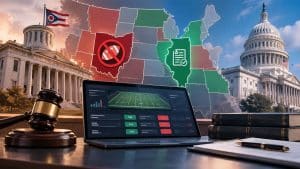
Baker has been at least partially successful in getting his point across to state legislators with Louisiana, Maryland, Ohio, and Vermont all in the process of banning college player props. New Jersey and North Carolina all have pending legislation on the topic while New York and Massachusetts were out in front of the issue by banning it from the start.
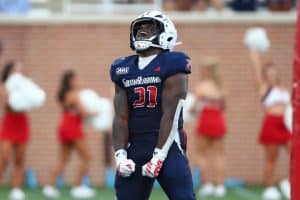
One of the most poignant accounts of harassment came 12 days after North Carolina launched sports betting and one college basketball player immediately felt the vitriol of a losing bettor. Armando Bacot, a member of the North Carolina Tar Heels basketball team, reported receiving an abusive direct message through one of his social media accounts after his performance.
“It’s terrible. Even at the last game, I guess I didn’t get enough rebounds or something. I thought I played pretty good last game, but I looked at my DMs, and I got like over 100 messages from people telling me I sucked and stuff like that because I didn’t get enough rebounds,” Bacot said.
The NCAA reports that “one in three high-profile athletes receive abusive messages from someone with a betting interest.” In highly popular sports, “15%-25% of all abuse surrounding that competition is betting related.”
Sportsbooks, in general, are against the ban as it allows them one less betting option to offer their customers. The more options, the more losses, and the fatter their bottom lines. However, according to the Ohio Casino Control Commission, which oversees sports betting in the Buckeye State, college player props represent only 1.35% of the total bets being placed.
Jay Snowden, CEO of Penn Entertainment which operates ESPNBET, said, “I would view it largely as a non-issue.” However, other operators and legislators believe the revenue derived from the college player props should stay in the U.S., citing the myriad of offshore sportsbooks offering them, which could drive traffic away from the U.S. licensed sportsbooks and into the black market.
NCAA managing director of enforcement, Mark Hicks, commented on the possibility that the offshore sportsbooks could benefit should a nationwide ban come to pass.
“It might happen. My guess is some people will (bet offshore). But the alternative for us is to do nothing,” said Hicks at SBC Summit North America. “So, we feel like we need a strong policy directed toward removing that target off student-athletes’ backs. (…) At the same time, we absolutely are encouraging federal law enforcement to go after the unregulated black market. It’s not either that one or this one. It’s why can’t we be doing both?”