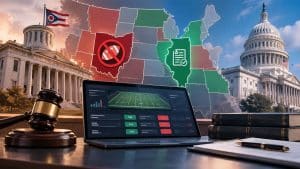
The Supreme Court struck down a federal ban on sports betting a little over five years ago. That ruling cleared the way for every state to determine whether or not to allow gambling on sports, something that previously had only been legal in Nevada and the Jersey Shore.
Over that five-year period, more than 30 states have legalized some form of sports betting. Some only allow it in person, not online, while others are still in the process of implementing a process for gambling on sporting events after voters approved it at the ballot box. And more states are expected to follow in their footsteps by beginning the process of approving sports betting within their borders.
That ruling, and the activities of 60% of the states in the U.S. to take advantage of the freedom it provided, have helped to spur the explosive growth of the legal sports betting industry, which had previously been largely underground and off the books across most of the nation.
Becoming Mainstream
As sports betting has emerged from the black market, it has very quickly been adopted by established organizations across the sports industry, who are looking to partner with sports books and appeal to gamblers to help support their own bottom line. Sports highlights shows, including ESPN SportsCenter and most NFL pregame shows, now regularly discuss odds and betting tips along with injuries, scores and other news.
You can find lines on the crawls on most sports networks, and commercials for Caesars, FanDuel, DraftKings and other gambling providers are a regular part of game broadcasts.
How Big Is It?
An analysis by the Associated Press found that, in the five years since the Supreme Court paved the way for legal sports betting across the nation, gamblers have wagered more than $220 billion on sporting events.
The industry’s growth is snowballing, as more and more states get on board. A year ago, the total wagered was $125 billion, meaning the legal betting activity has nearly doubled over a 12-month span. With sports books keeping up to 10% of what is wagered based on their house edge, there is a clear path to profitability for companies providing the opportunity to place bets. Online sportsbooks are getting into the black faster than most internet start-ups in other industries.
FanDuel was the first online sportsbook to report a profitable quarter, last year, and DraftKings and BetMGM both are on schedule to turn a profit this year.
“While the milestones of legalized sports betting that have led up to now are remarkable, this industry is excitingly still far from being fully realized,” DraftKings CEO Jason Robins told the AP.
How Big Can It Get
There are a number of analyses of just how large the sports betting industry can get if it gets fully legalized across the country. Estimates range from a $14 to $22 billion impact to the U.S. gross domestic product (GDP) if sports betting is legal in all 50 states. Of course, a caveat to that is that there are a handful of states, such as Utah, that have shown no indication that they will begin the legalization process.
Regardless of whether the number of states where Americans can bet on sports is 50 or somewhere in the 40s, legalization is producing revenue not just for the books but for the government. Legalization is expected to produce more than $8 billion in federal, state and local tax revenue. At the five-year mark, the AP calculated that states have already collected $3 billion in additional tax revenue, and the federal government has seen a tax benefit over $500 million.
Legalization also creates jobs, with one estimate finding that full 50-state legalization would put 125,000 to 150,000 people to work.
Red Flags
There are concerns over legalized gambling’s growth. Problem gambling helplines report that calls requesting their service have increased by 15% since the Supreme Court’s ruling. There have also been a few scandals—a handful of NFL players have faced suspensions for their involvement in gambling, and college baseball, of all sports, had a betting scandal earlier this year when Alabama’s coach was caught providing inside information to gamblers.
Still, given the large increase in the number of gamblers and opportunities to place bets, the number of problems that have been seen has been far short from the doomscape predicted by many opponents of legalization. It’s clear that it won’t stand as a barrier to the growth the industry has seen and is expected to continue to realize in the near future.