The Masters does not need help commanding attention, but the opening round always turns attention into urgency. This year, that urgency is especially visible in the wagering market, where the start of play at Augusta National has turned Masters betting into one of the day’s defining sports-betting stories.
I see the appeal clearly. Golf offers bookmakers something few other sports can match at a major championship: a four-day drama with constant swings in sentiment, a globally recognized venue, and a field loaded with star power. With the 2026 Masters now underway, the betting conversation has accelerated beyond simple winner picks and into a broader commercial moment shaped by promotions, live-market volatility, and shifting confidence around the tournament’s biggest names.
Why The Masters Moves The Betting Market
There is a reason the first major of the golf season carries such weight for operators and bettors alike. Augusta is one of the rare sporting stages that combines tradition, mainstream recognition, and genuine uncertainty. Every year, even casual fans who do not follow weekly golf storylines suddenly feel comfortable entering the market because the names are familiar and the stakes are instantly understood.
That accessibility matters. Betting operators thrive on events that bring in occasional customers as well as seasoned gamblers, and the Masters does exactly that. The event creates a clean narrative: the Green Jacket, the iconic course, the leaderboard drama, and a short list of elite contenders that the public already knows. This week, that mix has produced a fresh round of golf-specific offers and aggressive promotional activity, all designed to capture attention at the moment the tournament begins.
Unlike a regular-season football game or a one-night fight card, the Masters also unfolds slowly enough for wagering interest to evolve in real time. A poor front nine can move odds sharply. A late birdie run can revive a player’s position. A weather shift can change the complexion of the entire board. The tournament’s structure turns it into a live market ecosystem, not just a pre-event betting opportunity.
Scottie Scheffler And Rory McIlroy Are Driving The Conversation
Two names are anchoring almost every version of the market: Scottie Scheffler and Rory McIlroy. That is no surprise, but the more revealing story is how differently they are being priced in the public imagination.
Scheffler still enters Augusta with the kind of profile bookmakers trust. He remains one of the game’s most reliable elite players and carries the course history that naturally shortens a golfer’s number. Augusta rewards patience, control, and the ability to survive pressure without unraveling, all traits that fit his competitive identity. Yet this year’s market tone around him is more cautious than absolute. He is no longer standing so far apart from the field that the board feels closed off. That softening matters because it changes how bettors distribute money across the top tier.
McIlroy, meanwhile, arrives with a very different emotional current behind him. As defending champion, he carries both credibility and narrative force, and that combination is powerful in golf betting. A player with his profile always attracts casual money, but the defending-champion factor adds another layer. Backers are not only betting on form; they are betting on continuity, memory, and momentum. At Augusta, those intangible factors can become almost as influential as the hard metrics.
I think that is why this year’s market feels broader and more dynamic than a simple favorite-versus-field setup. Bettors are not treating the Masters as a one-man proposition. They are responding to a top board that feels open enough to invite conviction without feeling random.
A Quick Read Of What Is Powering The Market
The shape of the market is being driven by a few forces at once:
- star power at the top of the field
- tournament-specific promotions from sportsbooks
- live odds movement as rounds unfold
- renewed public interest at the start of golf’s biggest major season
That combination has made the Masters feel less like a niche betting event and more like a full-scale mainstream wagering window.
Promotions Reflect A Bigger Shift In Sportsbooks’ Strategy
The flood of Masters-themed offers is not just a seasonal gimmick. It reflects a larger truth about how modern sportsbooks operate. Major golf events have become valuable acquisition windows, especially when operators want to reach customers who may not bet consistently every week but will engage when a recognizable event arrives.
Golf is particularly useful here because the menu is so flexible. Outright winners remain the headline product, but they are only the beginning. Sportsbooks can build markets around top-five finishes, top-10 placements, player matchups, round leaders, birdie props, cut lines, and same-event combinations. That variety allows operators to package the tournament for different types of bettors, from the casual fan placing a small sentimental wager to the analytical player looking for value in narrower segments of the board.
This matters because it changes what the Masters means commercially. The event is no longer just a prestige betting week; it is a product showcase. Operators use it to demonstrate how expansive and interactive golf betting has become. In that sense, today’s promotional rush says as much about the betting industry as it does about the tournament itself.
For readers tracking the tournament as it unfolds, Masters betting is being shaped in real time by the leaderboard, the course conditions, and every small shift in perceived momentum.
How The Main Betting Angles Compare
| Betting Angle | Why It Matters At Augusta | Market Effect |
|---|---|---|
| Outright Winner | Driven by star power and long-term form | Heavy early attention on elite contenders |
| Top-10 / Top-5 Finish | Appeals to cautious bettors seeking lower risk | Broadens interest beyond the very top favorites |
| Head-to-Head Matchups | Useful for comparing specific player form and course fit | Often reacts quickly to round-by-round performance |
| Live Betting | Captures momentum swings during the tournament | Creates the most volatile odds movement |
Augusta’s Conditions Could Have An Outsized Betting Impact
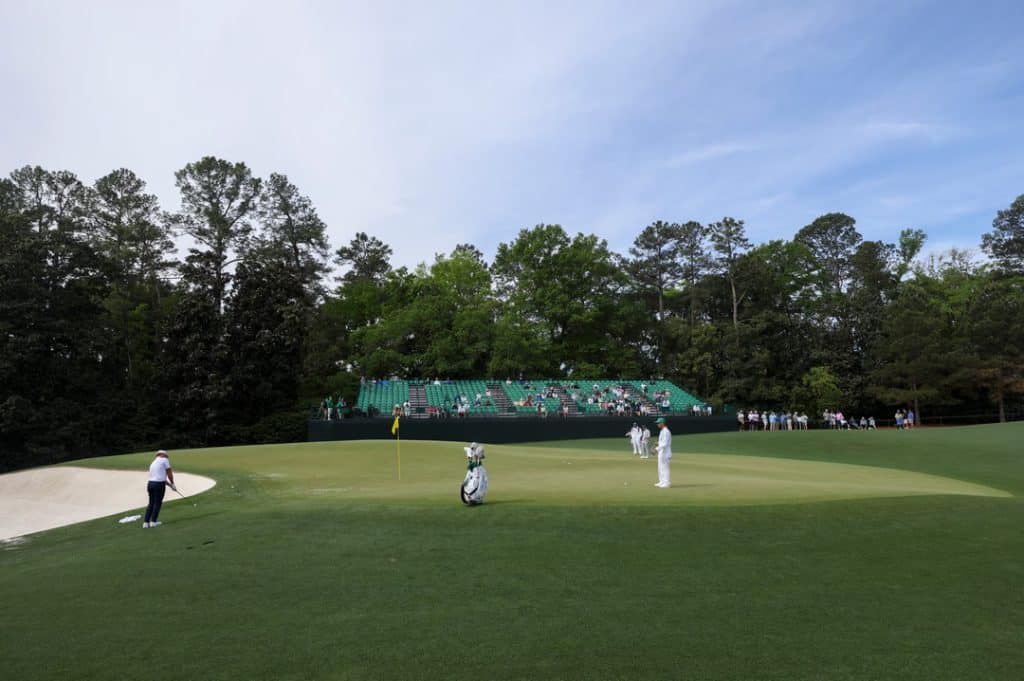
The betting market is never built on star power alone. Course setup and weather can change pricing logic quickly, and Augusta appears primed to test players in exactly the way bettors hate and love at the same time: unpredictably, but not randomly.
Firm conditions and the possibility of wind place a premium on precision. That tends to reward bettors who think beyond reputation and look instead at temperament, approach play, and short-game resilience. At Augusta, a player can look comfortable for long stretches and then lose three shots in minutes once the greens begin to punish imprecision. The course exposes weak decisions brutally, which is why live betting on the Masters often becomes more reactive than strategic after play starts.
From a market perspective, that creates opportunity and risk. Fast conditions can pull established favorites back toward the field because they reduce the margin for error. They can also elevate disciplined players who may not dominate headlines but know how to manage Augusta’s demands. That is one reason the market can widen even while a few stars continue to dominate public conversation.
Why Golf Betting Feels Different From Other Sports Right Now
What stands out to me this week is how much golf betting has matured as a mainstream product. It used to sit a step below football, basketball, and horse racing in public betting culture. That is no longer true during a major. The Masters now functions like a major trading event in its own right, one that combines prestige viewing with highly monetized, high-frequency market engagement.
Part of that growth comes from the mechanics of modern sportsbooks, which have made in-play betting easier and more visually intuitive. Part of it comes from the sport itself. Golf’s television coverage naturally supports betting because viewers can move from group to group, hole to hole, and leaderboard position to leaderboard position. The sport creates constant micro-moments that invite a wager.
But the larger reason is emotional clarity. Everyone understands what a Masters Sunday means. Everyone recognizes what it means when McIlroy is near the lead, when Scheffler steadies himself after a wobble, or when a contender suddenly charges through Amen Corner. Betting thrives when a sport produces moments that are easy to feel and easy to price. The Masters remains one of the best examples of that formula anywhere in global sport.
Why This Matters Right Now
This week’s surge in Masters betting is not simply about a famous golf tournament generating predictable excitement. It is a sign of how major sporting events are now consumed through two parallel lenses at once: competition and market movement. Fans are watching who leads, but they are also watching whose number shortens, whose price drifts, and which promotional angles dominate the commercial landscape.
That dual-track experience is now central to sports media, sports commerce, and sports fandom. The Masters just happens to dramatize it especially well because the event is rich in tradition while the betting market around it is relentlessly modern.
What matters right now is not only that the 2026 Masters has begun. It is that Augusta has once again become the place where golf’s grandeur meets the betting industry’s sharpest commercial instincts. That convergence is why this story matters today: it captures how sports wagering is becoming more event-driven, more immersive, and more tightly woven into the way major championships are experienced from the first tee shot onward.