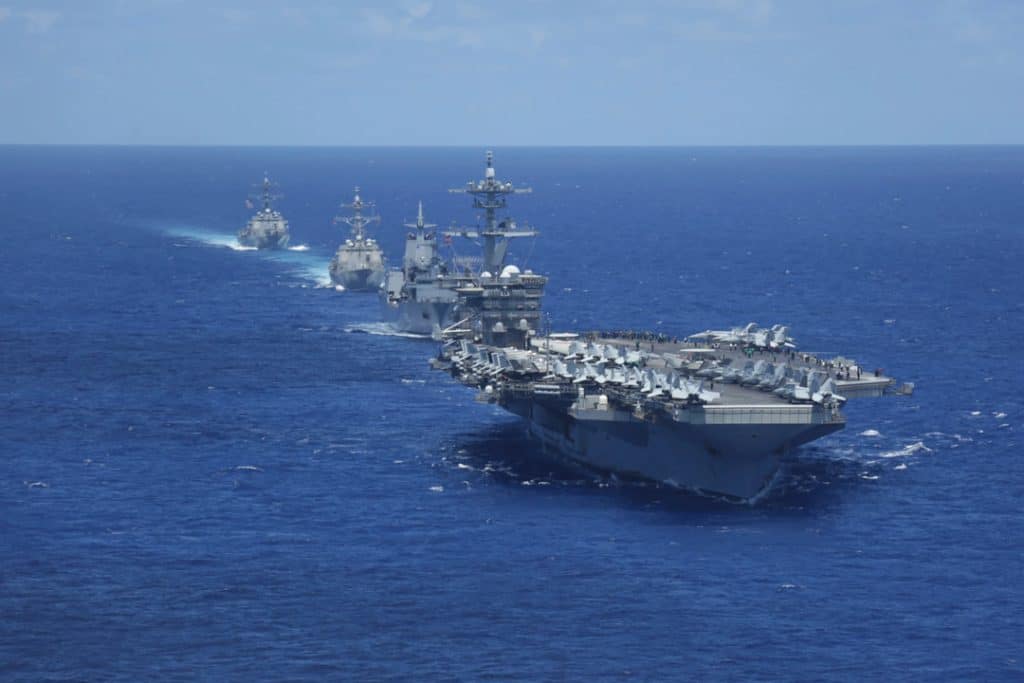
As tensions rise in global hotspots, speculation grows about the ability of even the most technologically advanced naval vessels to withstand a concentrated missile onslaught. In a scenario where Iran unleashes a barrage of 500 Khyber (Khorramshahr-4) ballistic missiles at the USS Abraham Lincoln Carrier Strike Group, defense analysts are raising alarms: could such a powerful attack overwhelm American naval defenses and threaten the very survival of a supercarrier?
The Khyber Threat: Heavy Payload and Long Range
Central to this question is the Khyber missile itself. Also known as the Khorramshahr-4, this Iranian-developed ballistic missile represents a significant leap in both destructive potential and reach. With a range exceeding 2,000 kilometers, Khyber can strike targets far beyond regional waters.
What sets it apart is its formidable warhead. Capable of carrying a 1,500-kilogram payload nearly double the weight of many conventional missile warheads a single Khyber could devastate a naval destroyer or inflict crippling damage to an aircraft carrier’s flight deck. Damage on this scale could render flight operations impossible, disable command centers, or, in a worst-case scenario, put the carrier at risk of sinking.
Hypersonic Speed: Outpacing Traditional Defenses
A further complication in intercepting the Khyber is its velocity. During flight outside the Earth’s atmosphere, it cruises at approximately Mach 16 and, even after re-entering the atmosphere, maintains speeds around Mach 8. Such hypersonic speeds grant defending forces just a few fleeting minutes to detect, track, and attempt interception.
Modern U.S. Navy vessels are equipped with a variety of missile defense measures, from Aegis combat systems and SM-3 interceptors to close-in weapon systems (CIWS). However, the window to launch these countermeasures shrinks considerably the faster the threat moves. At Mach 8 or greater, targeting a fast-moving inbound missile especially amid a swarm of hundreds can be a logistical nightmare even for top-tier technology.
Can the Navy’s Layered Defenses Withstand a Saturation Attack?
The principle behind aircraft carrier group defense is layered protection outer, middle, and inner rings of interceptors and point-defense weapons, supported by electronic warfare and decoys. Against a handful of traditional ballistic missiles, such systems are designed to succeed. But the scale and speed of a hypothetical 500-missile Khyber volley multiplies the complexity:
- Sheer Quantity: Current interceptor inventories are not designed for such monumental salvos. Even a high success rate leaves significant risk if even a few warheads get through.
- Reaction Time: Ballistic missiles at hypersonic speeds reduce reaction time to near-zero, pushing automated defenses to their limits.
- Simultaneous Threats: With multiple missiles inbound from different vectors, tracking and targeting become exponentially harder.
- Potential Countermeasures: Advanced warheads may include decoys or evasive maneuvers, further straining defensive capabilities.
Catastrophic Consequences: A Carrier’s Worst Nightmare
In war games and simulation models, an overwhelming missile assault often correlates with little room for error. If even a small number of Khyber missiles struck the USS Abraham Lincoln, historic precedent suggests the carrier could be significantly damaged:
- Loss of the flight deck, crippling air operations.
- Severe secondary explosions if munitions or fuel stores are hit.
- Compromised navigation, communications, or propulsion capabilities.
- In the worst case, enough direct hits could potentially lead to sinking.
These vulnerabilities, while mitigated by constant improvements to carrier design and damage control procedures, remain a potential Achilles’ heel in modern naval warfare.
What Are the U.S. Navy’s Options?
The U.S. Navy continues to invest in measures to counter advanced missile threats, including:
- Boosting interceptor stockpiles aboard carriers and escorts
- Developing next-gen directed energy weapons (lasers)
- Enhanced satellite and radar tracking for earlier threat detection
- Electronic warfare systems to jam or misdirect incoming missiles
- Decoy technologies to further absorb or divert missile attacks
Yet the scale of a full-scale Khyber assault pushes the limits of what is technologically achievable. Overwhelming numbers and speeds could render even the most robust defense frameworks insufficient in a worst-case engagement.
Final Thoughts: Is the Abraham Lincoln Truly Defenseless?
While the odds of such a massive, simultaneous missile strike remain remote, the threat posed by the Khyber and similar weapons is real and growing. The USS Abraham Lincoln, like all carriers, is a powerful symbol of U.S. military might and technology. But as offensive missile technology races forward, questions about the survivability of large warships in contested environments must be continuously reassessed.
Continued investment in missile defense, improved early warning, and new disruptive technologies remain critical if carriers are to avoid being rendered obsolete or, worse, defenseless on the high seas.