Rubio Iran testimony is no longer just another Capitol Hill hearing. It is becoming a public test of whether the White House can keep selling the Iran war as strategy while voters, lawmakers, and markets start treating it as political risk.
The danger for the administration is not only that Secretary of State Marco Rubio will face hard questions. It is that the questions now connect war powers, fuel costs, congressional authority, and the 2026 midterm map into one combustible story, especially as military strikes continue and the U.S.-Iran conflict enters a new phase.
Rubio Iran Testimony Is Really About Who Owns the War
The formal setting may be a budget hearing, but the political setting is much larger. Rubio is appearing before lawmakers at a moment when the administration’s Iran policy is being judged not only on national security terms, but on whether the White House has a clear endgame.
That matters because the longer a conflict lasts, the harder it becomes to keep the debate inside familiar partisan lanes. Early military action can rally support. A prolonged conflict forces members of Congress to answer different questions: What is the objective? What is the cost? What authority is being used? What happens if the ceasefire fails again?
For Rubio, the challenge is unusually sharp. He is not an outside diplomat explaining someone else’s policy. He is one of the administration’s most visible foreign-policy voices, a former senator who understands exactly how congressional pressure works, and a Republican figure with his own national profile.
That makes this testimony a political ownership test. If Rubio gives crisp answers, he may help stabilize the administration’s case. If he sounds boxed in by shifting goals, the hearing could become a televised reminder that the war has moved faster than the public explanation behind it.
The hearing is the arena, but the bigger fight is over whether the administration can define the conflict before opponents define it for them.
War Powers Are Moving From Legal Theory to Campaign Weapon
For years, war powers debates have often sounded procedural to voters. The fight over whether Congress or the president has the final say on military action can feel abstract until casualties, costs, or household prices bring the issue home.
Iran changes that calculation. The War Powers Resolution was designed to force shared judgment between Congress and the president when U.S. forces are introduced into hostilities. Once lawmakers start arguing that the White House has stretched or sidestepped that framework, the debate becomes less about legal language and more about accountability.
That is where the 2026 politics gets dangerous. Democrats can frame the war as another example of executive overreach. Anti-intervention Republicans can frame it as a broken promise to avoid open-ended Middle East conflicts. Vulnerable incumbents can frame it around prices, costs, and local economic pain.
The administration’s defenders still have a powerful counterargument: Iran’s nuclear ambitions, regional proxies, and threats to shipping give any president a serious national security case. But that argument weakens if the strategy seems to drift from deterrence to escalation, from limited strikes to indefinite pressure, or from diplomacy to another expanding regional commitment.
Here is the practical political problem Rubio must manage:
| Pressure Point | Why It Matters Politically |
|---|---|
| Congressional authorization | Lawmakers can argue the war lacks a democratic mandate |
| Energy prices | Voters feel foreign policy through gas and shipping costs |
| Iran strategy | A vague endgame invites criticism from both parties |
| Republican dissent | Even small defections can change the media narrative |
| Midterm timing | Every hearing now lands inside the 2026 campaign cycle |
The table matters because this is no longer one isolated foreign-policy dispute. It is a bundle of pressure points that campaigns can translate into ads, debate questions, and voter frustration.
The Midterm Risk Is Hiding in Gas Prices and Fatigue
Foreign policy rarely dominates midterm elections on its own. Voters usually prioritize prices, jobs, immigration, crime, health care, and local concerns. But wars can become midterm issues when they begin touching those domestic pressure points.
That is why the Iran conflict is politically different from a short strike package or a contained diplomatic crisis. Disruption in the Strait of Hormuz can become a kitchen-table issue quickly because energy markets do not need voters to follow every detail of Middle East diplomacy. They only need voters to notice prices.
This is where the administration faces its most uncomfortable 2026 problem. It can argue that military pressure is necessary, but it must also convince voters that the pressure is producing results. If the conflict drags on while costs rise, opposition messaging becomes easier: the war is expensive, unauthorized, and unfinished.
Republicans running in competitive races may not want to break openly with the president. But they also do not want to spend the summer and fall defending a conflict that voters associate with higher prices and unclear goals.
Cost becomes the message when strategy feels uncertain. That is why Rubio’s testimony could matter beyond the committee room. One awkward exchange about objectives, timing, or congressional approval can become a campaign clip before the day ends.
Rubio Has to Defend Policy Without Overpromising Control
Rubio’s strongest path is to present the Iran policy as disciplined, limited, and tied to concrete diplomatic objectives. That means avoiding the impression that the administration is improvising from one escalation to the next.
But there is a trap in that approach. If he promises too much control, every future strike, failed ceasefire, or energy shock makes the testimony look naïve. If he admits too much uncertainty, critics will argue the administration launched or expanded a conflict without a durable plan.
That is the difficult middle Rubio has to occupy. He must sound forceful enough for hawks, cautious enough for skeptics, and specific enough for lawmakers who want a strategy rather than slogans.
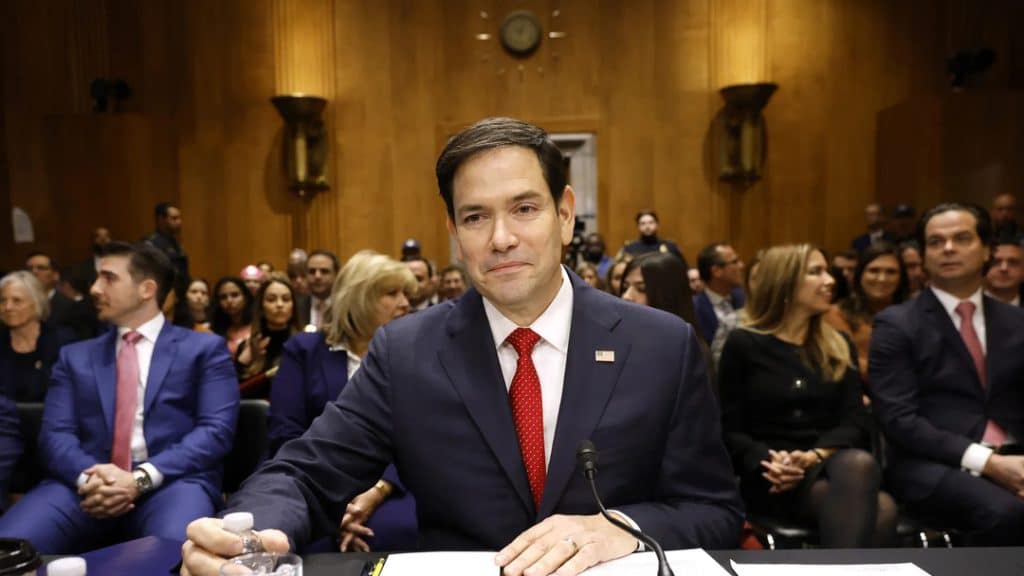
The hearing calendar adds another layer. The Senate Foreign Relations Committee setting gives lawmakers a public forum to test not just the State Department budget, but the logic behind America’s diplomatic and military posture. Budget hearings are often dry. This one is not.
That is because foreign affairs spending, military escalation, and congressional oversight now sit in the same frame. If the administration wants a larger military posture while cutting or reshaping diplomatic capacity, critics will ask whether Washington is funding force while weakening the tools that might end the conflict.
Diplomacy needs credibility, and credibility depends on whether the public believes the administration has a plan that can survive more than one news cycle.
The Next Flashpoint Is the Republican Split
The most important signal may not come from Democratic questioning. Democrats were always likely to challenge the administration on authorization and escalation. The sharper question is how many Republicans are willing to press Rubio publicly.
Even limited Republican discomfort can change the shape of the story. A single high-profile defection can turn a partisan dispute into a governing problem. A small cluster of skeptics can force leadership to manage votes, delay resolutions, or soften language that once looked automatic.
That does not mean the party is abandoning the president on Iran. Far from it. Many Republicans remain strongly aligned with a hard line toward Tehran, and some may view congressional criticism as weakness during a security crisis.
But the split matters because it gives the issue oxygen. When war powers criticism comes only from the opposition, the White House can dismiss it as politics. When it comes from inside the president’s party, the issue becomes harder to contain.
This is the space political markets and campaign strategists will watch closely. Not because one hearing decides the war, but because hearings expose where pressure is building. If Rubio spends the day defending basic premises rather than advancing a clear outcome, the midterm risk grows.
A Hearing That Could Define the 2026 Iran Debate
The Rubio Iran testimony matters because it compresses the administration’s biggest vulnerabilities into one public moment: legal authority, strategic clarity, economic pain, and political timing.
A clean performance could help the White House argue that the conflict is controlled, justified, and moving toward a defensible outcome. A messy one could make the Iran war feel less like a national security operation and more like a 2026 liability spreading across vulnerable districts and Senate races.
That is why this hearing deserves more attention than a standard budget appearance. Rubio is not simply defending a department request. He is defending the administration’s theory of power at a moment when Congress is testing whether it still has leverage.
For now, Rubio Iran testimony is the political pressure gauge. If the administration cannot clearly explain where the war is going, how long it may last, and why Congress should accept the current path, the Iran conflict could become one of the defining flashpoints of the 2026 campaign season.