The issue of cross-border firearms trafficking has once again taken center stage as Mexican authorities revealed that nearly four out of every five weapons seized during the current administration can be traced back to the United States. The proliferation of powerful assault weapons and specialized ammunition, particularly those favored by criminal organizations, has fueled concerns about security on both sides of the border.
Surge in Confiscated Firearms Under New Leadership
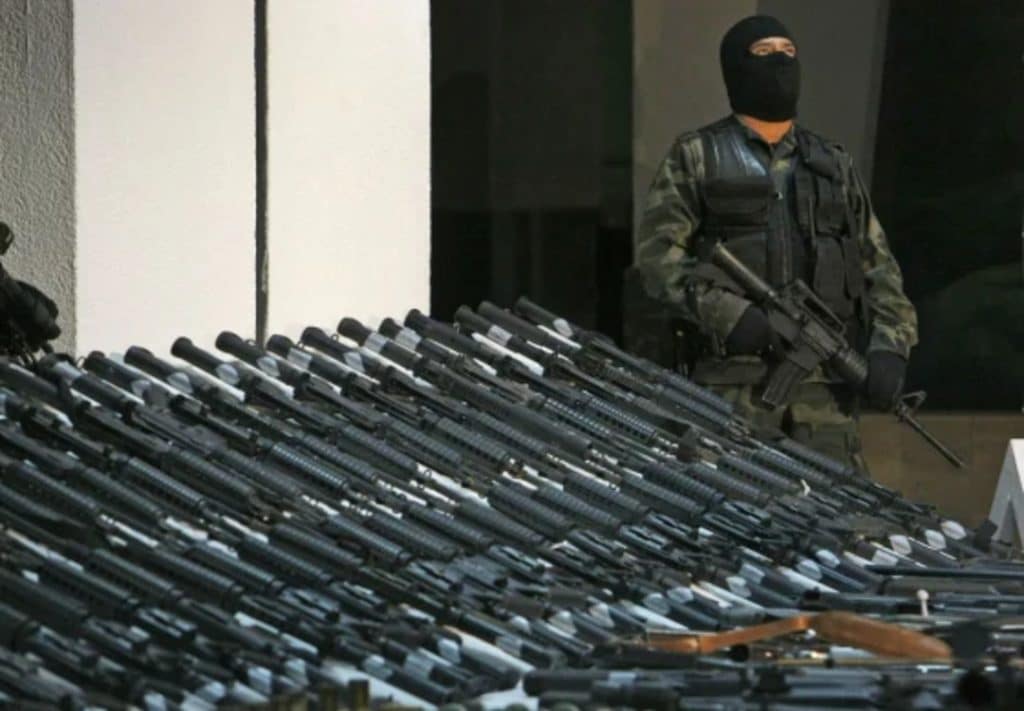
Since President Claudia Sheinbaum assumed office in October 2024, security forces have intensified their crackdown on illicit arms circulating within Mexico. Defense Secretary Ricardo Trevilla recently reported during a national press conference that authorities have confiscated close to 18,000 firearms, ranging from handguns to high-powered long guns. Notably, about 78% of these seized weapons were traced to the U.S.
One statistic that stands out is the recovery of 215 Barrett-style .50-caliber rifles, some of the most formidable weapons in the hands of criminal groups. These rifles, long associated with drug traffickers due to their power and range, are concerning for their ability to penetrate vehicles and even light armor, posing a severe challenge to law enforcement and public safety.
The Barrett .50: A Weapon of Choice for Organized Crime
The .50-caliber rifle, particularly the Barrett model, has gained notoriety for its repeated use by Mexico’s criminal syndicates. Its allure among drug traffickers lies in its firepower, which dwarfs most standard-issue police equipment. These rifles have reportedly been used in attacks against both civilians and law enforcement, raising alarms about their origins and availability.
Ammunition for these firearms is just as troubling. The Mexican Defense Secretariat (Sedena) has reported capturing approximately 137,000 rounds since 2012. Of those, 47% can be traced to the Lake City Army Ammunition Plant near Kansas City, Missouri a sprawling manufacturing center owned by the U.S. military. The revelation that ammunition and weapons designed for combat are ending up in the hands of illegal groups across the border has intensified diplomatic discussions between the two nations.
Presidential Response and International Demands
In response to the news, President Sheinbaum publicly addressed concerns regarding American-made arms flowing southward. She called for a direct dialogue with the White House, seeking answers as to how military-grade equipment, intended for exclusive government and defense use in the United States, is making its way into the arsenal of Mexican criminal groups.
“The matter reported this weekend by The New York Times requires immediate clarification,” Sheinbaum emphasized. “We need to understand the path these weapons take and work with our U.S. partners to stem this supply.” For additional insights on the U.S.-Mexico dialogue over gun trafficking.
The Broader Arsenal: Heavy Weaponry and Explosives
Beyond rifles and handguns, Mexican security forces have also retrieved a variety of other dangerous equipment from criminal syndicates since October 2024:
- 20 grenade launchers capable of firing explosive projectiles
- 13 shoulder-fired rocket devices
- 273 machine guns in diverse calibers
These military-style arms not only highlight the evolving threat posed by organized crime, but they also demonstrate how trafficking networks have gained access to an expanding array of deadly tools.
How Are U.S.-Supplied Weapons Entering Mexico?
Weapons and ammunition produced or distributed in the United States reach Mexican crime groups through sophisticated smuggling operations. Many traffickers exploit legal loopholes in the U.S. gun market, purchasing firearms at retailers or gun shows, then illicitly exporting them across the southern border. Arms are often concealed within vehicles or shipments to avoid detection at checkpoints.
This cross-border weapons flow has prompted Mexico to pursue both diplomatic and legal avenues. The Sheinbaum administration, following the footsteps of previous governments, has signaled its intention to press for stricter regulations and more robust cooperation with U.S. authorities.
Addressing the Crisis: The Path Forward
Combating the influx of U.S.-origin firearms remains a complex challenge. Mexican officials believe that without greater oversight and accountability within the U.S. arms industry, criminals will continue to gain access to weapons that fuel violence and instability. Enhanced information sharing, better tracing technology, and tougher penalties for illegal exports have been floated as possible solutions.
As ongoing discussions and diplomatic pressure increase, both nations face mounting urgency to address this deadly trade. Increased collaboration could mitigate the risks faced by Mexican citizens and law enforcement, while also stemming the rise of heavily armed criminal groups.
A Call for Bilateral Action
The unprecedented volume of U.S.-made weapons seized from organized crime in Mexico underscores a pressing international security issue. With nearly 80% of confiscated firearms originating from north of the border, the Sheinbaum administration has called for renewed cooperation and transparency. As Mexico and the United States grapple with the consequences, the hope is that coordinated policies and enforcement can stop the flow of deadly arms saving lives on both sides of the border.