The reported killing of Iran’s Supreme Leader, Ayatollah Ali Khamenei, has marked a dramatic escalation in tensions between Iran and the United States. This development represents more than a tactical strike it signals a profound shift in the geopolitical landscape of the Middle East. Leadership decapitation in a nation like Iran carries consequences that extend far beyond its borders, influencing military strategy, regional alliances, and global economic stability.
As the situation unfolds, analysts and policymakers are grappling with a new reality: a conflict that is no longer contained but rapidly evolving into a broader and more unpredictable confrontation.
The Strategic Impact of Leadership Decapitation
Targeting a nation’s highest authority is one of the most consequential actions in modern warfare. In Iran’s case, the Supreme Leader is not only a political figure but also the ultimate authority over military and ideological direction. Removing such a central figure creates immediate uncertainty within the country’s command structure.
However, rather than weakening Iran outright, the strike appears to have galvanized internal unity. Historically, external threats have often consolidated power within Iranian leadership circles. Early reports suggest that key institutions, including the Islamic Revolutionary Guard Corps (IRGC), have moved quickly to stabilize control and project strength.
This response underscores a critical reality: leadership removal does not necessarily lead to collapse. Instead, it can intensify resistance and harden strategic positions.
Iran’s Retaliation: Expanding the Scope of Conflict
In the aftermath of the strike, Iran has launched a series of retaliatory actions that signal a widening battlefield. Missile and drone operations targeting U.S. military installations and allied positions have increased in both frequency and scale.
Unlike previous confrontations, these responses appear more coordinated and deliberate. Iran’s military strategy is shifting toward asymmetric warfare, leveraging regional proxies and advanced missile systems to apply pressure across multiple fronts.
The result is a conflict that is no longer confined to isolated incidents. Instead, it is evolving into a sustained campaign with the potential to draw in additional actors from across the region.
Regional Reactions: Allies, Proxies, and Rising Tensions
The Middle East has long been shaped by a complex network of alliances and rivalries, and this latest escalation is amplifying those dynamics. Countries aligned with the United States have heightened their security posture, while Iran-aligned groups across the region have signaled readiness to engage.
Militia organizations and proxy forces are playing an increasingly prominent role. Their involvement allows Iran to project influence without direct confrontation, complicating efforts to contain the conflict.
Meanwhile, neighboring states face difficult decisions. Balancing national security concerns with the risk of deeper involvement has become a delicate and urgent challenge.
Global Implications: Energy Markets and Economic Shockwaves
The consequences of this escalation extend well beyond the Middle East. Global energy markets have already begun to react, with oil prices experiencing volatility amid fears of supply disruptions.
The Strait of Hormuz, a critical passage for a significant portion of the world’s oil shipments, has become a focal point of concern. Any sustained disruption in this could have far-reaching effects on global trade and economic stability.
In addition, international air travel and shipping routes are facing increased risks, prompting rerouting and delays. These disruptions highlight how regional conflicts can quickly translate into global challenges.
The Role of the United States: Strategy and Risks
For the United States, the situation presents a complex strategic dilemma. While the initial strike may have been intended to weaken Iran’s leadership, the resulting escalation introduces new risks.
Maintaining a balance between deterrence and de-escalation is becoming increasingly difficult. A stronger military response could further inflame tensions, while restraint may be perceived as weakness.
This delicate balance is further complicated by domestic and international pressures. Allies expect leadership, while global audiences are closely watching how the United States navigates this crisis.
Information Warfare and Narrative Control
In modern conflicts, the battle is not only fought on the ground but also in the information space. Competing narratives are shaping public perception and influencing international opinion.
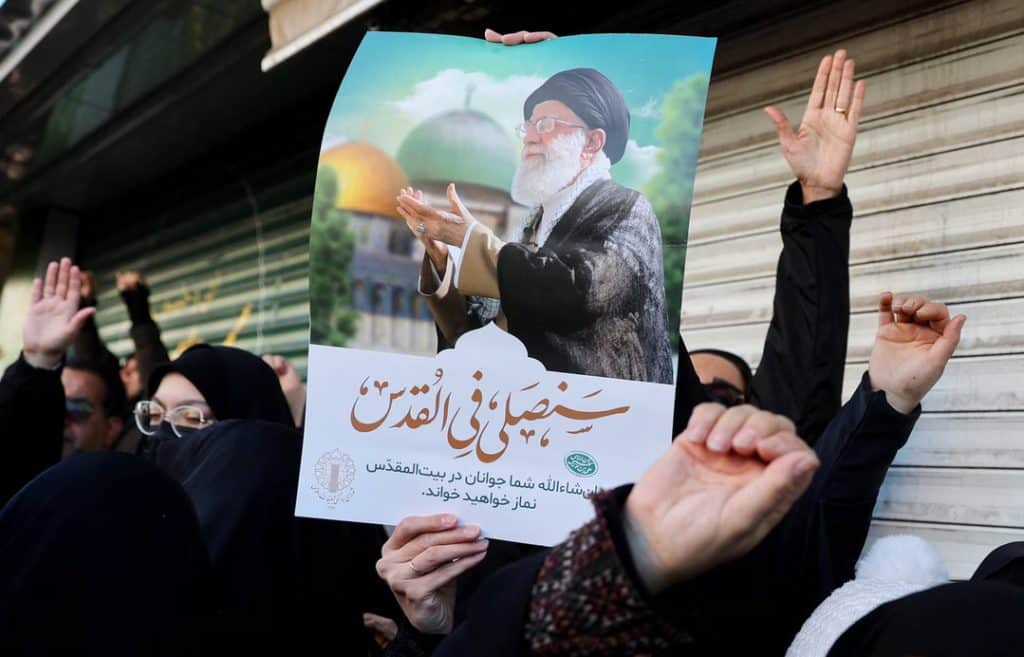
Iran has framed the leadership strike as an act of aggression, using it to rally domestic support and justify retaliation. At the same time, U.S. officials emphasize strategic necessity and security concerns.
This contest of narratives plays a crucial role in determining how the conflict is perceived globally, affecting diplomatic efforts and potential resolutions.
What Comes Next: Scenarios and Uncertainty
The future trajectory of the Iran–US conflict remains uncertain, with several possible scenarios emerging. One possibility is a prolonged period of heightened tension, characterized by intermittent clashes and proxy engagements.
Another scenario involves a broader regional war, should additional countries become directly involved. This outcome would significantly increase the scale and impact of the conflict.
Alternatively, diplomatic channels could re-emerge as both sides seek to avoid further escalation. However, achieving meaningful dialogue in the current climate presents significant challenges of local government.
A Conflict Redefining Global Stability
The reported killing of Iran’s Supreme Leader has reshaped the dynamics of the Iran–US conflict in profound ways. What began as a targeted action has evolved into a complex and far-reaching crisis with implications that extend across the globe.
As the situation continues to develop, one thing is clear: the stakes have never been higher. The decisions made in the coming weeks will not only determine the course of this conflict but also influence the broader trajectory of international relations in the years ahead.
In a world already facing numerous uncertainties, this escalation serves as a stark reminder of how quickly geopolitical tensions can transform into global challenges.