The Strait of Hormuz war has moved from warning to commercial danger. Once tankers are hit in the waterway that carries Gulf oil and LNG toward markets, the conflict stops being measured only by missiles or bases and starts being measured by whether ships can move.
Digital Wager Wire has already tracked the wider energy-market pressure around Hormuz, but the latest tanker attacks sharpen the story: the waterway itself is becoming the battlefield, and the market is being forced to price the risk of a shipping war in real time.
Why The Strait Of Hormuz War Is Now The Center Of The Conflict
The Strait of Hormuz is not just a map point between Iran, Oman, and the Gulf. It is the narrow passage that turns regional confrontation into a global economic event.
Iran has long understood the leverage built into that geography. The United States has long treated freedom of navigation there as a red line. Gulf exporters depend on it, Asian energy buyers watch it closely, and insurers react quickly whenever the threat level rises.
A strike on tankers changes the audience, pulling in shipowners, traders, naval commanders, LNG buyers, and governments that cannot ignore the route.
This is the shipping-war phase of the conflict. The fight is no longer only about who can strike whom. It is about who can make commerce feel unsafe.
The Tanker Attacks Turned A Military Crisis Into A Supply Crisis
The attack on the Qatari LNG tanker Al Rekayyat is the clearest reason this moment feels more dangerous. A damaged warship would have signaled military escalation. A damaged LNG tanker signals something broader: the possibility that energy cargoes themselves are becoming pressure points.
The reported engine-room fire mattered because LNG markets depend on confidence as much as volume. The fact that the cargo tanks were not reported breached reduces the immediate catastrophe risk, but it does not erase the strategic warning. A vessel does not need to explode to change behavior. It only needs to prove that the route is no longer routine.
Qatar’s role makes the incident even sharper. When a Qatari LNG vessel is struck, the war expands politically even if the damage remains contained physically.
The U.S. Response Shows What Washington Thinks Iran Was Building
CENTCOM’s latest strike package said U.S. forces hit more than 80 targets after attacks on commercial vessels transiting the strait. The listed targets included air-defense systems, command-and-control networks, coastal radar sites, anti-ship missile capabilities, and more than 60 IRGC small boats in and near the waterway.
That target list is the real message. Washington was not only punishing a single attack. It was trying to degrade the tools Iran could use to keep threatening shipping.
The location-by-location claims around Qeshm Island, Sirik, and Bandar Abbas should still be treated carefully unless confirmed in official or highly reliable reporting. The stronger verified picture is broader: the United States targeted the network that can find ships, track ships, threaten ships, and swarm ships.
| Pressure Point | Immediate Signal | Why It Matters |
|---|---|---|
| Commercial tankers | Multiple vessels struck | Moves the war into civilian shipping lanes |
| Qatari LNG cargo | Al Rekayyat damaged | Raises LNG supply and safety concerns |
| U.S. strike package | More than 80 targets hit | Shows Washington sees a broader maritime threat |
| IRGC small boats | More than 60 targeted | Weakens Iran’s close-range pressure tools |
| Gulf bases | Bahrain and Kuwait exposed | Pulls host states deeper into the conflict |
The pattern is clear: maritime attacks now connect the military fight to energy markets, allied territory, and commercial risk.
LNG Is The Pressure Point Traders Cannot Ignore
Oil always gets the first headline in a Hormuz crisis, but LNG may be the more concentrated vulnerability. The EIA’s global LNG flows show that about 20% of world LNG trade moved through the Strait of Hormuz in 2024, primarily from Qatar.
That makes Al Rekayyat more than a vessel name. It represents a supply chain that is difficult to reroute quickly. Oil markets have some buffers through inventories, spare capacity, and limited bypass pipelines. LNG is less forgiving because cargoes depend on liquefaction plants, specialized tankers, receiving terminals, and long-term buyer commitments.
For traders, the danger is not only a full closure of Hormuz. The first risk is delay. The second is higher insurance. The third is vessels waiting outside the strait or turning around before loading. Those smaller frictions can still raise prices if buyers begin to doubt whether cargoes will arrive on schedule.
That is the LNG supply risk now sitting behind the military headlines.
Small Boats Are A Bigger Threat Than Their Size Suggests
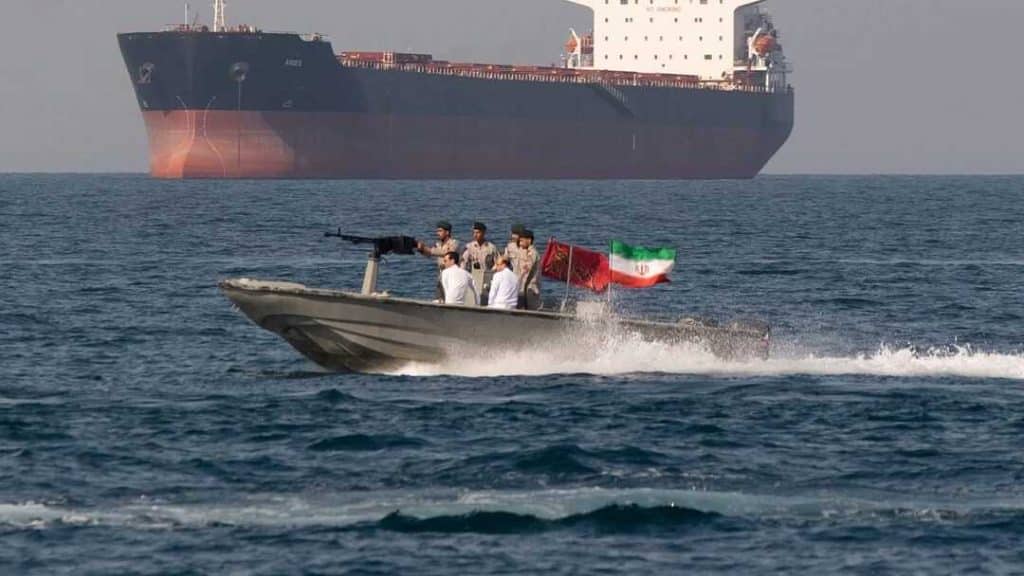
The focus on IRGC small boats may look odd next to missile sites, but it makes strategic sense. Small boats are useful because they create uncertainty at close range. They can harass, shadow, swarm, and force commercial ships or naval escorts into fast decisions.
That is why the small-boat threat matters in Hormuz. The waterway is narrow, traffic is dense, and commercial crews are not built for tactical ambiguity. Even when a small boat does not fire, its presence can slow movement, change routes, and raise premiums.
Fear does not need a blockade to work. If enough captains, insurers, and charterers believe the passage is becoming unsafe, the effect begins before the strait ever closes.
The Next Signals Will Come From Ships, Not Speeches
The political question is whether the memorandum can be saved. The practical question is whether tankers keep moving.
The next market signal will come from vessel behavior: ships turning back, transponders going dark, LNG carriers waiting near loading points, insurers raising war-risk costs, or naval escorts becoming routine. Those details will tell the market more than another official statement.
Bahrain and Kuwait matter because Iranian retaliation against U.S.-linked sites there would pull host governments further into the crisis. Qatar matters because LNG exposure makes its role impossible to separate from the energy story. Saudi Arabia matters because crude flows remain central to the broader inflation and supply picture.
The Strait of Hormuz war now sits at the intersection of military escalation and market psychology. If ships continue moving, the crisis may stay severe but contained. If shipping confidence breaks, the battlefield will stretch from the Gulf to energy bills, freight rates, and political pressure far beyond the region.