The reported killing of Nemesio Oseguera Cervantes, widely known as “El Mencho,” marks one of the most consequential moments in Mexico’s ongoing cartel conflict in recent years. As the longtime leader of the Jalisco New Generation Cartel (CJNG), El Mencho built one of the most powerful and feared criminal organizations in the world. His sudden removal has not brought immediate calm instead, it has unleashed a wave of violence that has spread rapidly across multiple regions of the country.
Rather than weakening cartel influence overnight, the fall of such a dominant figure has created instability, fear, and a dangerous struggle for control. The aftermath reveals a harsh reality: dismantling leadership within organized crime often triggers short-term chaos before any long-term stability can emerge.
Who Was El Mencho and Why He Mattered
El Mencho rose to prominence as the head of the CJNG, a cartel that rapidly expanded its influence across Mexico and beyond. Under his leadership, the organization became known for its aggressive tactics, sophisticated operations, and willingness to confront government forces directly.
Unlike earlier cartel leaders who often preferred to operate behind the scenes, El Mencho cultivated a reputation for boldness and brutality. His group was heavily involved in drug trafficking, particularly in the production and distribution of synthetic drugs such as fentanyl and methamphetamine. This global reach made him a high-priority target for both Mexican authorities and international law enforcement agencies.
His leadership style centralized power, meaning that many key decisions flowed directly through him. As a result, his sudden removal has left a significant void within the organization.
The Operation That Led to His Death
Reports indicate that Mexican security forces carried out a large-scale military operation aimed at capturing El Mencho. The operation involved coordinated efforts between the army, intelligence units, and federal law enforcement agencies. What followed was a violent confrontation, highlighting the level of resistance that cartel leaders can mobilize.
While details continue to emerge, early accounts suggest that the operation resulted in heavy clashes, arrests, and the seizure of weapons. The intensity of the confrontation underscores how heavily armed and organized cartel networks have become over the years.
Operations of this scale are rarely isolated events. They are often the result of months or even years of intelligence gathering, surveillance, and strategic planning. However, even successful missions can carry unintended consequences, as the aftermath of this event clearly demonstrates a dynamic that echoes the concept of heritage bets, where the outcome of a high-stakes move can reshape the landscape for all players involved.
Immediate Aftermath: Violence Spreads Across Mexico
Following news of El Mencho’s death, multiple regions in Mexico experienced a surge in violent incidents. Armed groups linked to the CJNG reportedly initiated coordinated retaliation efforts, targeting infrastructure and creating widespread disruption.
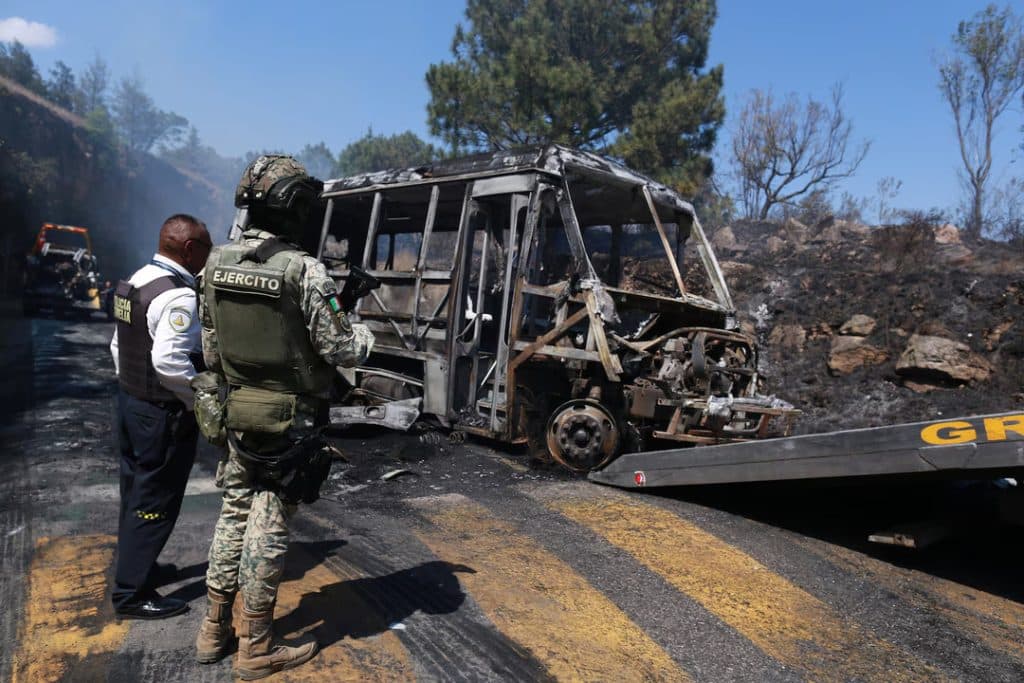
Highways were blocked using burning vehicles, effectively paralyzing transportation routes. Businesses were set ablaze, and gun battles erupted in several areas, including key urban centers. These tactics are often used by cartels to overwhelm authorities and demonstrate their continued power.
The scale and speed of these retaliatory actions highlight the organizational strength of the CJNG. Even without its leader, the group has shown it can mobilize quickly and execute large-scale operations.
Why Cartel Leader Killings Often Lead to More Violence
The surge in unrest following El Mencho’s death is not an isolated phenomenon. Historically, the removal of high-ranking cartel leaders has frequently led to increased violence in the short term. This pattern can be attributed to several factors.
First, the sudden absence of a central authority creates uncertainty within the organization. Rival factions may compete for control, leading to internal conflict. At the same time, competing cartels may seize the opportunity to expand their territory, resulting in further clashes.
Second, retaliatory attacks are often used as a show of strength. By responding aggressively, cartel members aim to signal that they remain operational and capable despite leadership losses.
Finally, local communities often bear the brunt of this instability. As violence escalates, civilians are caught in the crossfire, and everyday life becomes increasingly dangerous.
The Power Vacuum: What Happens Next for CJNG
With El Mencho gone, attention now turns to who will take control of the CJNG. The organization’s future remains uncertain, and several scenarios are possible.
One possibility is that a successor quickly consolidates power, maintaining the cartel’s structure and operations. Alternatively, the group could fragment into smaller factions, each vying for dominance. This type of fragmentation has been seen in other cartels and often leads to prolonged periods of violence.
There is also the risk that rival organizations will attempt to exploit the situation. Territories previously controlled by the CJNG could become contested zones, increasing the likelihood of armed confrontations.
The coming months will be critical in determining which path the organization takes. Regardless of the outcome, the transition period is likely to remain volatile.
Impact on Civilians and Daily Life
For ordinary citizens, the consequences of cartel-related violence are immediate and deeply felt. The recent unrest has disrupted transportation, closed businesses, and created an atmosphere of fear in affected areas.
Authorities have, in some cases, urged residents to stay indoors as a precautionary measure. Schools and workplaces have been temporarily shut down in certain regions, highlighting the broader societal impact of the violence.
Tourism, a key component of Mexico’s economy, may also be affected. Reports of unrest can deter visitors, even if the incidents are localized. This ripple effect demonstrates how cartel activity extends far beyond criminal networks, influencing economic stability and public confidence.
Government Response and Security Challenges
The Mexican government faces a complex challenge in responding to the aftermath of El Mencho’s death. While the operation itself represents a significant tactical success, maintaining order in its wake requires sustained effort.
Security forces have been deployed to affected regions in an attempt to restore stability and prevent further escalation. However, addressing the root causes of cartel violence such as economic inequality, corruption, and demand for illicit drugs remains a long-term challenge.
Efforts to dismantle organized crime networks must balance immediate enforcement with broader social and economic strategies. Without this balance, cycles of violence are likely to continue.
A Victory with Uncertain Consequences
The reported killing of El Mencho is a landmark event in Mexico’s fight against organized crime. It represents a major blow to one of the country’s most powerful cartels. Yet, as the unfolding situation reveals, such victories are often accompanied by unintended consequences.
The surge in violence following his death highlights the complexity of the cartel landscape. Removing a leader does not automatically dismantle the organization in many cases, it simply reshapes it.
As Mexico navigates this new phase, the focus will be on whether stability can be restored or if the country will face an extended period of conflict. One thing remains clear: the fall of a kingpin is not the end of the story it is the beginning of a new and uncertain chapter.